How Long to Plan a Wedding: A Realistic Timeline for Couples
24 min
How Long to Plan a Wedding: A Realistic Timeline for Couples
Author
The ItsaYes TeamAuthor
So, you’re engaged! Congratulations! Now comes the big question everyone asks: how long does it really take to plan a wedding?
Most couples find the sweet spot is somewhere between 12 and 18 months. That timeline usually gives you enough breathing room to book your top-choice vendors, manage your budget without panicking, and actually enjoy being engaged. But honestly? The right timeline depends entirely on your vision, your flexibility, and how quickly you can make decisions.
The Surprising Reality of Wedding Planning Hours
Before we jump into specific timelines, let’s get real about the time commitment. Planning a wedding often feels like a part-time job, and the numbers don't lie. The journey from "yes" to "I do" is packed with an endless stream of decisions, emails, and phone calls that add up faster than you can imagine.
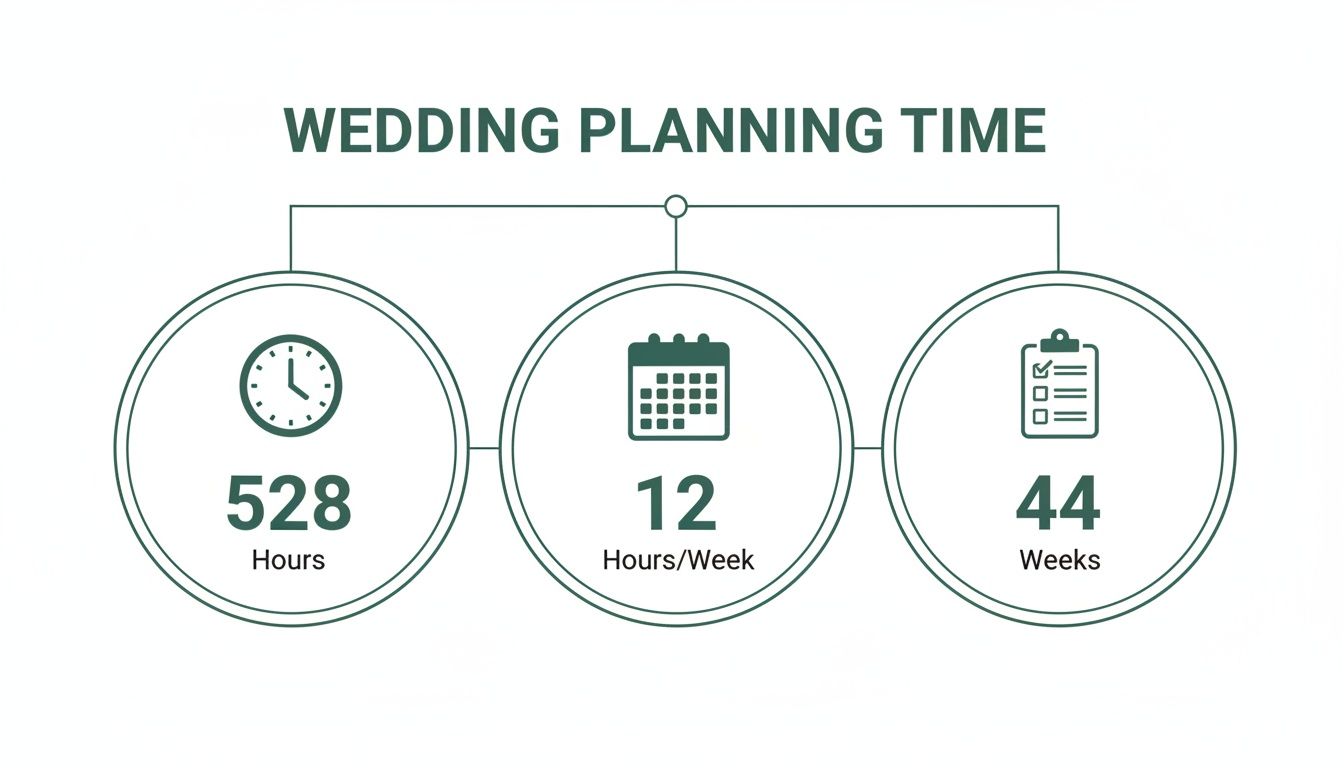
Think about it this way: the average wedding requires a staggering 528 hours of planning. That’s the equivalent of 22 full days or 66 eight-hour workdays. Some recent studies show couples are putting in about 12 hours a week for nearly 44 weeks, which can quickly turn a joyful milestone into a stressful grind. It’s no wonder so many newly engaged couples feel completely overwhelmed right from the start.
This infographic really puts the scale of the project into perspective.
When you see the numbers laid out like that, 528 hours, it’s clear why having a structured plan isn't just nice to have; it's essential for staying sane and actually enjoying the process. This is where modern tools can be an absolute game-changer.
From Overwhelm to Organization
The sheer number of tasks is exactly why old-school methods, like a messy spreadsheet, a million saved screenshots, and a chaotic Pinterest board, just don't cut it anymore. Juggling vendor research, budget tracking, and a to-do list that seems to grow every day can suck the excitement right out of your engagement. This is the very problem that smart, AI-powered systems were designed to solve.
An organized plan doesn't just save time; it creates mental space. It allows you to focus on the joy of getting married rather than the logistics of the event itself, transforming the entire experience from a chore into a celebration.
Instead of letting hundreds of hours get lost in disorganized planning, an intelligent system like ItsaYes pulls your vision, tasks, and budget into one calm, streamlined space. You begin by defining your style and ideas. The platform then helps you turn inspiration into a clear plan, breaking the next 6 to 12 months into simple, manageable steps. Your personal AI assistant is available 24/7 to suggest priorities, organize tasks, and keep everything moving forward without overwhelm.
By letting technology handle the organizational heavy lifting, you can focus on the fun decisions and genuinely enjoy the journey. Our guide on the first steps to planning a wedding is a great place to get started on the right foot.
To give you a better idea of what to expect, here's a quick look at how different timelines compare.
Wedding Planning Timelines at a Glance
This table offers a quick summary of typical wedding planning durations to help you find your starting point based on your engagement length.
Engagement Length
Average Planning Pace
Key Focus
18+ Months
Relaxed & Deliberate
Securing top-tier vendors with long lead times; ample time for DIY projects and thoughtful details.
12-15 Months
Comfortable & Steady
The "sweet spot" for most couples. Balanced pace for booking vendors, making decisions, and avoiding rush fees.
9-11 Months
Focused & Efficient
Requires decisive action. Prioritize booking the venue and high-demand vendors immediately.
6 Months
Fast-Paced & Decisive
All about making quick decisions. Flexibility on dates and vendors is crucial for success.
3 Months
Intense & All-In
A sprint to the finish line. Best for small weddings, elopements, or off-season dates.
No matter where you fall on this chart, the key is to have a clear, actionable plan. In the next sections, we'll break down exactly what to do and when for each of these timelines.
Your 12 to 18 Month Wedding Planning Timeline
So, you just got engaged and your dream wedding date is more than a year away. First of all, congratulations! You’ve just landed in the planning sweet spot. A 12 to 18-month timeline is what most planners consider the gold standard. It gives you room to breathe, make thoughtful choices, and actually enjoy the process without that constant, nagging feeling of a ticking clock.
This extended runway isn't just about avoiding stress; it's a huge strategic advantage. You get first dibs on the most in-demand venues and sought-after photographers long before their calendars fill up. Plus, you have more time to save and more leverage to negotiate, which can make a massive difference for your budget.
While many couples globally take about a year, the average in the United States actually stretches to 15 months. This is largely thanks to the popularity of fall weddings and the flood of proposals that happen around the holidays. You can dive deeper into these trends in The Knot's Worldwide Report.
The First Four Months: Vision and Foundation
Alright, this is where the magic begins. The first few months are all about making the big, foundational decisions that will shape your entire wedding. It’s time to move from daydreaming to doing. Your main goal here is to lock down the non-negotiables, the things that are most important to you as a couple.
Start by sitting down together and just talking. What’s the vibe? A massive ballroom party, a rustic barn get-together, or an intimate garden ceremony? This conversation is absolutely crucial. It’s also the perfect moment for a frank discussion about the budget. Knowing what you're both comfortable spending will guide every single choice you make from here on out.
Once you have a style and a number in mind, you can start turning inspiration into a real, actionable plan. This is where a tool like ItsaYes can be a game-changer. It’s built for newly engaged couples who want to enjoy the process, stay organized, and feel confident, from first inspiration to a fully structured plan. Instead of letting your ideas stay scattered across a dozen Pinterest boards and saved screenshots, the platform helps you centralize everything and bring your vision into one calm, intuitive workspace.
Here’s your focus for this initial phase:
Define Your Vision: Talk about the feel, the theme, and the overall atmosphere you want guests to experience.
Build Your Budget: Settle on a realistic number and start tracking your very first expenses.
Draft a Guest List: Create a preliminary guest list to get a rough headcount. This number will heavily influence your venue search.
Book Key Vendors: Lock in your venue and photographer. These are the vendors who book up more than a year in advance, so don't wait.
The Mid-Planning Phase: 9 to 12 Months Out
With your venue booked and the date officially on the calendar, the next few months are all about building out the rest of your vendor dream team and making key design choices. The foundation is laid; now you’re filling in the details that will bring the day to life. This period is less about big, sweeping decisions and more about steady, consistent progress.
This is when you’ll really start to see your vision take shape. You'll be hiring the creative pros who will execute your ideas, from the florist who designs your bouquet to the DJ who will get your grandma on the dance floor.
Key Takeaway: The middle months of a long engagement are for building your team. Focus on finding vendors whose work you love and who you genuinely connect with. This trust will be crucial for a relaxed wedding day.
Your main tasks during this window include:
Hire Your Vendor Team: Research and book your florist, caterer, band or DJ, and wedding planner if you’re using one.
Choose Your Attire: Start shopping for your wedding dress and other key outfits, as custom orders can take several months to arrive.
Send Save-the-Dates: Give your guests, especially anyone traveling, plenty of notice so they can make plans.
Create a Wedding Website: Build a central hub for guests to find info on travel, hotels, and your registry.
The Final Stretch: The Last Six Months
As you cross the six-month mark, the pace picks up again. This phase is all about finalizing details, ticking off smaller decisions, and making sure all your carefully laid plans are coming together seamlessly. You’ll find yourself communicating with vendors more frequently as you confirm timelines, menus, and playlists.
This is also when you'll handle important logistical tasks, like applying for your marriage license and chasing down those last few RSVPs. Staying organized here is non-negotiable. Your AI assistant in ItsaYes can help by sending reminders for payment deadlines and keeping all your final vendor confirmations in one place, preventing anything from slipping through the cracks. It’s this systematic approach that ensures you move toward your wedding day with confidence, not chaos.
In these last few months, you'll tackle:
Finalizing the Details: Work with your florist on mock-ups, attend menu tastings with your caterer, and create a detailed day-of timeline.
Sending Invitations: Mail your official wedding invitations about eight to ten weeks before the big day.
Confirming Everything: Follow up with all vendors to triple-check arrival times, services, and final payment schedules.
Managing RSVPs: Track guest responses as they come in and start putting together that all-important seating chart.
By breaking the 12-to-18-month journey into these manageable stages, you can actually enjoy the process and arrive at your wedding day feeling prepared, calm, and incredibly excited.
The 9 Month Wedding Plan for Focused Couples
A nine-month engagement hits a pretty amazing sweet spot. You have just enough time to plan a thoughtful, beautiful wedding without those long lulls where you start to second-guess every decision.
This timeline is all about focused momentum. It’s perfect for couples who are ready to make choices and see their vision come to life quickly. When you have less than a year, the name of the game is prioritizing the big-ticket items, immediately.
You just don’t have the luxury of casual browsing for months on end. You need to jump straight into defining your vision, locking in a firm budget, and finalizing your guest list. These three pillars are completely interconnected and will steer every other decision you make. You absolutely need a clear headcount, for instance, before you can even start your venue search.
The First Three Months: The Decisive Sprint
This initial ninety-day period is, without a doubt, the most critical phase of your plan. Your entire goal is to lock down all the major vendors who can only handle one wedding per day. This is where you’ll run into the biggest challenge of a shorter timeline: vendor availability.
Let’s be real: popular venues, photographers, and caterers often book up 12 to 18 months in advance. That means you need to be prepared and, most importantly, flexible.
So, how do you get around that? Start by considering alternative dates. A Friday or Sunday wedding can open up a surprising number of possibilities, and many vendors will even offer better rates. Likewise, looking at off-season months (like January or November) can reveal some hidden gems that would otherwise be completely booked.
Here’s your tight, targeted task list for this phase:
Establish Your Foundation: Get your budget, guest list, and wedding style solidified in the first few weeks. No exceptions.
Book High-Impact Vendors: This means securing your venue, photographer, and caterer. They are the absolute pillars of your wedding day.
Order Your Wedding Attire: Custom wedding dresses can easily take six months or more to arrive. Make this an early priority.
Send Save-the-Dates: As soon as you have a date and venue confirmed, get the word out so your guests can start making their arrangements.
A nine-month timeline doesn't mean you're behind; it means you're efficient. The key is to transform your inspiration into a structured, actionable plan from day one. This proactive approach prevents last-minute stress and keeps the process enjoyable.
This is exactly where a tool like ItsaYes becomes your new best friend. Instead of juggling spreadsheets, Pinterest boards, and scattered notes, ItsaYes brings your vision, tasks, budget, and timeline into one calm, intuitive workspace. The platform’s AI assistant helps turn your jumbled ideas into a clear, prioritized plan, breaking down the next nine months into simple steps and keeping everything organized.
The Middle Three Months: Building and Refining
With your core vendors secured, the next three months are all about filling in the details. This is when you bring on the creative professionals who will bring your vision to life.
Now’s the time to book your florist, DJ or band, and officiant. You’ll also be diving into the aesthetic details, choosing your color palette and locking in your overall design theme.
This is also the perfect window to set up your wedding website and registry. It gives your guests a central hub for all the information they'll need. As you're making all these decisions, ItsaYes keeps your tasks organized so nothing falls through the cracks. The 24/7 AI assistant can suggest what to tackle next and track your progress, helping you feel confident that everything is moving forward without becoming overwhelming.
The Final Three Months: Finalizing and Confirming
The last stretch is all about logistics and execution. You’ll send out your official invitations eight weeks before the wedding, which means you need to be ready to manage RSVPs as they start rolling in.
This is also the time for all those final vendor meetings, menu tastings, and creating a detailed day-of timeline that everyone can follow.
Your key tasks for the home stretch include:
Mail Invitations: Get them in the mail about two months before the wedding date.
Track RSVPs: Use your planning system to keep a running tally of guest responses and their meal choices.
Finalize Details: Confirm song lists with your DJ, puzzle out a seating chart, and walk through the timeline with your photographer and venue coordinator.
Get Your Marriage License: Don't forget this one! Check your local requirements, as there's often a waiting period.
A nine-month plan is entirely achievable and can be an incredibly exciting journey. By staying organized and making decisive choices, you can create the wedding you’ve always wanted without the long, drawn-out wait.
The Sprint: Planning a Wedding in 6 Months or Less
So, you’re engaged and want to tie the knot in six months? Or maybe even three? Let me be the first to tell you: it’s absolutely possible. Planning a wedding on a shorter timeline isn’t about cutting corners. It’s a high-energy sprint that rewards focus, decisiveness, and a little bit of creative flexibility.
Honestly, it can be incredibly exciting. You’re forced to make confident choices and watch your vision come to life in what feels like record time.
The secret? You have to make the big decisions almost immediately. Those first two or three weeks are everything. This is when you nail down your absolute non-negotiables: your budget, the guest list size, and the overall vibe you’re going for. Think of these three things as your foundation, there’s simply no time to waste in getting them set in stone.
A shorter timeline naturally forces a more focused approach. Instead of spending months casually browsing, you’ll be diving straight into booking. The biggest hurdle you’ll likely face is vendor availability, since the most popular venues and photographers often book out more than a year in advance. This is where compromise becomes your superpower.
Making Smart Compromises Without Sacrificing Style
When you’re planning a wedding in under six months, flexibility is the name of the game. But being open to alternatives isn’t about settling. It’s about strategically finding incredible options that other couples might have overlooked.
Consider these game-changing compromises:
Rethink Your Date: A Saturday in October might be completely booked, but what about a Friday in November? Or a chic Sunday brunch wedding in April? Weekday weddings are gaining popularity and often come with serious cost savings and much better availability.
Embrace a Smaller Guest List: A more intimate celebration with just your closest friends and family opens up a whole new world of venue possibilities. Think stylish restaurants, cool art galleries, or boutique hotels that simply can’t accommodate a massive crowd.
Explore Non-Traditional Venues: Look beyond the places that scream "wedding venue." Breweries with amazing industrial-chic spaces, city parks, and even design-forward Airbnbs can serve as stunning and unique backdrops for your day.
A short engagement forces you to prioritize what truly matters. It strips away the pressure of tradition and encourages you to create a day that is authentically and unapologetically you.
This is exactly where an AI-powered planner becomes your most valuable player. Instead of burning your first crucial week building a spreadsheet from scratch, a system like ItsaYes can instantly generate a prioritized task list based on your specific timeline. Its AI assistant breaks down the entire overwhelming process into simple, manageable steps, keeping everything moving forward without the chaos.
Your High-Impact 6-Month Action Plan
With a condensed timeline, every action needs to count. There’s no room to procrastinate. Your planning will basically be broken down into three distinct, fast-paced phases. The goal is to get from a vague idea to a fully structured plan almost immediately.
Months 1-2: The Foundation
This is an all-out blitz to lock in your core vendors. Your goal should be to have your venue, caterer, and photographer booked within the first 30-45 days. Seriously.
Finalize that budget and guest list. No more maybes.
Book your venue, which officially locks in your date.
Hire your photographer and your caterer.
Order your wedding attire now, custom dresses and suits have long lead times.
Months 3-4: The Details
Once the big pieces are in place, you can shift your focus to the vendors and details that inject your personality into the day.
Book your DJ or band, florist, and officiant.
Send out your wedding invitations. Yes, this early! You need RSVPs back ASAP.
Create a wedding website with all the essential info for your guests.
Months 5-6: The Finalization
These last two months are all about confirming logistics and tying up loose ends. Staying organized here is what makes for a smooth final stretch.
Start tracking RSVPs and create your seating chart.
Schedule final meetings with all your vendors to go over every last detail.
Don't forget to apply for your marriage license.
Build your day-of schedule. Our wedding day timeline generator can be a lifesaver for structuring the flow of events perfectly.
Planning a wedding in six months is an intense ride, but it’s also an incredibly rewarding one. It forces you to trust your gut, make quick decisions, and keep your focus right where it belongs: on celebrating your love story.
Moving Beyond Checklists with an AI Wedding Planner
The wedding planning timelines we’ve mapped out are fantastic starting points. But here’s the thing about any static checklist: it can’t possibly know what matters most to you.
A generic list might tell you to book a florist by month eight, but it has no idea you’re dreaming of a minimalist, greenery-focused vibe and need to adjust your budget accordingly. This is where modern couples are making a huge shift, leaving behind scattered spreadsheets and disconnected Pinterest boards for a smarter, more personal approach.
A truly personalized plan isn't just about staying organized. It’s about making sure the 200-300 hours you pour into your wedding feel productive and joyful, not chaotic. Planning a wedding without a pro is a marathon, it’s the equivalent of seven full-time workweeks.
With 60% of couples using Pinterest for inspiration, the real challenge is turning that visual dream into an actionable reality without drowning in vendor emails and budget spreadsheets. An intelligent system is designed to bridge that exact gap, translating your inspiration into a structured, manageable plan from day one.
From Inspiration to an Actionable Plan
The journey from a saved pin to a booked vendor is where things often go off the rails. You start by defining your wedding style—maybe it's "modern romantic" with a touch of "urban chic." In a traditional setup, you'd then create one spreadsheet to track vendors, another for the budget, and a separate document for your to-do list. It gets messy, fast.
An AI-powered system like ItsaYes completely flips this model. Instead of juggling a dozen different tools, you start by defining your style and ideas. The platform then helps you turn inspiration into a clear plan, breaking the next 6 to 12 months into simple, manageable steps.
From there, the system does the heavy lifting. It instantly generates a personalized timeline and a dynamic budget that actually reflect your specific priorities. This creates a single, calm workspace where your vision, tasks, and financials are all connected, giving you clarity right from the start.
How an AI Assistant Personalizes Your Timeline
Once you’ve defined your style, your personal AI assistant becomes your 24/7 planning partner. It doesn't just hand you a generic checklist. It builds a smart task list that’s tailored to your exact timeline, whether you have six months or sixteen.
It Suggests Priorities: Based on your wedding date and vision, the AI points you to what you should tackle next, making sure you book in-demand vendors first without feeling rushed.
It Organizes Your Tasks: It breaks down huge goals like "Find a Venue" into small, manageable steps like "Research 5 local venues" and "Schedule 3 tours."
It Keeps Everything Moving: The assistant tracks your deadlines and sends reminders, so you can feel confident that nothing is slipping through the cracks.
This kind of automated guidance ensures you're always working on the right thing at the right time. For a deeper look at how this technology works, check out our complete AI wedding planning guide for 2026. It’s a game-changer for avoiding that last-minute scramble.
Wedding planning isn’t a one-size-fits-all process. The right system moves with you, adapting to your pace and priorities. It’s about building a framework that supports your unique vision, not forcing your vision into a rigid checklist.
Let's look at how the old way compares to a more modern, AI-powered approach.
Traditional vs AI-Powered Wedding Planning
This table breaks down how an AI planner like ItsaYes truly streamlines the wedding planning process compared to the classic spreadsheet-and-notes method.
Planning Aspect
Traditional Method (Spreadsheets, Notes)
ItsaYes AI-Powered Method
Initial Planning
Manually creating spreadsheets for budget, guests, and tasks. Ideas are scattered across Pinterest and random notes.
Define your style, and the AI generates a cohesive plan, budget, and timeline in one intuitive workspace.
Task Management
Following a generic, static checklist. It's easy to lose track of what's next or feel overwhelmed by a giant list.
A dynamic, prioritized task list is created for you. The 24/7 AI assistant suggests what to do next.
Budgeting
Manually inputting every expense and formula. It's hard to see how one decision impacts the overall budget in real-time.
The budget is integrated with your vision and tasks, updating automatically as you make decisions and track payments.
Overall Feeling
Often feels disjointed, stressful, and overwhelming. Juggling multiple documents leads to confusion and anxiety.
Feel calm, confident, and in control. Everything is in one place, providing clarity and a sense of forward momentum.
Ultimately, the goal is to create a planning system that works for you, not against you. By moving beyond outdated checklists and embracing a smarter approach, you can navigate your engagement with confidence and enjoy a process that feels as special as the wedding day itself.
Your Top Wedding Timeline Questions, Answered
Even with the perfect timeline in front of you, questions are going to pop up. It’s totally normal. Knowing the answers to a few common ones can save you a ton of stress and keep things moving smoothly. Here are the questions I hear most often from couples, with some real talk to keep you on track.
What’s the Very First Thing I Should Do After Getting Engaged?
Before a single Pinterest pin is pinned or a venue is toured, stop. Take a breath. The absolute first thing you need to do is sit down with your partner and have a real, honest-to-goodness conversation about your vision and your budget.
I know, it’s not the fun part. But it's the most critical foundation you'll build. What's the feeling you want for the day? Who are the absolute must-have people on your guest list? And what's a realistic number you're both comfortable spending?
Nailing these big-picture items first prevents so much backtracking and disagreement later. It gets you both rowing in the same direction from day one. This is exactly where a tool like ItsaYes comes in handy, it’s designed for couples who want clarity from the very start. It helps you translate those initial conversations into a tangible style profile and a working budget, giving you a solid launchpad for everything else.
Is It Actually Possible to Plan a Wedding in 3 Months?
Absolutely. But you have to shift your mindset. A three-month engagement is a sprint, not a marathon. This is all about being decisive, flexible, and ready to make quick, confident calls.
You probably won’t get your first-choice photographer for a Saturday in June, and that’s okay. The key is to be open to compromise.
To make it work, you’ll need to:
Look for all-inclusive venues. Bundling catering, rentals, and staff in one contract is a massive time-saver.
Keep the guest list small. An intimate wedding opens up a world of non-traditional venues like restaurants and galleries that are easier to book on short notice.
Think off-the-rack. Forget custom gowns with long lead times; look for sample sales or ready-to-wear outfits.
In a time crunch like this, an AI planner is your best friend. It can instantly create a condensed, high-priority to-do list so you don’t miss a single critical deadline in the whirlwind.
How Far in Advance Should I Really Book My Wedding Venue?
If you have your heart set on a popular venue during peak season (think a Saturday in October), you need to be booking that 12 to 18 months in advance. No joke.
The venue is the cornerstone of your entire wedding. It locks in your date and location, which dictates every single vendor you hire afterward.
But if you have a shorter timeline, don't panic! This is where flexibility becomes your superpower. Considering a Friday, a Sunday, or an off-season date can dramatically open up availability. You might be surprised to find that a different day or season offers a unique vibe you end up loving even more.
The best timeline is the one that works for you. Whether you have three months or eighteen, the goal is to create a plan that keeps you joyful, not stressed. Staying organized is what makes any timeline feel manageable.
Does a Longer Engagement Automatically Make Planning Easier?
It can, but it’s not a magic bullet. A longer engagement is great for spreading out the tasks and the costs. It gives you more time to save, more vendor options, and a generally more relaxed pace.
The hidden challenge? Decision fatigue. With too much time, some couples find themselves second-guessing every choice. Planning can start to feel like a never-ending project, and the initial excitement can fade.
The trick is to maintain momentum, no matter how much time you have. Using a structured planning tool helps you set and hit milestones along the way. It keeps you moving forward at a steady clip, so you can actually enjoy being engaged instead of feeling like the wedding is endlessly far away.
Ready to turn your timeline into a calm, confident plan? Instead of juggling spreadsheets and a million little notes, let ItsaYes pull your vision, tasks, and budget into one smart, intuitive space. Start building your personalized plan and actually enjoy the journey from inspiration to "I do."