39 min

Wedding Day Timeline: Free Templates + Step-by-Step Guide

Author

The ItsaYes TeamAuthor
Wedding coordinator checking timeline while bride gets ready with bridesmaids in background

You've been engaged for six months. You've picked your colors, found your venue, and your Pinterest board has 400 pins. But when someone asks "so what's your wedding day timeline?" you freeze.

Honestly, you might not know when hair and makeup should start, whether you need a first look, or how long cocktail hour should be. All those small decisions can make the difference between a smooth day and a stressful one.

I've worked with hundreds of couples planning their weddings, and the timeline is where I see the most panic. Not the budget. Not the guest list drama. The timeline. Because it's the one thing that touches every single part of your day—and if it's off by even 30 minutes, everything dominoes.

One thing I know for sure: having a solid wedding day timeline is what separates a relaxed, enjoyable wedding from one where you're running 90 minutes late, your photographer is stressed, and your guests are left wondering when dinner will start.

What Is a Wedding Day Timeline (And Why It Actually Matters)

A wedding day timeline isn't just a nice-to-have document you send to vendors. It's the operating system running your entire celebration.

Picture this: your photographer needs to know when golden hour hits for couple portraits. Your florist needs to deliver bouquets before you get dressed (not after). Your caterer needs to coordinate dinner service with your DJ's announcement schedule. Your hair and makeup artist needs to finish with enough buffer time that you're not still in curlers when guests arrive.

If you don't have a clear timeline to coordinate all these details, you're just hoping everything works out on its own. After looking at many wedding timelines in ItsaYes, I can tell you that rarely happens.

A strong wedding day timeline includes:

  • Getting ready schedule (hair, makeup, dressing)
  • Photography blocks (portraits, family photos, couple shots)
  • Ceremony timing (including setup and processional)
  • Cocktail hour logistics
  • Reception flow (entrances, toasts, dinner, dancing)
  • Vendor coordination (load-in times, meal breaks, load-out)
  • Buffer time for delays (because something always runs late)

Why this matters more than you think:

When your photographer shows up at 1 PM expecting to shoot getting-ready photos but your hair and makeup team is running 45 minutes behind, that's not just an inconvenience. That delay pushes your first look back, which pushes family photos back, which means you miss cocktail hour, which throws off your entire reception entrance timing.

I've seen couples miss their own cocktail hour completely because nobody built buffer time into the timeline. They were stuck doing family photos while their guests wondered where they were.

Couples who truly enjoy their wedding day have a timeline that reflects real-life timing, not just the ideal plan.

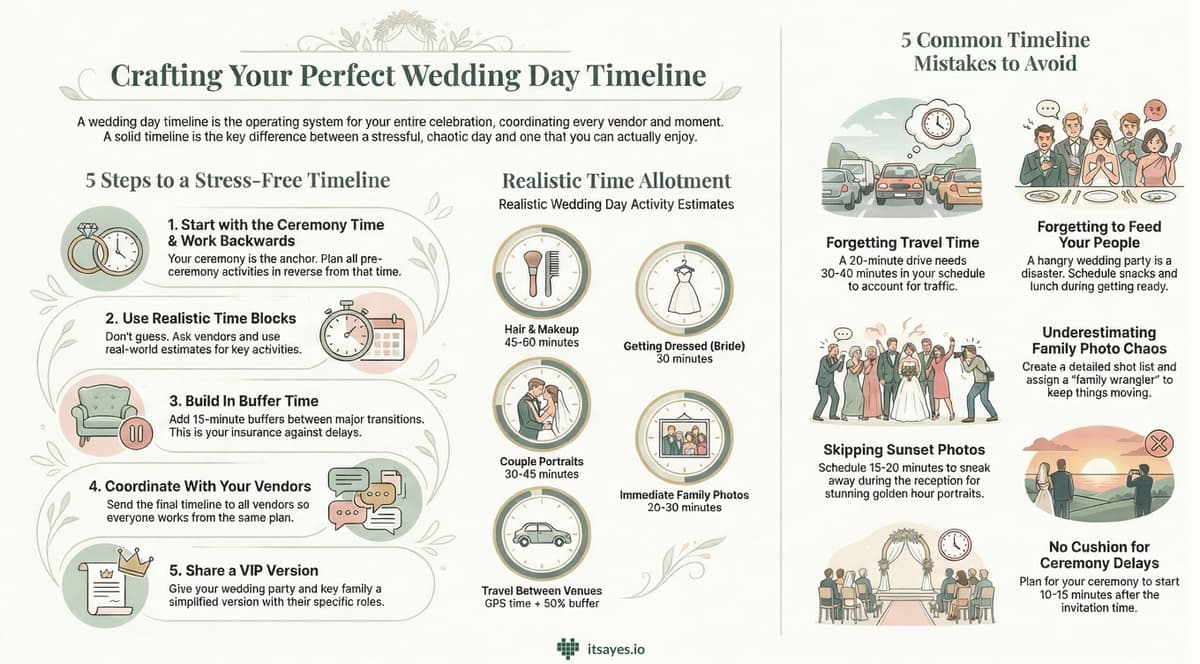
Modern wedding day timeline infographic showing an hour-by-hour schedule from getting ready to reception, designed in a clean minimalist style for brides planning their wedding day.

How Sarah & Mike Planned Their Three-Event Wedding (A Real ItsaYes Story)

Before I walk you through the sample timelines, let me show you how this works in real life.

Sarah and Mike got engaged in January and set their wedding date for October—nine months to plan. They were having a traditional Catholic ceremony, a cocktail hour at a different venue, and a full reception dinner. Three separate events, two locations, 120 guests.

They began with a PDF timeline template, similar to the ones at the end of this article. It helped them organize their ideas and start planning the day, but they soon ran into problems.

Whenever they changed the ceremony time by 30 minutes, they had to recalculate everything: when hair and makeup should start, when the photographer should arrive, when to schedule transportation, and when cocktail hour would begin. It felt like trying to fit puzzle pieces together in a spreadsheet.

That's when they moved everything into ItsaYes.

Here's exactly what happened:

When Sarah first created their timeline in ItsaYes, the AI assistant asked her a few questions: "What time is your ceremony? Are you doing a first look? How many people are getting hair and makeup? Are your ceremony and reception at the same location?"

Based on her answers, the system automatically generated a realistic timeline for all three events—ceremony, cocktail hour, and reception—with proper travel buffers between the two venues.

The best part was that whenever Sarah made a change, the whole timeline updated automatically.

When they decided to push the ceremony from 4 PM to 5 PM, the system instantly recalculated:

  • Hair and makeup start time
  • Photographer arrival
  • First look timing
  • Travel window to the second venue
  • Cocktail hour schedule
  • Reception entrance time

There was no need for manual calculations or complicated spreadsheets, just instant, logical updates.

The Details Column That Saved Them

Sarah mentioned something that stuck with me: even though ItsaYes had already broken down each timeline block pretty thoroughly, she loved that there was a "Details" column where she could add her own notes.

For "Bride Getting Dressed," she added: "Mom helps with buttons, photographer captures veil moment, save 5 min for emotional breakdown (happy tears)."

For "Family Photos," she listed out exactly which family groupings they wanted: "Parents only, Parents + siblings, Full extended family on bride's side, Full extended family on groom's side."

The template provided structure, and the Details column allowed them to personalize it.

Sharing the Timeline = Zero Day-Of Stress

A month before the wedding, Sarah exported her final timeline and shared it with:

  • Their photographer and videographer
  • Both venue coordinators
  • The florist
  • Hair and makeup team
  • Their parents and wedding party

What really made a difference was printing the timeline and hanging it in their home office. Each week, they reviewed it together, pictured the day, spotted possible issues, and made small changes.

Mike told me later: "We basically rehearsed our wedding day 20 times in our heads before it actually happened. So when the day came, nothing felt chaotic. We knew exactly what was supposed to happen and when."

On the actual wedding day? Zero timeline issues. Hair and makeup finished on time. The photographer caught every moment. Transportation between venues went smoothly. Cocktail hour flowed into dinner perfectly.

Sarah's maid of honor said it best: "I've been in eight weddings. This was the only one where the bride wasn't stressed about logistics. She just enjoyed it."

That's the benefit of a real timeline that adapts to your actual wedding plans.

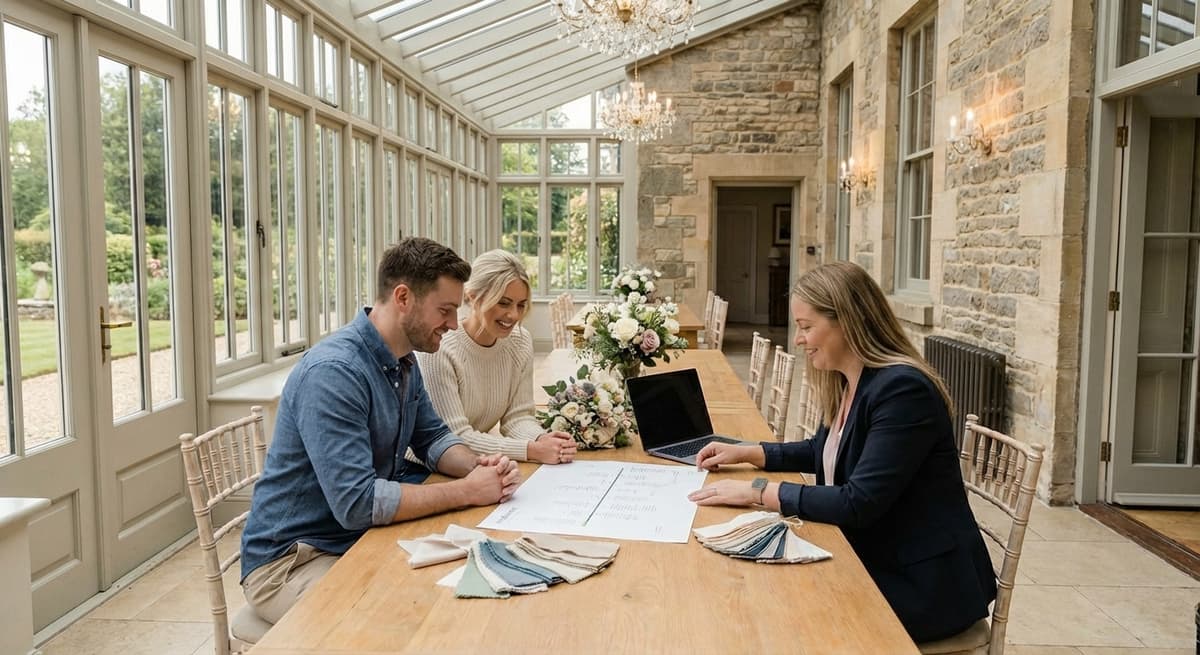
Engaged couple reviewing printed wedding timeline together at home office desk

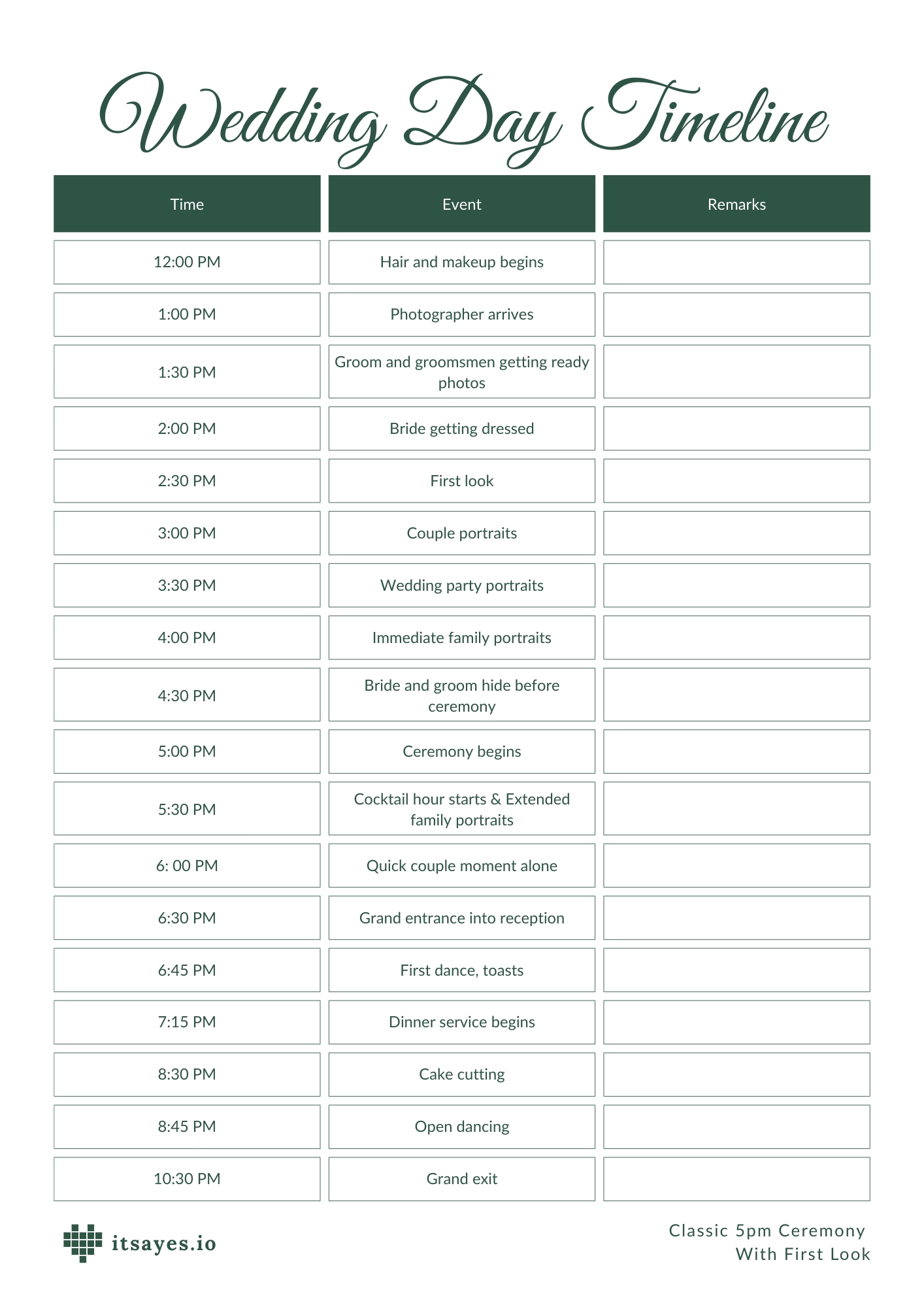
Classic 5 PM Ceremony Timeline (With First Look)

This is the go-to schedule for evening weddings when you want to take photos before the ceremony. About 60% of the couples I work with choose this option.

12:00 PM – Hair and makeup begins
Start with bridesmaids so the bride is finishing when the photographer arrives

1:00 PM – Photographer arrives
Detail shots: rings, dress, invitations, shoes, florals

1:30 PM – Groom and groomsmen getting ready photos
Quick portraits while suits go on

2:00 PM – Bride getting dressed
Allow 30 minutes for the dress, veil, jewelry

2:30 PM – First look
Plan 15-20 minutes for this private moment

3:00 PM – Couple portraits
Take advantage of afternoon light for the two of you

3:30 PM – Wedding party portraits
Bridesmaids and groomsmen group shots

4:00 PM – Immediate family portraits
Parents, siblings, grandparents (small groups only)

4:30 PM – Bride and groom hide before ceremony
Guests start arriving, you disappear

5:00 PM – Ceremony begins
Typically 20-30 minutes depending on religious or cultural elements

5:30 PM – Cocktail hour starts
Guests enjoy drinks and appetizers while you finish family photos

5:30 PM - 6:00 PM – Extended family portraits
Aunts, uncles, cousins, larger groupings

6:00 PM – Quick couple moment alone
Sneak away for 10 minutes, eat something, breathe

6:30 PM – Grand entrance into reception

6:45 PM – First dance, toasts

7:15 PM – Dinner service begins

8:30 PM – Cake cutting

8:45 PM – Open dancing

10:30 PM – Grand exit

Why this timeline works: The first look allows you to enjoy cocktail hour with your guests instead of spending that time on photos. You'll also feel less tired when the reception begins, and your photographer can capture everything in great light.

When brides ask me about first looks, I always say you'll have that emotional moment no matter what. The real choice is whether you want it to be private, with a first look, or public, as you walk down the aisle. Both are good options, but having a first look gives you much more flexibility with your schedule.

Visual timeline infographic showing 5 PM wedding ceremony schedule with first look from 12 PM to 10:30 PM

If Your Ceremony and Reception Are at Different Venues

Having two locations changes everything. I learned this firsthand when I coordinated my sister's wedding, with the ceremony at a church and the reception at a winery 25 minutes away. Here's how to adjust your plans:

Key differences:

3:00 PM - 4:30 PM – Complete ALL ceremony venue photos before guests arrive
This includes couple portraits, wedding party, and as many family photos as possible. You won't have time after the ceremony.

5:30 PM – Ceremony ends, guests directed to cocktail hour location
Provide clear directions, consider shuttle service for guests

5:35 PM - 6:15 PM – Travel time + arrival photos
Allow 40 minutes minimum for:

  • Travel between venues (add 50% to GPS time)
  • Touch-ups upon arrival
  • Quick venue arrival shots

6:15 PM – Remaining family photos at reception venue (if needed)
Keep this short, no more than 10-15 minutes.

6:30 PM – Join cocktail hour briefly, then prep for entrance

7:00 PM – Grand entrance into reception
Pushed back 30 minutes to account for travel

The rest of the timeline continues as above, just shifted later.

Critical additions for two venues:

  • Coordinate transportation for elderly guests or those without cars
  • Assign someone to stay at ceremony venue until last guest departs
  • Have a point person at reception venue to greet early arrivals
  • Build in 15-minute buffer in case of traffic between locations

Here's exactly how this works inside ItsaYes: When you indicate you have two separate venues, the timeline builder automatically adds travel time between locations. You input the addresses, it calculates realistic drive time, adds 50% buffer, and recalculates all your photo blocks accordingly.

The AI also points out possible issues. For example, if your cocktail hour venue is 40 minutes away but you've only set aside 30 minutes for photos at the ceremony site, it will suggest taking more photos before the ceremony or accepting that you'll miss part of cocktail hour. This way, there are no surprises on your wedding day.

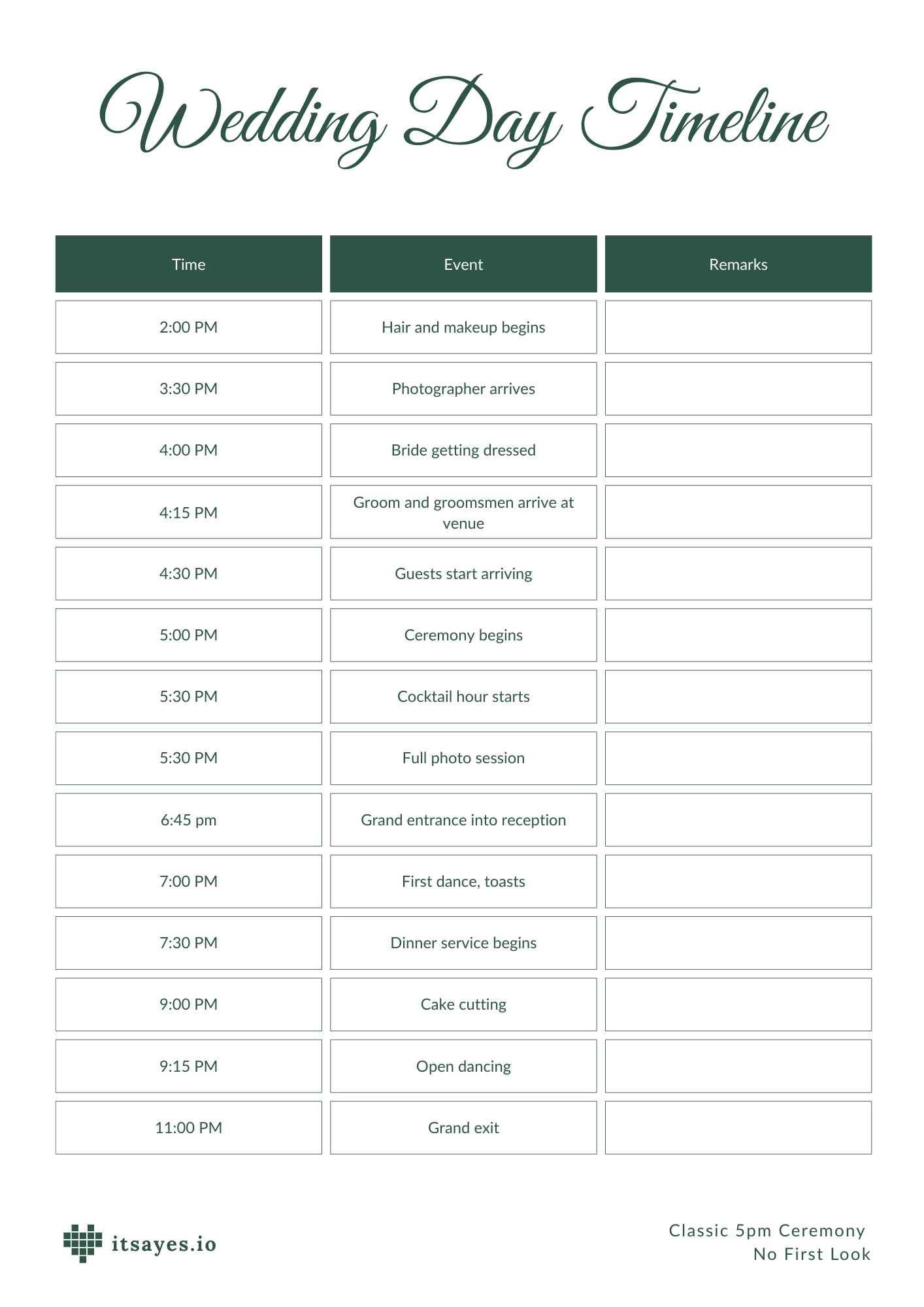
Classic 5 PM Ceremony Timeline (No First Look)

This option is for couples who want the traditional moment of seeing each other at the altar. About 40% of couples still choose this, and I respect that. There's something truly special about that walk down the aisle.

2:00 PM – Hair and makeup begins

3:30 PM – Photographer arrives

4:00 PM – Bride getting dressed
Photographer captures final touches

4:15 PM – Groom and groomsmen arrive at venue
Quick group photos before ceremony

4:30 PM – Guests start arriving

5:00 PM – Ceremony begins

5:30 PM – Cocktail hour begins
This is when you're doing ALL your photos

5:30 PM - 6:30 PM – Full photo session
Couple portraits, wedding party, immediate family, extended family (you'll miss most of cocktail hour)

6:45 PM – Grand entrance into reception

7:00 PM – First dance, toasts

7:30 PM – Dinner service

9:00 PM – Cake cutting

9:15 PM – Open dancing

11:00 PM – Grand exit

The trade-off: You get the emotional first look at the altar, but you'll spend less time with your guests during cocktail hour. If family photos matter to you and your list is long, this schedule can feel rushed.

To be honest, this is where I see the most stress on wedding days. Trying to gather 40 family members for photos while your guests wait at cocktail hour isn't relaxing. It's possible, but you'll need a detailed shot list and someone—like your planner or a very organized relative—to help gather everyone quickly.

Visual timeline infographic showing 5 PM wedding ceremony schedule without first look from 2 PM to 11 PM

If Your Ceremony and Reception Are at Different Venues

This scenario is trickier without a first look because you need to do photos AND travel. Here's the reality check:

Key adjustments:

5:30 PM – Ceremony ends

5:35 PM - 6:05 PM – SPEED ROUND family photos at ceremony venue
Only immediate family (parents, siblings). Keep it to 30 minutes MAX.

6:05 PM - 6:45 PM – Travel to reception venue
Pack up, travel, arrive, touch-ups

6:45 PM – Guests already at cocktail hour, you join briefly

7:00 PM - 7:20 PM – Couple portraits + wedding party at reception venue
Your photographer will use the reception venue backdrop

7:30 PM – Grand entrance (adjusted timing)

The reality check: Without a first look and with two venues, something has to give. You'll either:

  • Miss most of cocktail hour doing photos
  • Rush through family photos
  • Skip extended family portraits entirely

That's why many couples with two venues choose to do a first look—it simply works better for the schedule. I'm not trying to discourage the traditional approach, but I want you to have realistic expectations about what you might be giving up.

Inside ItsaYes, the AI will actually show you this trade-off visually. When you select "no first look" + "two venues," it maps out exactly how much cocktail hour you'll miss. Some couples see that and decide the first look is worth it. Others decide they're fine missing cocktail hour to preserve that aisle moment. Both are valid—but at least you're making an informed choice.

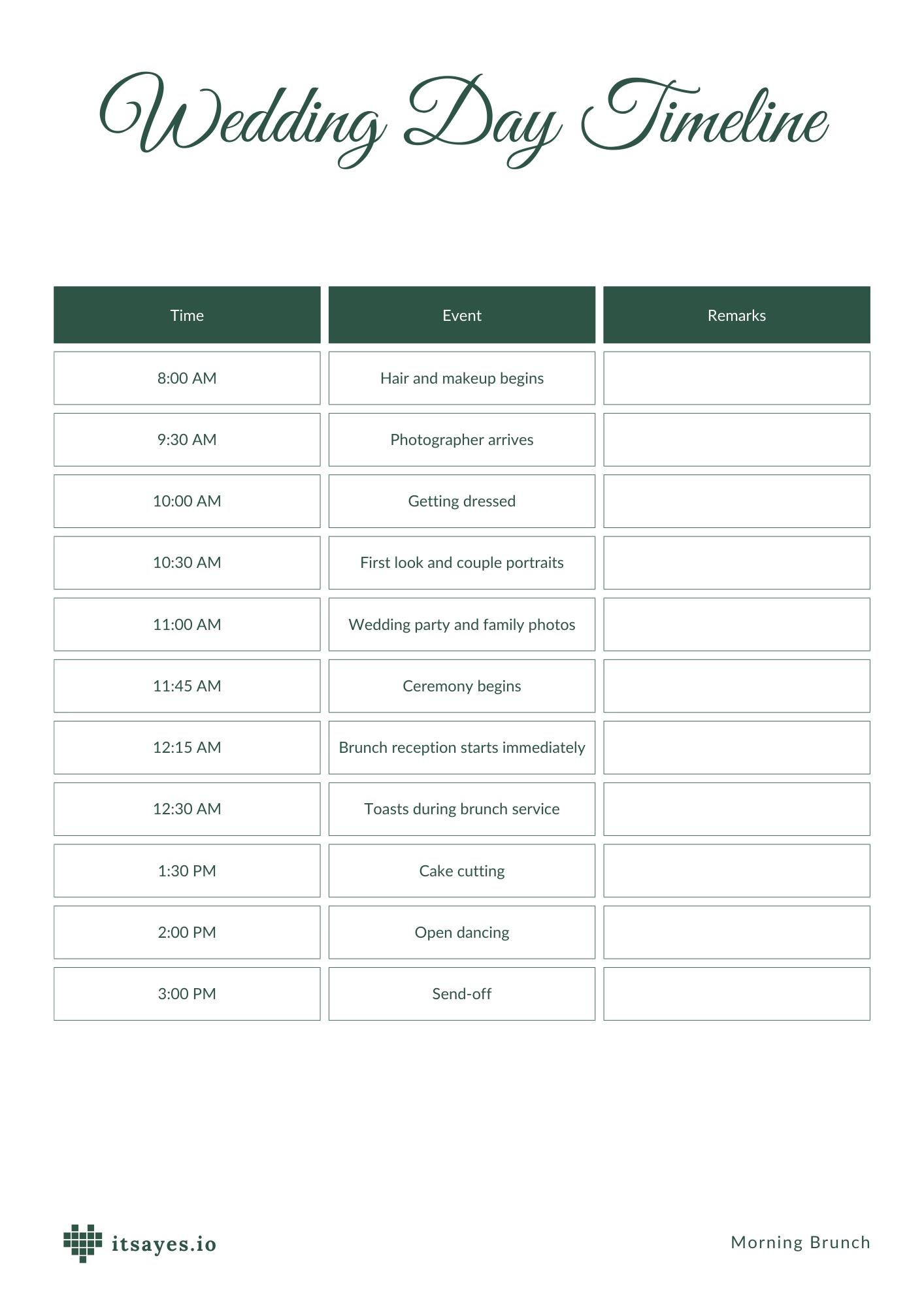
Morning Brunch Wedding Timeline

For couples who love breakfast more than they love staying up late. Also for couples getting married on a budget—brunch receptions typically cost 30-40% less than dinner receptions.

8:00 AM – Hair and makeup begins

9:30 AM – Photographer arrives

10:00 AM – Getting dressed

10:30 AM – First look and couple portraits

11:00 AM – Wedding party and family photos

11:45 AM – Ceremony begins

12:15 PM – Brunch reception starts immediately
No cocktail hour needed, guests go straight to tables

12:30 PM – Toasts during brunch service

1:30 PM – Cake cutting

2:00 PM – Open dancing (or lawn games for casual vibe)

3:00 PM – Send-off

Why couples love this: You get beautiful morning light for photos, guests feel refreshed, brunch is less expensive than dinner, and you have the whole evening to relax or begin your honeymoon.

One couple I worked with did a 10 AM ceremony and 11 AM brunch reception. By 2 PM, they were checked into their hotel, napping before their evening flight to Hawaii. They said it was the best decision they made—they got to actually enjoy the first day of their honeymoon instead of being exhausted from a late-night reception.

Visual timeline infographic showing morning brunch wedding schedule from 8 AM to 3 PM

Backyard/Outdoor Wedding Timeline

Same structure as the 5 PM ceremony, but with critical outdoor considerations that most couples forget about until it's too late.

Use the 5 PM ceremony timeline above as your base, then account for these differences:

Key outdoor-specific adjustments:

  • Add 30 minutes to setup time – Outdoor setups take longer than indoor venues. Tables, chairs, tents, lighting—it all takes more coordination when you're starting from scratch.

  • Plan for weather contingency – And I don't mean "hope it doesn't rain." I mean have an actual backup plan with a tent rental on standby or an indoor space reserved. Check the forecast 10 days out and make the call.

  • Consider sunset timing – This changes by season and location. An October wedding in Seattle has different light than an October wedding in Austin. Google "[your date] [your city] sunset time" and build your timeline around it.

  • Add bug spray station – Small detail, huge impact on guest comfort. Especially for summer evening weddings.

  • Bathroom logistics – If you're renting restrooms, they need setup time in the morning. And you need more of them than you think. The standard is 1 restroom per 50 guests for a 4-hour event.

The most common mistake with backyard weddings is assuming everything will take as long as it would at an indoor venue. In reality, everything takes longer outside—setup, cleanup, and even photos, since you have to work with changing natural light.

Pro tip: For outdoor weddings, share your timeline with your rental company early. Tent setup, chairs, tables, and lighting all need to happen in a specific order. Your florist can't decorate tables that don't exist yet.

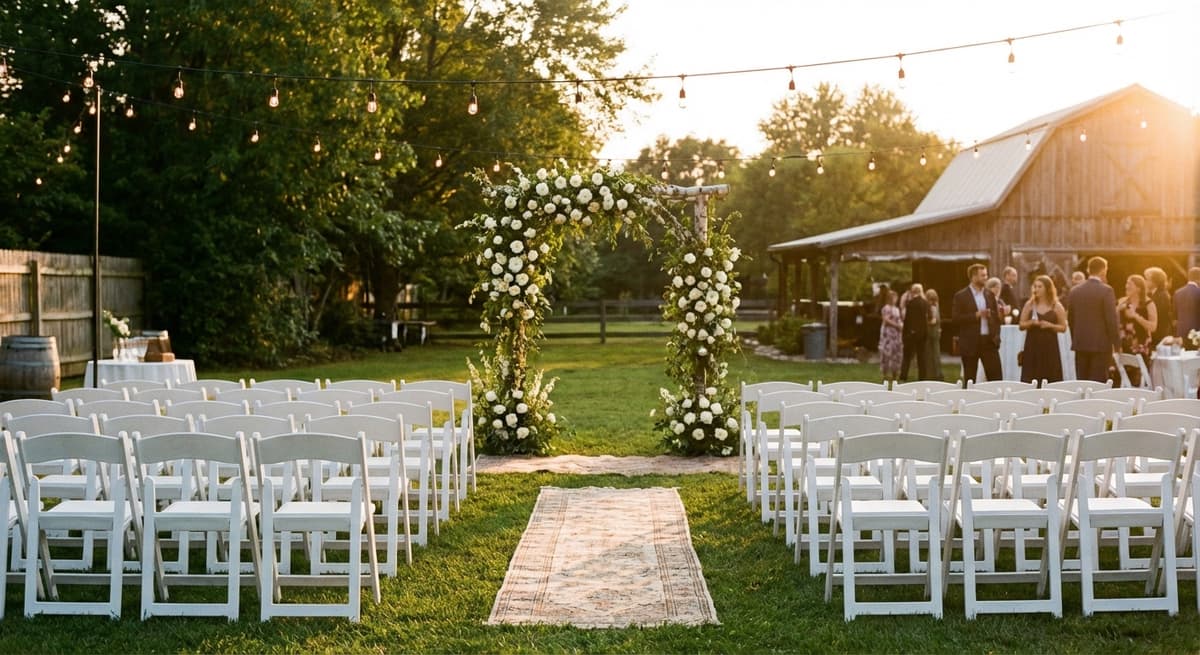
Outdoor backyard wedding ceremony setup with white chairs, floral arch, and string lights during golden hour

Micro Wedding/Elopement Timeline (Under 20 Guests)

When your guest list is tiny, your timeline can actually breathe. This is my favorite type of wedding to plan because there's so much flexibility.

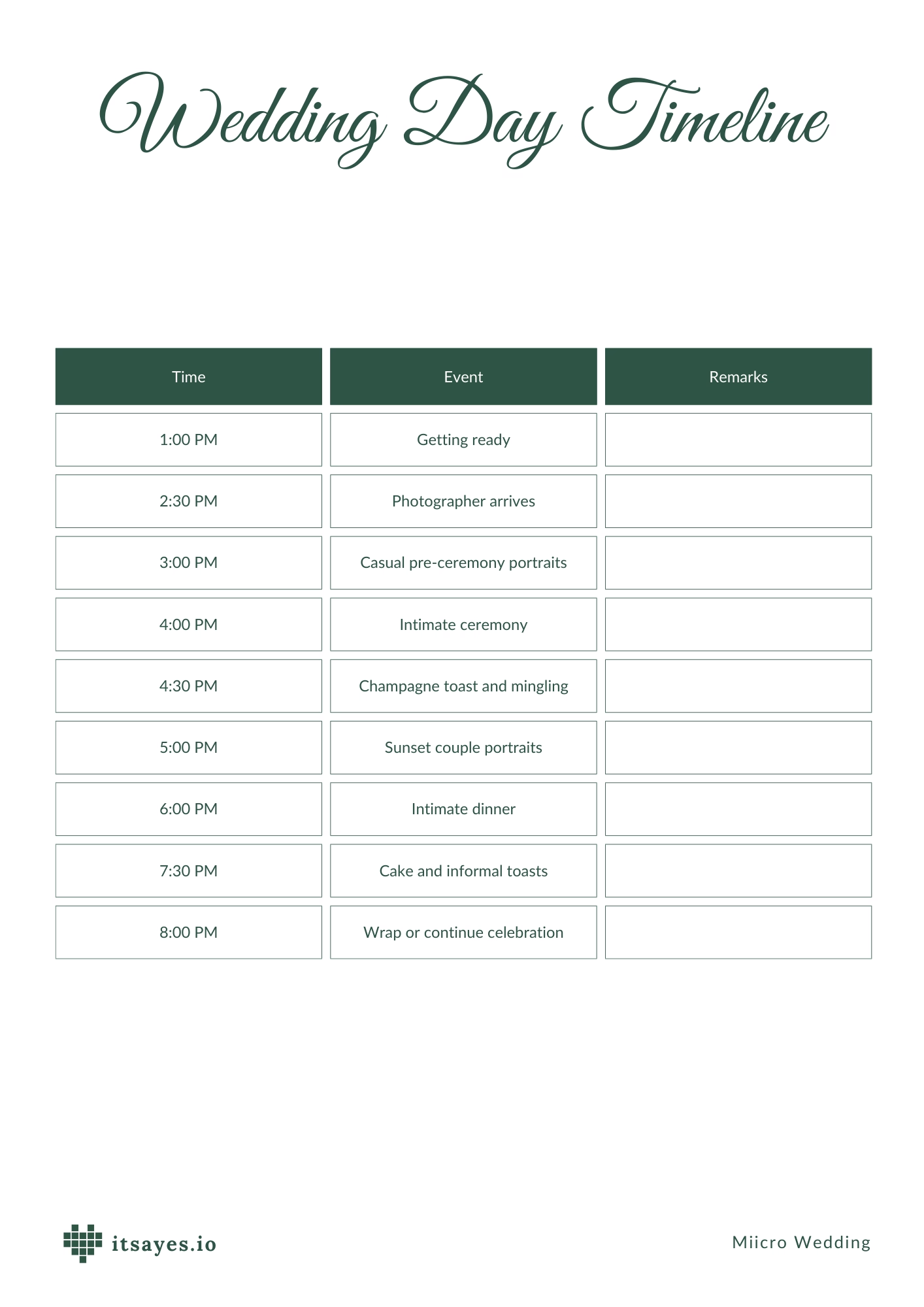
1:00 PM – Getting ready
Can be more relaxed, less formal

2:30 PM – Photographer arrives

3:00 PM – Casual pre-ceremony portraits

4:00 PM – Intimate ceremony
15-20 minutes

4:30 PM – Champagne toast and mingling
No formal cocktail hour needed

5:00 PM – Sunset couple portraits
Take advantage of golden hour

6:00 PM – Intimate dinner
Family-style or long table seating

7:30 PM – Cake and informal toasts

8:00 PM – Wrap or continue celebration casually

The best part of micro weddings is that you don't need a strict schedule. You can talk to every guest, photos feel more natural, and you can finish by 8 PM if you want.

I once worked with a couple who invited just 12 guests. Their reception was a long table dinner at a private chef's tasting room. They spent three hours eating, drinking wine, and sharing stories. There was no DJ, no dance floor, and no stress. They told me it felt more like an amazing dinner party than a wedding, and they loved that.

Visual timeline infographic showing intimate micro wedding schedule from 1 PM to 8 PM

Destination Wedding Timeline: What Changes

Destination weddings have a completely different pace. You're not just planning a single day; you're organizing a multi-day experience with guests who are in vacation mode.

I've helped coordinate 20+ destination weddings, and the biggest mistake couples make is trying to cram everything into a single day like they would for a hometown wedding. Your guests flew across the country (or the world) to be there. Let them enjoy the destination.

Timeline Considerations for Destination Weddings

The reality: Your guests traveled hours (maybe across time zones) to be there. Your timeline needs to account for jet lag, travel fatigue, and the fact that people want to actually enjoy the destination—not just attend your wedding.

Sample 3-Day Destination Wedding Timeline

Day 1: Arrival Day (Thursday or Friday)

2:00 PM onwards – Guest arrivals throughout the day
Stagger check-ins, don't plan anything requiring everyone

6:00 PM – Optional casual welcome gathering
Beach walk, poolside drinks, or informal dinner. Make it LOW key—people are tired.

Key rule: Keep this optional. Some guests will be exhausted, others energized. Let them choose.

One couple I worked with did a "welcome drinks by the pool" thing where they just hung out from 6-8 PM. No speeches. No schedule. Just drinks available and them being present. About half the guests showed up. The other half slept or explored on their own. Perfect.

Day 2: Wedding Day (Friday or Saturday)

Use the standard timelines above, but with these destination-specific adjustments:

Start later than you would at home
If you'd normally do a 5 PM ceremony, consider 5:30 PM or 6 PM. Guests need time to nap, get ready, and adjust to the location. Nobody looks good in photos when they're jet-lagged.

Account for venue distance
Is your ceremony on the beach but guests are staying at a resort 20 minutes away? Add shuttle coordination and extra buffer time. Tropical destinations = unpredictable traffic.

Plan for weather unpredictability
Destination weddings often mean tropical or coastal locations. Have a real backup plan, not a "hope it doesn't rain" plan. I've seen gorgeous beach ceremonies moved indoors with 2 hours' notice because of sudden storms.

Example destination wedding day timeline:

1:00 PM – Hair and makeup begins

3:00 PM – Photographer arrives

3:30 PM – First look

4:00 PM – Couple and wedding party portraits
Use the destination scenery—this is what you came for. Ocean views, tropical gardens, architectural backdrops you don't have at home.

5:30 PM – Guests shuttle to ceremony location (if needed)

6:00 PM – Ceremony begins
Later start accounts for afternoon heat and gives guests time to get ready without rushing

6:30 PM – Cocktail hour on the beach/terrace

7:30 PM – Reception dinner
Often outdoor or semi-outdoor

9:00 PM – Dancing under the stars

11:00 PM – After-party continues
Destination weddings often run late because guests are in vacation mode and don't have to worry about driving home.

Day 3: Farewell Brunch (Sunday)

10:00 AM - 12:00 PM – Casual farewell brunch
Lower key than a full event. Buffet style, come-and-go format works well.

Purpose: Say goodbye to guests, thank them for traveling, and give everyone closure before heading home.

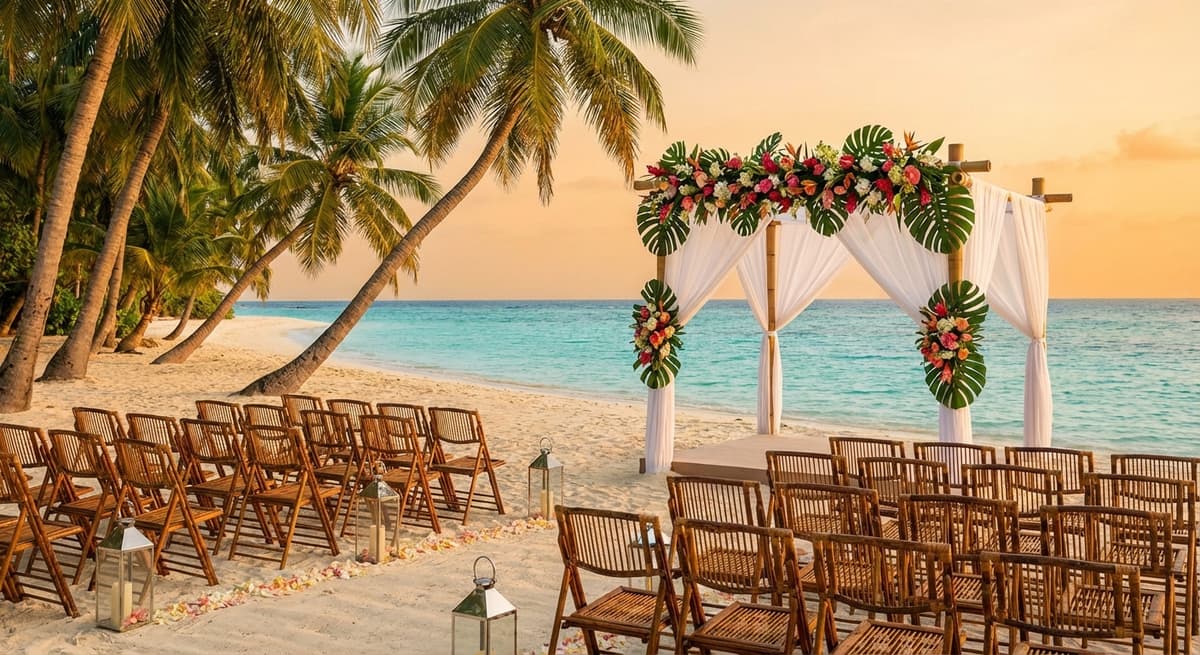
Destination wedding ceremony setup on tropical beach with ocean view and palm trees

What Makes Destination Timelines Different

Pacing over several days is important
You can't pack everything into one day. Spread activities across 2-3 days so guests (and you) don't burn out. I've seen couples try to do welcome party + wedding + farewell brunch all within 36 hours with guests who just flew 8 hours. Everyone was exhausted.

Travel logistics are a key part of the timeline
Airport pickups, shuttles between hotel and venue, guest welcome bags—these aren't "extras," they're core timeline elements. Someone needs to coordinate all of this, and that someone is usually you.

You must be flexible about the weather
Have a Plan B that's actually good, not just "move it inside." I worked with a bride who had a stunning beach ceremony planned. Storm rolled in. Her backup? An indoor ballroom that was already decorated beautifully because she'd planned for this scenario. Guests never knew it was Plan B.

Coordinating with vendors can be complicated
Many destination vendors work multiple weddings per day. Your timeline needs to align with their schedule constraints, especially for setups and teardowns. You don't have as much control as you would with hometown vendors.

Guests will have very different energy levels
Some guests will want to explore the destination all day. Others will need downtime. Your timeline should allow flexibility for both. Don't schedule mandatory activities from 9 AM to midnight.

Tools That Actually Help with Complex Timelines

Here's the truth: building a destination wedding timeline manually is a nightmare. You're coordinating time zones, travel schedules, multi-day events, vendor availability, and guest energy levels.

This is exactly where ItsaYes becomes invaluable. When you create a destination wedding timeline in the platform, here's what happens:

You tell the AI assistant: "We're having a destination wedding in Cabo. Three-day event. Ceremony on the beach Saturday at 6 PM. Welcome party Friday night. Farewell brunch Sunday morning."

The system automatically generates realistic timelines for all three days, accounting for:

  • Guest travel arrival patterns
  • Time zone adjustments if relevant
  • Weather backup planning prompts
  • Shuttle coordination between events
  • Buffer time for "vacation mode" pacing

Then, as you adjust things—let's say you move the ceremony from 6 PM to 5:30 PM—the entire multi-day timeline recalculates. Friday's welcome party timing adjusts. Saturday's hair and makeup schedule shifts. Sunday's brunch stays consistent.

You're not rebuilding three separate timelines every time you make one change. The system handles that automatically.

The benefit: You spend less time in spreadsheets and more time actually planning the parts of your wedding that matter—like which beach club to book for welcome drinks or what tequila to serve at the farewell brunch.

How to Create Your Wedding Day Timeline

Templates are a great starting point, but your wedding is unique. Here's how to build a timeline that fits your specific day.

Step 1: Start with Your Ceremony Time and Work Backwards

Your ceremony time is the anchor. Everything else builds around it. This is the first thing I ask every couple: "What time do you want to get married?"

If your ceremony is at 5 PM, work backwards:

  • Ceremony prep and guest arrival: 4:30 PM
  • Family portraits (if doing them pre-ceremony): 4:00 PM
  • Wedding party photos: 3:30 PM
  • Couple portraits or first look: 3:00 PM
  • Getting dressed: 2:30 PM
  • Photographer arrival: 1:30 PM
  • Hair and makeup start: 12:00 PM

That's how it works: start with the ceremony and plan backwards for everything leading up to it. Then, plan forward for everything that happens after, like cocktail hour, the reception, dancing, and your exit.

A common mistake is picking random times for activities without linking them to the ceremony. For example, some couples want hair and makeup to start at 10 AM, even though their ceremony isn't until 5 PM. That means they're ready by 2 PM and have to wait three hours, often feeling uncomfortable in their wedding clothes.

Step 2: Add Realistic Time Blocks

Here's where most timelines fall apart. Couples guess how long things take based on what sounds reasonable. Then reality hits.

Use these real-world estimates (based on data from 2,300+ timelines):

  • Hair per person: 45-60 minutes (not 30)
  • Makeup per person: 45-60 minutes (not 30)
  • Bride getting dressed: 30 minutes (more if your dress has 100 buttons)
  • Groom getting dressed: 15 minutes (guys are quick)
  • First look: 15-20 minutes (the moment itself is 5 minutes, but getting positioned and shots afterward takes longer)
  • Couple portraits: 30-45 minutes
  • Wedding party photos: 20-30 minutes
  • Immediate family photos: 20-30 minutes
  • Extended family photos: 30-45 minutes (this always takes longer than planned)
  • Ceremony: 20-30 minutes (religious ceremonies can go 45-60 minutes)
  • Cocktail hour: 60 minutes minimum
  • Travel between two venues: Add 50% to GPS estimate

If you're not sure, ask your vendors. Your photographer knows how long family photos take with a large group, and your hair and makeup artist knows how much time your style will need. Don't guess—ask the professionals.

Here's exactly how this works inside ItsaYes: When you add an activity to your timeline, the system suggests realistic time blocks based on what actually works for other couples. You can override it if you want, but at least you're starting from a realistic baseline instead of guessing.

And in that Details column I mentioned earlier? You can write notes like "bride's hair is long and thick, might need extra 15 min" or "groom's family is always late, build in buffer." The template gives you structure. The Details column lets you account for your specific reality.

Bride and groom working together on laptop creating wedding day timeline with notebooks and coffee

Step 3: Build In Buffer Time

Add 15-minute buffers between major transitions. Always.

Traffic happens. Dresses malfunction. Someone's boutonniere falls off. Grandma needs help finding the bathroom. The officiant runs late. The limo gets stuck behind an accident. Your photographer's camera battery dies and they need to swap it.

I've seen all of these things happen. Multiple times. On the same wedding day.

Where to add buffers:

  • Between getting ready and departure to venue
  • Between arrival at venue and first look
  • Between ceremony and cocktail hour
  • Between cocktail hour and reception entrance
  • Extra buffer if traveling between two venues (15 minutes minimum becomes 30)

These buffer times are like insurance. If everything goes smoothly, you get a chance to relax. If there's a delay, you won't feel overwhelmed.

A wedding planner once told me, "Your timeline should have enough flexibility that a 15-minute delay doesn't ruin everything." If your schedule is so tight that one small delay throws off the whole day, it's not a real plan—it's a recipe for stress.

Step 4: Coordinate with Your Vendors

Your timeline isn't just for you. It's the instruction manual for everyone working your wedding.

Send your final timeline to:

  • Photographer and videographer
  • Venue coordinator
  • Caterer and bar staff
  • Florist (for delivery timing)
  • DJ or band
  • Hair and makeup team
  • Transportation company (especially critical with two venues)
  • Wedding planner or day-of coordinator

Each vendor needs to know when they're needed and what's happening when. Your photographer needs to know ceremony start time. Your caterer needs to know when cocktail hour ends so they can time dinner service. Your DJ needs to know when to announce your entrance.

But here's what most couples don't realize: vendors also need to know what's happening around their time slots. Your photographer wants to know if you're doing a first look (affects their shot list). Your caterer wants to know if you're doing toasts before or after dinner (affects service pacing). Your florist wants to know what time guests arrive (affects delivery timing).

Share the full timeline with everyone involved, not just the parts that apply to them.

Step 5: Share It With Your Wedding Party

Your maid of honor needs this timeline. Your best man needs it. Your parents probably need it. Anyone who has a specific role or responsibility needs to know when they're needed.

Create a simplified version for VIPs that shows:

  • When and where to arrive
  • When they're needed for photos
  • When key moments happen (ceremony, toasts, dances)

Nobody needs the vendor load-in times or catering schedule. Just the highlights that affect them.

Sarah (from the story at the beginning) did something smart: she created a one-page "VIP Timeline" with just the essentials and texted it to her wedding party and parents one week before the wedding. Simple. Clear. Nobody confused.

Pro tip: Print out physical copies for the wedding day. Even if you send it digitally, phones can die and texts can get lost. A printed schedule taped to the getting-ready room mirror is hard to miss. I've seen many bridesmaids ask, "When are we supposed to be ready?" while standing right next to the printed timeline.

Wedding Morning Timeline: The Part Everyone Underestimates

Let's zoom in on the morning because this is where timeline plans usually collapse. I've seen more weddings go sideways during getting-ready time than any other part of the day.

When Should Hair and Makeup Actually Start?

Count backwards from when you need to be fully dressed and ready. Not from when the ceremony starts—from when you need to be READY.

The math:

Example: You need to be ready by 2:30 PM for a 3:00 PM first look.

  • 2:30 PM: Fully dressed and ready
  • 2:00 PM: Start getting dressed (allow 30 minutes minimum)
  • 1:00 PM - 2:00 PM: Bride's hair and makeup (assume 1 hour for both)
  • 11:00 AM - 1:00 PM: Bridesmaids' hair and makeup (if you have 4 bridesmaids, two stylists, that's 2 hours)

So hair and makeup needs to start at 11:00 AM. Not 1:00 PM. Not "whenever we feel like it." 11:00 AM.

Common mistake: Brides forget to account for ALL the people getting services. If you have 6 bridesmaids and only two stylists, that's 3 hours minimum before you even start. I've seen brides realize this the morning of and panic because they didn't do the math.

Your hair and makeup artist should give you a detailed schedule. If they don't, ask for one. "What time do we need to start if I need to be photo-ready by 2 PM?" Good artists will map this out for you.

What Time Should the Photographer Arrive?

About 90 minutes before you need to leave for the ceremony (or for your first look).

This gives time for:

  • Detail shots while you're finishing hair and makeup (rings, dress, shoes, invitations)
  • Getting-dressed photos (this is a big moment—you want it captured)
  • Final touch-up moments
  • A few portraits before departing

If your photographer arrives too early, they're standing around waiting (you're paying for that time). Too late, and they miss key getting-ready moments. 90 minutes is the sweet spot.

One thing photographers won't tell you: they hate arriving during chaos. If you tell them to come at 1 PM but nobody's dressed yet and hair is running behind, they can't shoot anything good. Better to have them arrive when you're mostly ready and things are calm.

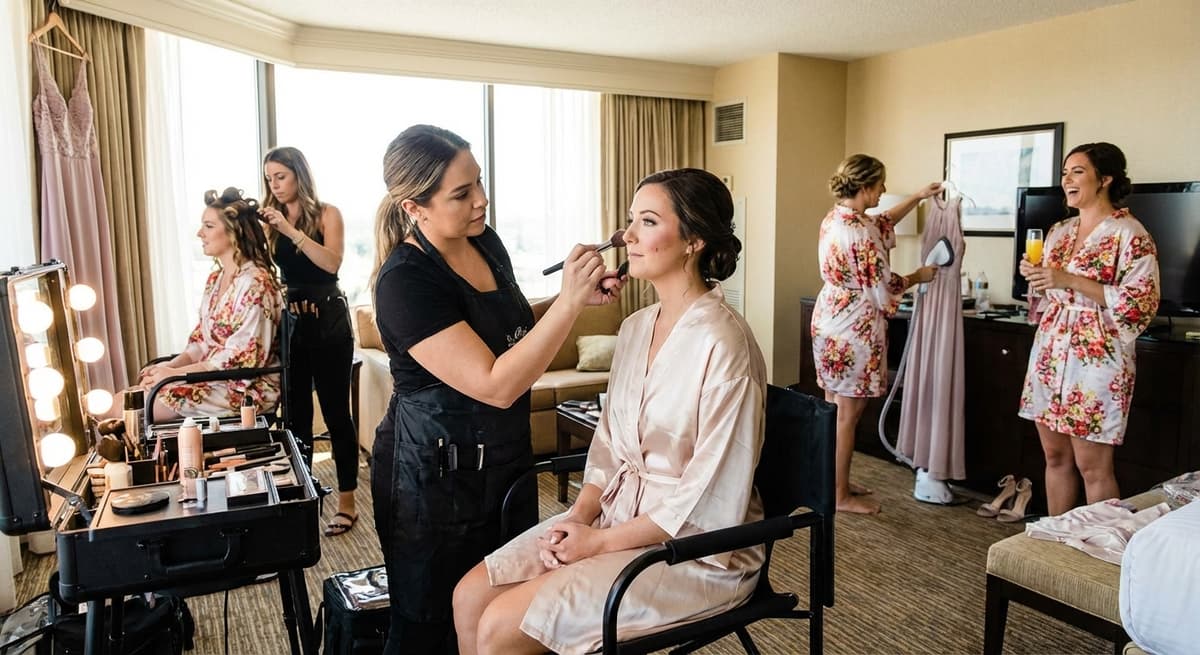
Bride having makeup applied by professional makeup artist while bridesmaids get ready in background

The Getting-Ready Room Game Plan

Here's a sample morning timeline for a 3 PM first look that actually works:

11:00 AM – Bridesmaids start hair and makeup

11:30 AM – Breakfast or light lunch delivered
Eat BEFORE putting on your dress. This is non-negotiable.

12:30 PM – Bride starts hair

1:00 PM – Photographer arrives, shoots details

1:30 PM – Bride starts makeup

1:45 PM – Bridesmaids get dressed

2:00 PM – Bride gets dressed
Photographer captures this moment

2:15 PM – Bridesmaid portraits with bouquets

2:30 PM – Final touch-ups, everyone ready

2:45 PM – Depart for first look location

This schedule gives everyone room to breathe. No one is rushing, and there's time to fix a broken nail or touch up makeup. That's the goal.

Compare that to what I see too often: bride starts hair at 1 PM, makeup at 1:45 PM, photographer arrives at 2 PM, bride tries to get dressed at 2:15 PM while photographer is waiting, first look is supposed to be at 2:30 PM but bride isn't ready until 3 PM, everything spirals from there. Don't do that to yourself.

5 Common Wedding Timeline Mistakes

Let's talk about where timelines go sideways. These are the issues I see over and over.

Mistake 1: Not Adding Travel Time

You're getting ready at a hotel. Your ceremony is at a venue 20 minutes away. So you plan to leave 20 minutes before ceremony time, right?

That's not enough time.

Add 50% more time than GPS says. Minimum. Add even more if:

  • It's a weekend with traffic
  • Your dress requires careful transportation (you can't just hop in an Uber)
  • You're moving a group of people, not just yourself
  • Parking will be complicated
  • You're in a city (traffic is always worse than you think)

That "20-minute drive" needs 30 minutes in your timeline. Maybe 40 if you're in LA or NYC.

I watched a bride try to transport herself, her mom, and three bridesmaids from a hotel to a venue in downtown Chicago. Google said 15 minutes. Reality? 35 minutes because of Saturday afternoon traffic plus time to find parking plus time to wrangle everyone out of the car without wrinkling dresses. Ceremony started late. Domino effect for the entire day.

Mistake 2: Forgetting to Feed Your Wedding Party

Your bridesmaids have been getting hair and makeup done since 11 AM. Your groomsmen arrived at 3 PM. It's now 5 PM and nobody's eaten since breakfast.

Hangry wedding party = disaster.

Budget time and money for:

  • Morning snacks during hair and makeup (bagels, fruit, pastries—nothing messy)
  • Actual lunch delivery for getting-ready crew (sandwiches, salads, something substantial)
  • Vendor meals during reception (your photographer can't shoot for 8 hours on an empty stomach)

I've seen bridesmaids get shaky from low blood sugar during family photos. I've seen groomsmen sneak out to grab fast food and miss the processional lineup. I've seen photographers eating granola bars in corners because nobody fed them.

Don't forget to provide food for your group. It's not expensive—plan for $15-20 per person for lunch—and it makes a big difference in everyone's mood and energy.

Mistake 3: Underestimating Family Photo Chaos

On paper, family photos should take 30 minutes. In reality? 45-60 minutes. Minimum.

Why? Because:

  • Aunt Carol went to the bathroom
  • Dad's boutonniere fell off and needs to be re-pinned
  • Nobody can find the flower girl (she's hiding under a table eating cake)
  • Grandma needs help walking to the photo location
  • Someone's definitely getting a phone call mid-photo
  • Uncle Bob is telling a story and won't stop talking
  • Your photographer needs to adjust lighting for outdoor shots
  • Large groups take forever to arrange

The fix:

  • Create a detailed shot list beforehand (not day-of)
  • Assign a family member to wrangle people (someone organized and slightly bossy)
  • Tell everyone they need to be available 10 minutes before you actually need them
  • Consider doing immediate family before the ceremony, extended family after
  • If you're short on time, skip photos with distant relatives—you probably won't look at those pictures later.
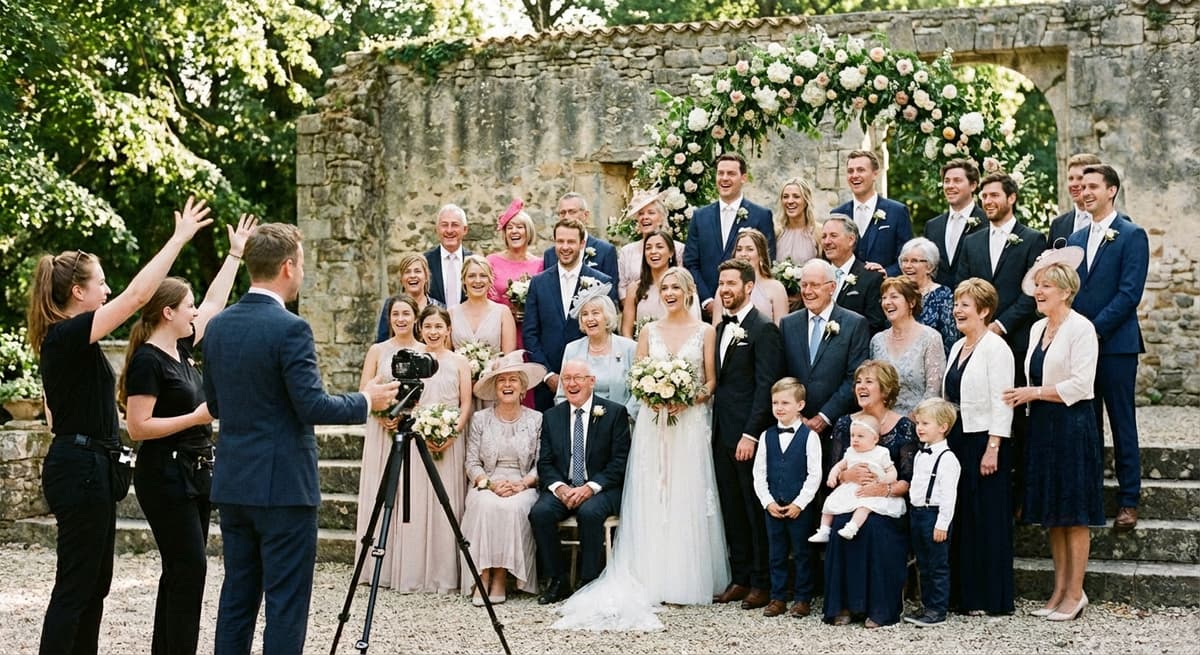
Large extended family group photo at wedding ceremony with photographer directing everyone

Mistake 4: Skipping Sunset Photos

If your ceremony is at 5 PM and reception immediately after, you'll be eating dinner during golden hour—the most beautiful light of the day.

Your photographer knows this. That's why the best timelines include a "sneak away for sunset" moment around 7:30 PM (depending on season and location).

Plan for:

  • 15-20 minutes to step away during reception
  • Your DJ or coordinator announcing you'll be back shortly
  • Your planner or coordinator ensuring you actually leave (you'll get caught up talking to guests)

These sunset portraits are often couples' favorite photos from their entire wedding. The light is magical. You're relaxed because the ceremony pressure is over. You've had a drink or two. The photos are always stunning.

If you don't set aside time for sunset photos, it probably won't happen. You'll be eating dinner, the sun will set, and you'll miss the chance for those beautiful pictures.

Check sunset time for your specific date and location. Build in 15-20 minutes around 30-45 minutes before sunset. Your photographer will thank you.

Mistake 5: No Cushion for Ceremony Delays

Ceremonies rarely start exactly on time. Ever. Guests trickle in late. The officiant needs last-minute instructions. Someone's adjusting the flower arch. The sound system has a glitch.

Plan for your ceremony to start 10-15 minutes after the invitation time. This is built-in buffer.

If your invite says 5:00 PM, plan your actual timeline for 5:10 PM or 5:15 PM start. Guests who arrive on time won't mind waiting 10 minutes—that's what prelude music is for. But if you start early, late guests miss the ceremony entirely. And trust me, Aunt Linda will never forgive you if she misses watching you walk down the aisle because she hit traffic.

I've been to weddings that started "on time" and half the guests missed the processional. I've been to weddings that built in a buffer and everyone relaxed because there was no stress about being exactly on time.

Build the buffer. Your vendors know you're doing this. Your guests won't notice. And you won't be standing at the back of the aisle looking at empty seats where people are supposed to be sitting.

Wedding Ceremony Timeline: What Actually Happens During Those 30 Minutes

Let's break down the ceremony itself, minute by minute. Most couples don't think about this level of detail, but it helps to visualize the flow.

5:00 PM – Prelude music begins
Guests are seated, ambient music plays, sets the mood

5:10 PM – Officiant, groom, and groomsmen take positions
The "we're about to start" signal

5:12 PM – Grandparents seated (traditional processional)
If you're doing this—some couples skip it

5:14 PM – Parents seated
Mother of the bride is usually last to be seated

5:16 PM – Wedding party processional begins
Bridesmaids and groomsmen walk down the aisle (about 30 seconds per pair)

5:20 PM – Bride's entrance
Music changes, everyone stands, this is the moment

5:23 PM – Ceremony begins
Welcome from officiant, readings, vows, ring exchange

5:35 PM – Pronouncement and kiss
You're married

5:36 PM – Recessional
You walk back down the aisle as a married couple

5:40 PM – Ceremony officially ends
Guests directed to cocktail hour, you go to remaining family photos

Obviously, this varies based on cultural and religious elements. Catholic ceremonies can run 60 minutes. Jewish ceremonies have different processional orders. Hindu ceremonies are multi-hour affairs. Secular ceremonies might be 15 minutes.

Adjust accordingly. Just know the basic structure so you can time everything else around it.

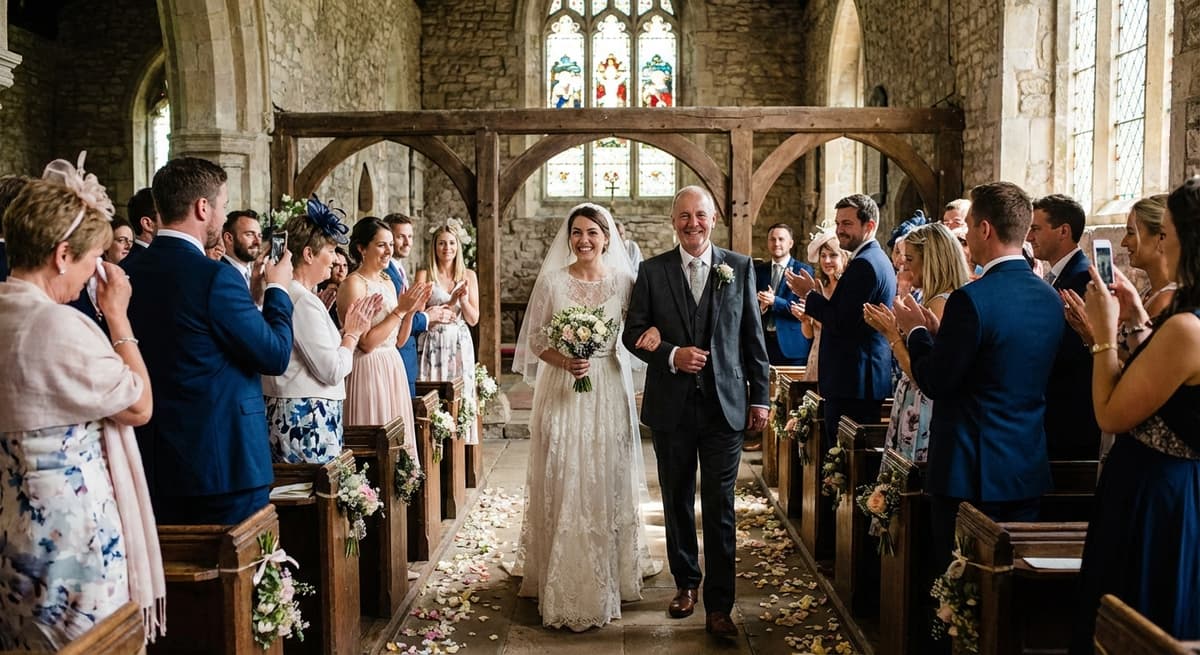
Bride walking down aisle during wedding ceremony with guests standing and watching

Ready to build your complete wedding plan? Your timeline is just one piece. See how everything connects when you plan with tools that automatically adjust to your specific venues, travel logistics, and preferences.

Start planning with ItsaYes →

Download Your Free Wedding Timeline Templates

Now let's get practical. Templates are a great way to start organizing your ideas.

We've created downloadable PDF templates for every scenario covered in this guide:

  • 5 PM ceremony with first look
  • 5 PM ceremony with two locations and first look
  • 5 PM ceremony without first look
  • 5 PM ceremony with two locations without first look
  • Morning brunch wedding
  • Micro wedding

Each template includes:

  • Hour-by-hour breakdown
  • Vendor coordination notes
  • Space to customize for your specific details
  • Printable format for day-of use
  • That "Details" column where you can add your own notes for each time block

These PDFs are great for dumping your initial ideas and thinking through the flow. Print them out, mark them up with a pen, share them with your partner or your mom or your wedding party.

The thing about PDF templates is that they're static. If you change your ceremony time from 4 PM to 5 PM, you have to recalculate everything yourself. If you decide to add a first look, you'll need to rebuild the whole timeline.

That's why after you've used the PDFs to get your initial ideas down, I recommend moving to something more dynamic.

Inside ItsaYes, here's exactly what happens:

You create your timeline once. Input your preferences: ceremony time, first look or no, how many people getting hair and makeup, venue locations, number of events.

The AI assistant asks clarifying questions to understand your specific situation. Then it generates a realistic timeline with proper time blocks.

But the magic is what happens next: every time you adjust something, the entire timeline auto-recalculates.

Change ceremony time? Everything before and after adjusts automatically.
Add a second venue? Travel buffers appear.
Decide to do a first look after all? The whole structure reorganizes.

And you still have that Details column where you can write whatever you want for each block. The system gives you structure. You add the personal touches.

You can share the timeline with vendors directly from the platform. Update it as plans evolve. Print it whenever you want. And on your wedding day, everyone's working from the same up-to-date schedule.

Sarah and Mike, who I mentioned earlier, started with a PDF template to plan the basics. But when they switched to ItsaYes and used a dynamic timeline that updated as they made changes, they said it was like switching from a paper map to Google Maps. Both work, but one is much easier.

Final Tips for a Stress-Free Wedding Day

Now that you have your timeline, here's how to follow it without feeling stressed or overwhelmed.

Assign a timeline enforcer. This is your wedding planner, day-of coordinator, or that friend who's annoyingly punctual (you know who they are). Someone needs to be watching the clock and gently moving things along. That person is NOT you on your wedding day.

Communicate early and often. Send your timeline to vendors a month out. Confirm it a week before. Have printed copies day-of. Over-communication is impossible when it comes to timelines.

Add more buffer time than you think you'll need. If things move faster, you get a break. If they take longer, you're still on track. A tight schedule causes stress, but a flexible one keeps things calm.

Don't worry about making everything perfect. Something will run late, someone might miss a cue, or a photo might take longer than planned. That's okay. Your timeline is a guide, not a strict rule. Be flexible.

Trust your vendors. You hired professionals for a reason. If your photographer says we need 45 minutes for family photos, believe them. They've done this before. You haven't.

The couples who have the best wedding days aren't the ones with the perfect timeline. They're the ones who have a solid plan and the flexibility to roll with the inevitable hiccups.

Your timeline is just a roadmap. The real goal is marrying the person you love, surrounded by your favorite people. Don't get so focused on the schedule that you miss out on enjoying the day.

Now, go create your timeline. Make it realistic, share it with everyone who needs it, and on your wedding day, let someone else keep track of the schedule so you can enjoy being married.

FAQs About Wedding Day Timelines

How far in advance should I finalize my wedding timeline?

About one month before your wedding. This gives you time to share it with vendors, make adjustments based on their feedback, and communicate it to your wedding party. Any earlier and things will probably change. Any later and vendors won't have enough lead time.

What's the ideal length for a wedding reception?

Most receptions run 4-5 hours. That's enough time for cocktail hour, dinner, toasts, cake cutting, and 2-3 hours of dancing. Anything longer and guests start to fade. I've been to 6-hour receptions where the dance floor was empty by hour 5 because everyone was exhausted.

Do I really need a first look?

No, it's completely personal preference. The practical benefit: you'll finish most photos before the ceremony and can enjoy cocktail hour with guests. The traditional approach: seeing each other for the first time at the altar creates that big emotional moment in front of everyone. Neither is right or wrong. Choose based on what feels right for you.

How long should cocktail hour actually be?

60-75 minutes is standard. It needs to be long enough for guests to get drinks, appetizers, and socialize without feeling rushed. But not so long that they're standing around wondering when dinner is happening. I've been to cocktail hours that went 90 minutes and guests were getting restless.

What if my ceremony runs late?

Build buffer time into your timeline so a 10-15 minute delay doesn't cascade into chaos. If your ceremony is supposed to start at 5 PM, plan the rest of your timeline as if it starts at 5:15 PM. That way if it actually starts on time, you're ahead of schedule. If it runs late, you're still on track.

Should vendors eat at the same time as guests?

Your photographer, videographer, and planner typically eat during guest dinner service—but in shifts so someone's always working. Your band or DJ usually eats before guests so they're ready to perform. Your caterer handles their own team's meal breaks. Make sure vendor meals are in your catering contract and timeline.

How do I account for travel time between ceremony and reception venues?

Add 50% more time than GPS estimates. A 20-minute drive becomes 30 minutes minimum. Factor in loading everyone into cars, potential traffic, parking at the second venue, time for touch-ups upon arrival, and inevitable delays. Better to budget 40 minutes and arrive early than budget 20 and arrive late.
Keep reading

You might also like