4 PM Ceremony Timeline: The Perfect Wedding Flow
Author
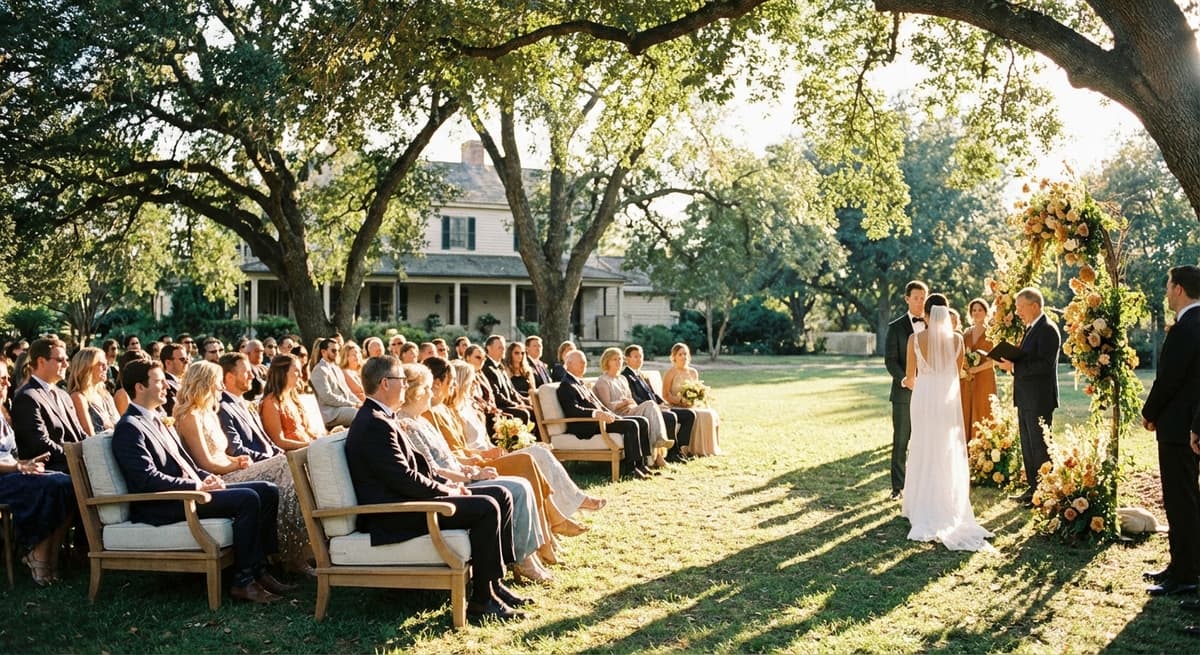
A 4 PM ceremony is the most popular wedding start time, and it's easy to see why. This schedule lets the day flow smoothly from getting ready in the morning to celebrating at the reception. Couples often say they're much happier with this timing compared to earlier or later starts.
With this timeline, you have plenty of time to get ready in the morning, starting at 7:30 AM. The ceremony and portraits benefit from great natural light, and the reception ends at 10:30 PM. Your photographer can work in ideal conditions, dinner is served at a comfortable hour, and you get to enjoy cocktail hour with your guests instead of missing it for photos.
Family photos often take about 50 minutes instead of the planned 30, and hair and makeup can run 15 minutes late. Planning for these common delays helps keep your whole day on track.
Ready to build your complete wedding plan? Your timeline is just one piece. See how everything connects when you plan with tools that automatically adjust to your specific venues, travel logistics, and preferences.
Start planning for freeWhy 4 PM is the "Golden" Start
A 4 PM ceremony solves three big wedding problems: feeling rushed in the morning, dealing with bad lighting, and having dinner too late.
Morning prep that works:
- 11:00 AM: Hair and makeup start
- 12:30 PM: Everyone dressed and ready
- 2:00 PM: First look with 90-minute buffer
- No 5 AM wake-ups or afternoon stress
For comparison, a 2 PM ceremony means your team has to arrive before sunrise, while a 6 PM start leaves everyone rushing through the afternoon.
Light that looks incredible:
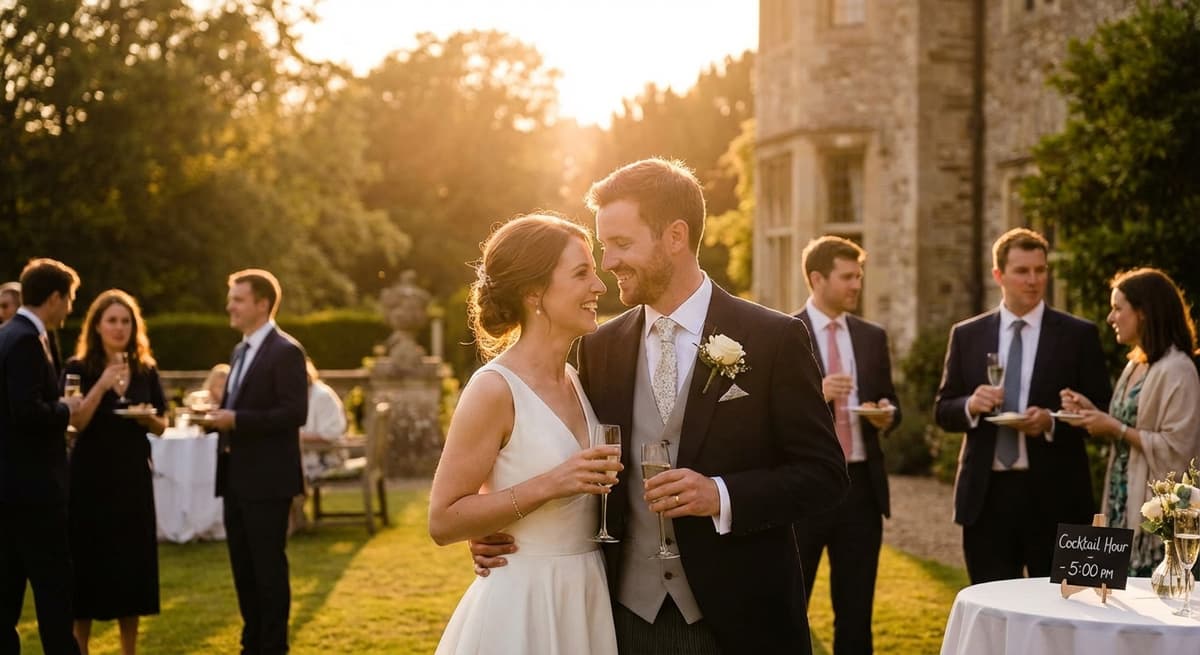
Spring and fall are ideal for a 4 PM ceremony, which happens 2-3 hours before sunset. This timing gives you soft afternoon light instead of harsh midday sun. Photographers can capture the ceremony in beautiful natural light, then take golden hour portraits during cocktail hour from 5:30 to 6:00 PM.
For winter weddings, remember that the sun sets early, around 4:45 PM in December. In summer, you'll have daylight until about 8:30 PM. Always check the sunset time for your date before making final plans.
Reception timing that makes sense:
| Event | Time | Duration |
|---|---|---|
| Ceremony | 4:00 PM | 30 min |
| Cocktail Hour | 4:45 PM | 2.25 hours |
| Dinner Service | 7:00 PM | 2 hours |
| Dancing | 9:00 PM | 2.5 hours |
| Exit | 10:30 PM | — |
Guests won't be hungry waiting for dinner or left wondering when the meal will start. The energy builds during dancing and winds down naturally by 10:30 PM, which fits most venue schedules that need to get out by 11 PM.
First Look Timing (2 PM)
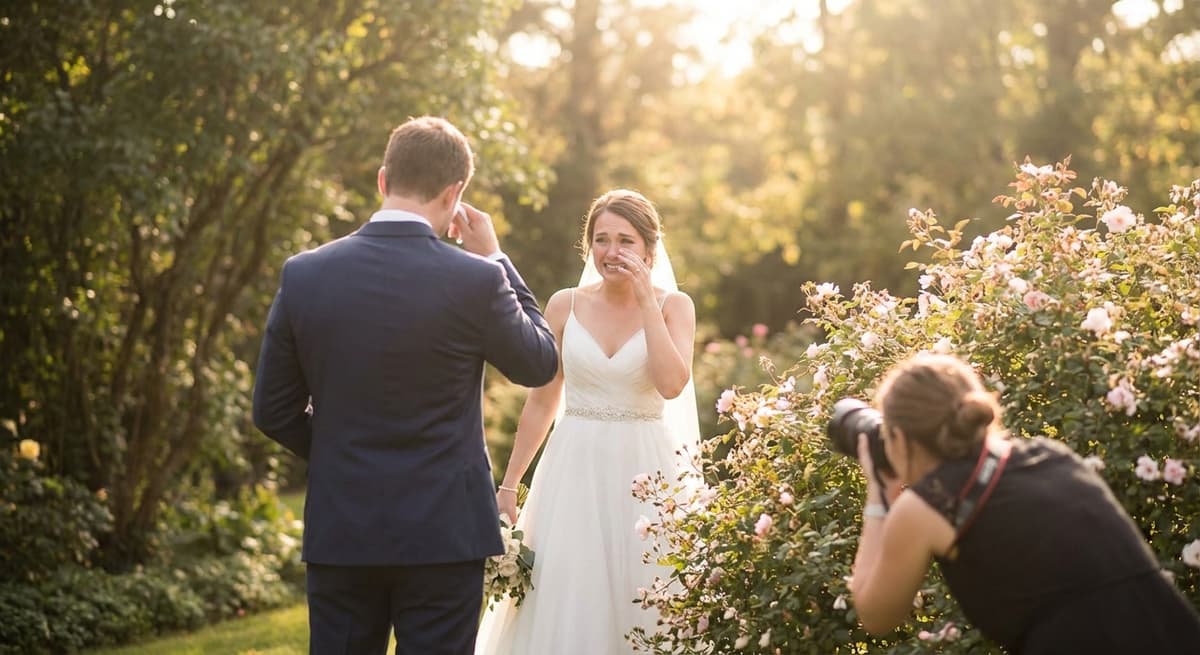
When deciding on a first look, ask yourself: would you rather spend cocktail hour with your guests or be busy taking photos?
With a 2 PM first look:
- 2:00 PM — Private first look (20 minutes)
- 2:20 PM — Couple portraits (30 minutes)
Without a first look:
- 4:00 PM — Ceremony starts
- 4:35 PM — Cocktail hour begins (without you)
- 4:35-5:45 PM — All photos happen now
- Couple portraits: 30 minutes
- Bridal party: 30 minutes
- Family: 30 minutes
- Extended family: 20 minutes
- 5:45 PM — You join cocktail hour for 15 minutes
- 6:00 PM — Reception entrance
You end up missing most of your cocktail hour, about 70 minutes. By the time you join, the best appetisers may be gone, and your photographer will have to hurry as the light fades. Sometimes, extended family photos get rushed or skipped.
Quick comparison:
| Factor | With First Look (2 PM) | Without First Look |
|---|---|---|
| Photos done pre-ceremony | 90% | 0% |
| Cocktail hour attendance | 60 minutes | 15 minutes |
| Photographer pressure | Minimal | Intense |
| Golden hour risk |
The hiding schedule:
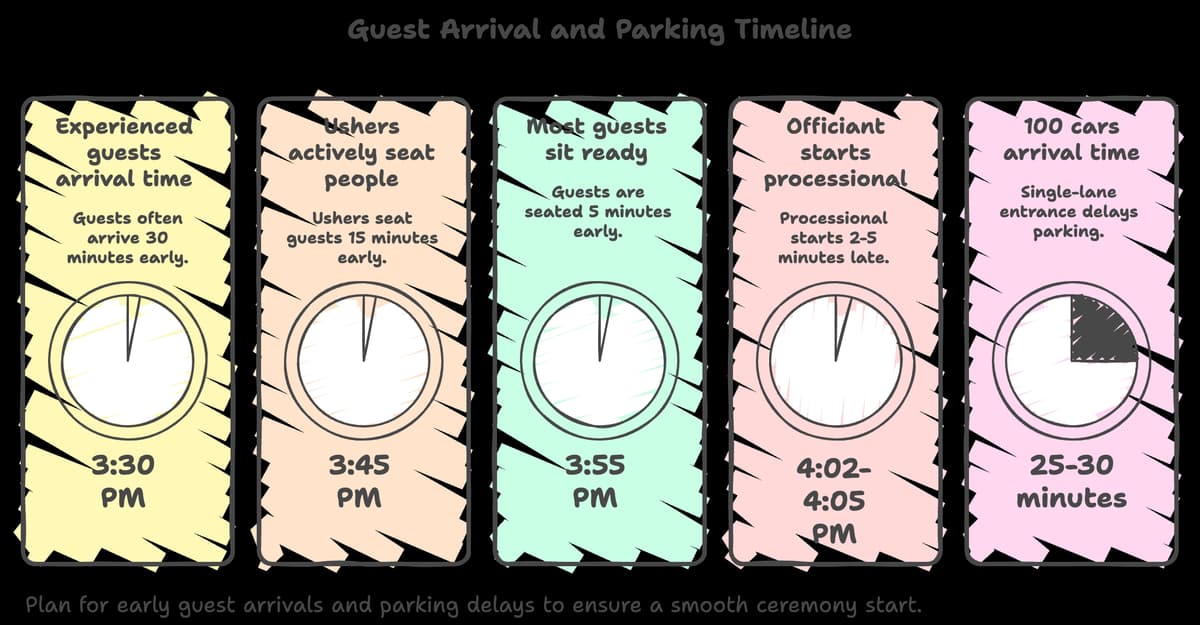
Your wedding party vanishes from sight by 3:25 PM:
- 3:25 PM — Retreat to separate private rooms
- 3:30 PM — First guests arrive
- 3:50 PM — Most guests seated
- 4:02 PM — Processional starts
- 4:05 PM — Bride walks
Set up two separate hiding spots: one for the bride and bridesmaids, and another for the groom and groomsmen. Make sure these are far from the ceremony entrance so early guests don't see you by accident.
The 10:30 PM Grand Exit
A 4 PM ceremony naturally leads to a 10:30 PM exit when working backwards from most venues' 11 PM curfew.
Evening flow:
- 7:00 PM — Dinner starts
- 8:45 PM — Dinner wraps, toasts finish
- 9:00 PM — Dancing begins
- 10:25 PM — DJ announces last song
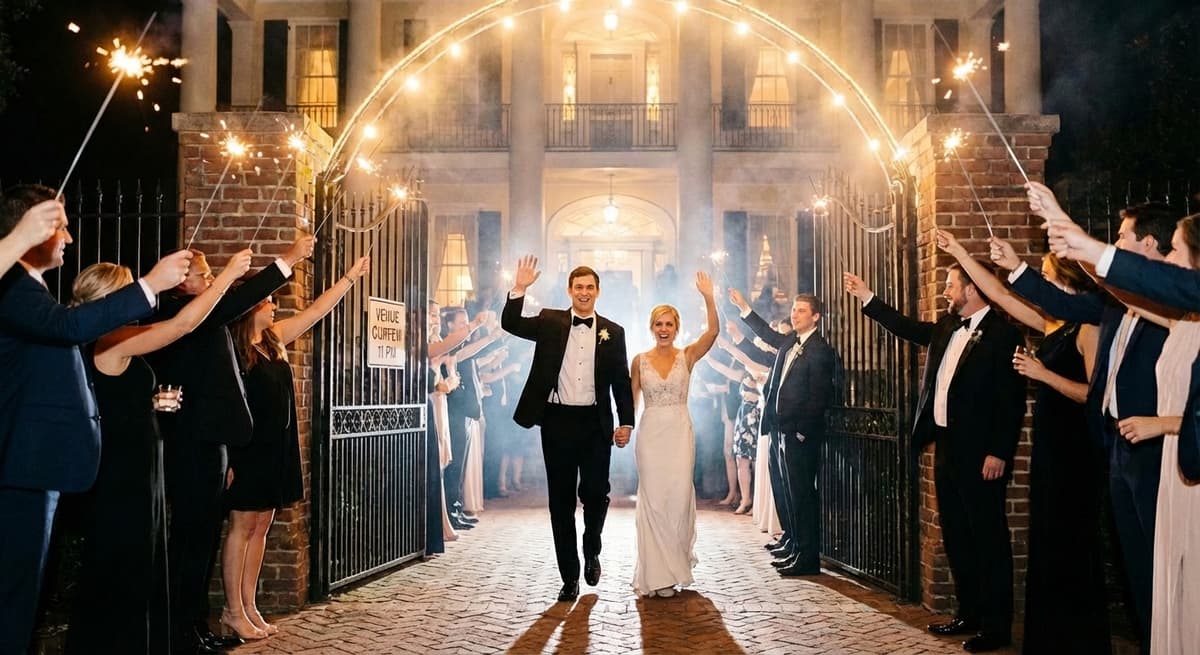
- 10:30 PM — Grand exit
- 11:00 PM — Venue cleared
You'll have half hours of lively dancing from 9:00 to 10:30 PM. By the end, older guests have usually left, parents are ready to wind down, and six hours of celebration feels just right.
Exit styles:*
| Style | Setup Time | Notes |
|---|---|---|
| Sparkler tunnel | 10 min | Needs fire marshal approval |
| Bubble send-off | 2 min | Easier permits, softer look |
| Classic car | 15 min | Position vehicle at 10:15 PM |
| Fake exit | 5 min | Leave then return for after-party |
Staying later:
Want to party past 10:30 PM? Two options work.
Extended venue hours: Book until midnight or 1 AM (pricey). Expect half your guests to leave after 10:30 PM. Provide late-night food to keep remaining guests happy.
Separate after-party: Move to a hotel bar, club, or Airbnb. Coordinate transportation. Maybe 30-40 people actually come.
Most wedding planners suggest ending at 10:30 PM for a 4 PM ceremony. By then, guests are winding down, and six hours of celebration feels just right. Having a planned exit makes things clear for everyone: guests know when to leave, you get a proper send-off, and everyone gets home at a reasonable hour.