Planning a Wedding in 6 Months: Step-By-Step Guide
22 min
Planning a Wedding in 6 Months: Step-By-Step Guide
Author
The ItsaYes TeamAuthor
Believe it or not, planning a wedding in 6 months isn’t just possible, for many decisive couples, it’s actually better. The trick is swapping endless deliberation for focused, smart decisions. A shorter timeline keeps the excitement alive, forces you to get crystal clear on what you want, and helps you sidestep that dreaded planning fatigue.
Embrace The 6-Month Wedding Plan
That old idea that you need a year (or more!) to plan a wedding is quickly becoming a myth. For today's couples, a tight timeline is often a huge advantage. It transforms a potentially overwhelming marathon into an exciting, manageable sprint.
Instead of spending months second-guessing every tiny choice, you make a confident decision and move on. It’s about being efficient, not hasty. A shorter engagement keeps the momentum high and pushes you to focus on what really matters, the venue, the guest experience, the overall vibe, while letting go of the small stuff that causes so much stress over a longer planning period.
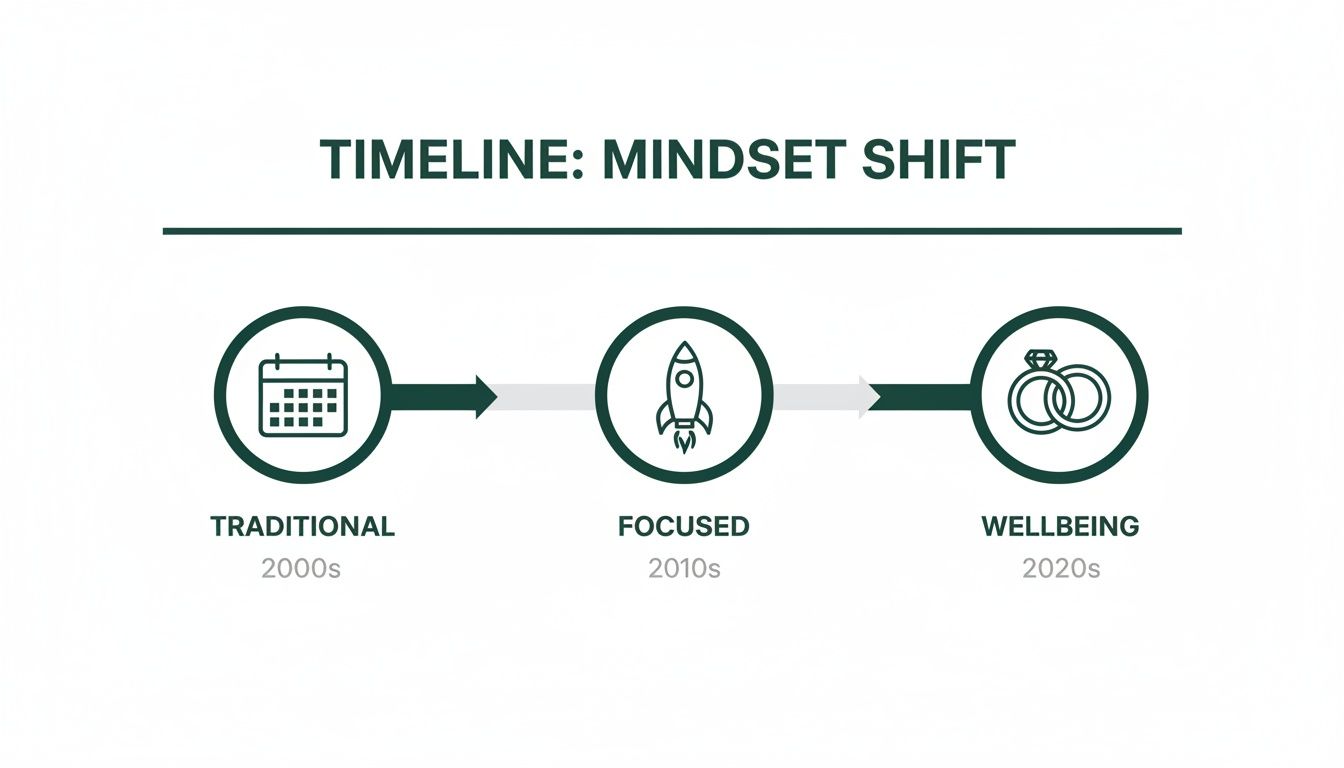
Shifting Your Planning Mindset
Here's a little secret from inside the industry: wedding planning timelines have been getting shorter for years. A 6-month plan is far more common than you might think. Before 2020, the standard was easily 12-18 months. Now, we're seeing a major shift toward faster planning windows, especially in cities where couples are used to making big life decisions without overthinking it. You can actually explore more about these industry shifts to see just how normal this timeline has become.
This shift isn't just about being busy; it's about a change in what couples value.
The real takeaway? Today’s couples want a calm, organized process that fits their lives, making a six-month plan the new sweet spot.
This is where having a smart system changes everything. Forget juggling scattered spreadsheets and a million Pinterest boards. A platform like pulls your entire plan into one calm, central hub. It helps you turn inspiration into a clear plan, breaking down the next six months into simple, manageable steps.
To succeed with a shorter timeline, you need to think a little differently. It's less about leisurely browsing and more about decisive action.
The 6-Month Wedding Planning Mindset Shift
Traditional Planning Mindset (12+ Months)
Focused 6-Month Planning Mindset
"I have plenty of time to explore every option."
"What are the top 3 options that fit our vision and budget?"
"Let's visit 10 venues over the next few months."
"Let's research online and narrow it down to our top 2-3 to visit this weekend."
"I'll think about the guest list later."
"The guest list is our first priority; it drives every other decision."
DIY projects can be started anytime.
"Does this DIY project save significant money or add unique value? If not, we hire a pro."
Hesitation and second-guessing are part of the process.
"Trust your gut. Make a decision and move forward."
Adopting this focused approach doesn't mean you have to compromise on your dream wedding, it just means you get there without the year-long headache.
The secret to planning a wedding in 6 months isn't rushing, it's clarity. When you know your priorities from the start, every decision becomes simpler, faster, and more aligned with the celebration you truly want.
By getting into this headspace and using the right tools, you can actually enjoy your engagement and pull off a beautiful, memorable wedding without the prolonged stress. This guide will give you the month-by-month roadmap to get you there.
Months 6 and 5: Building Your Wedding Foundation
Alright, let's be real. The first sixty days of planning a wedding in six months are a sprint. It's intense, it’s a blur, but it is without a doubt the most important phase. This is where you lay the entire groundwork for your celebration.
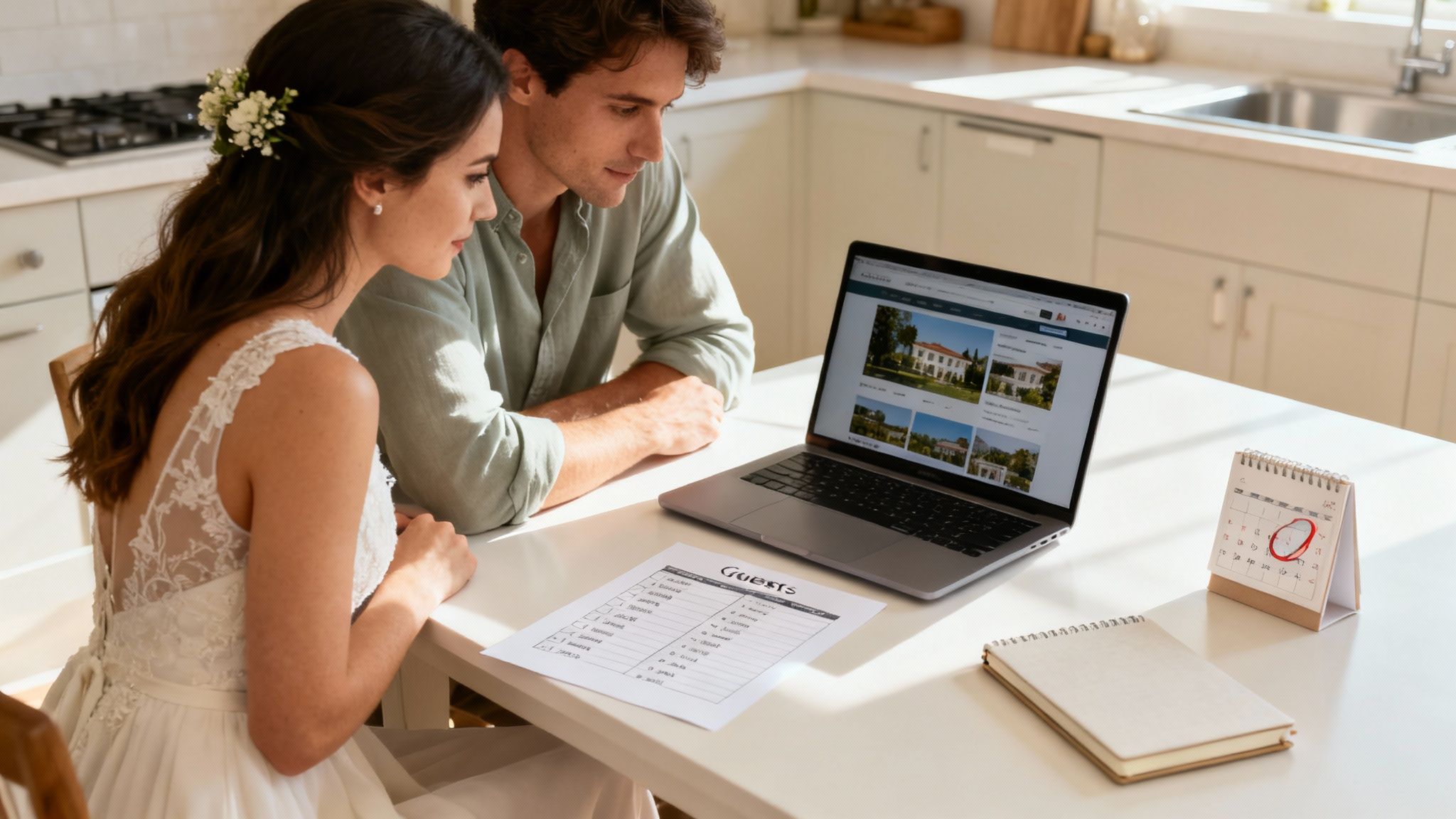
Think of it as locking down the three interconnected pillars of your wedding: your budget, your guest list, and your venue. Get these right, and the rest of the process becomes remarkably smoother. These three things don't exist in a vacuum; they're in a constant dance. Your budget dictates how many people you can invite, and that number determines the kind of venue you can even look at. Trying to decide on one without the others is just asking for a headache.
The All-Important Budget Conversation
Before you even think about pinning a single tablescape, you and your partner need to sit down and have a completely candid conversation about money. This isn't just about landing on a total number; it's about figuring out your priorities.
What are your top three must-haves? Is it jaw-dropping photography you'll treasure forever? A live band that guarantees a packed dance floor? Or is it all about serving the most incredible food and wine?
Knowing your non-negotiables from day one helps you put your money where it matters most. This is especially true on a tight timeline where every dollar and every decision feels that much bigger.
Key Milestone: By the end of Month 6, your goal is to have a realistic, line-item budget that includes a 10-15% contingency fund. This isn't just a number in a spreadsheet; it's your financial roadmap for every single decision you're about to make.
Many couples are actually choosing shorter engagements specifically because of financial pressures. A recent report from The Knot Worldwide found that roughly 8 in 10 couples said the economy has impacted their planning. With a staggering 52% reporting that their initial budget feels lower than the actual cost of a wedding, it’s clear why a focused, six-month plan is so appealing, it helps you stay in control.
Draft Your Guest List Before You Fall in Love with a Venue
I've seen it happen a hundred times. A couple books a gorgeous venue they're obsessed with, only to realize their "must-invite" list is way bigger than the space can hold. It’s a heartbreaking and often costly mistake that leads to painful cuts or losing a deposit.
Avoid this by creating three lists before you start touring:
The A-List: These are your ride-or-dies. Immediate family and your absolute closest friends. If they can't be there, you wouldn't do it.
The B-List: Your next circle out. Close friends, beloved extended family, and key colleagues you'd really love to celebrate with.
The C-List: The "nice-to-have" guests. Think parents' friends or distant relatives you'd invite if the space and budget magically expanded.
This tiered system gives you instant flexibility when you start getting quotes. You can immediately see how trimming the C-list (or even part of the B-list) impacts your bottom line.
Finding and Booking Your Venue
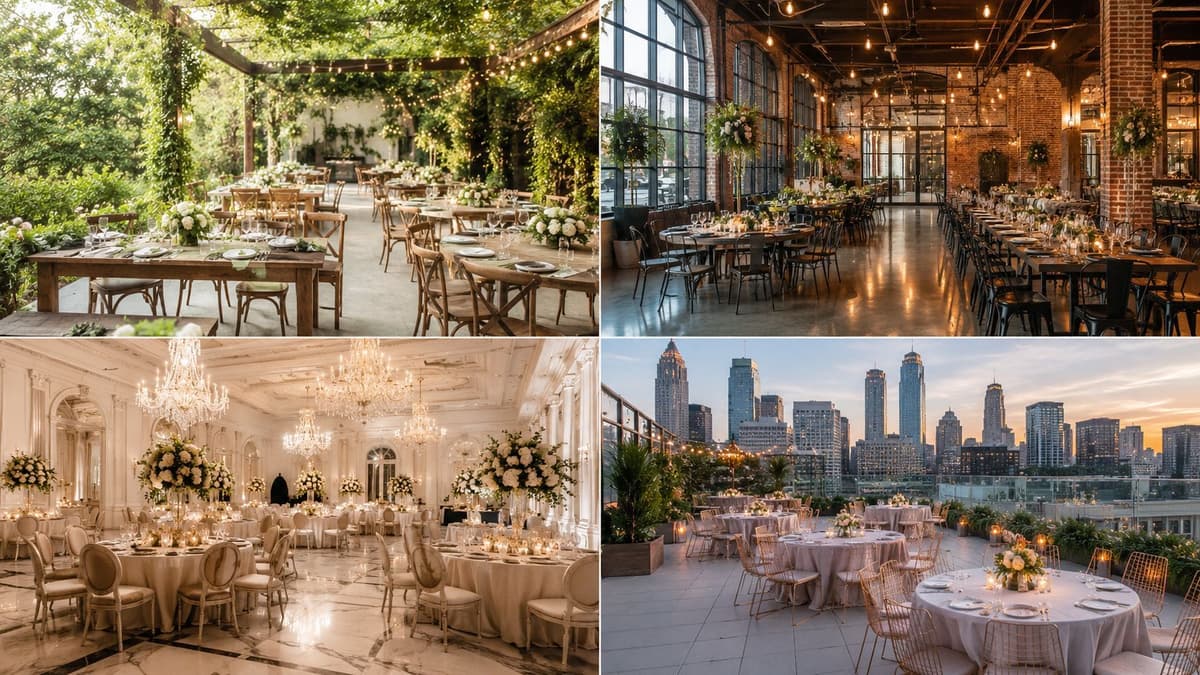
With your budget set and a solid guest estimate in hand, the venue hunt is officially on. When you're working with a six-month timeline, flexibility is your superpower. That prime Saturday in June? It's probably been booked for a year. But a Friday or a Sunday at that same dream venue might just be open, and often at a much friendlier price point.
Think outside the traditional ballroom box. Restaurants with great private rooms, art galleries, modern breweries, and even city parks often have more last-minute availability. Plus, they come with built-in character, which can seriously cut down your décor budget.
Common Mistake to Avoid: Don't get seduced by the rental fee alone. Always ask for a full, all-in quote that includes service charges, taxes, gratuity, and any mandatory extras like security or valet. That "bargain" price can double in a heartbeat if you're not looking at the fine print.
As you juggle these huge decisions, keeping everything in one central hub is a lifesaver. Instead of scattered spreadsheets and frantic texts, a dedicated platform connects all the dots. Using a smart wedding budget app lets you plug in a venue quote and instantly see how it affects your entire spending plan. That kind of clarity is what lets you build a rock-solid foundation for the rest of your planning.
Months 4 and 3: Assembling Your Vendor Team
Okay, take a deep breath. You've locked in your budget, guest list, and venue. That's the heavy lifting, the absolute foundation of your wedding. Now for the really fun part: assembling the creative team that will bring your vision to life.
This two-month stretch is all about booking the people who will capture the memories, set the vibe, and make your day beautiful. On a six-month timeline, we have to be strategic. The goal is to lock in the vendors who have limited availability first.
Think of this as a sprint to secure the talent that defines the look, feel, and energy of your celebration. Procrastination isn't an option, but with a clear plan, it's going to feel exciting, not overwhelming.
The High-Demand Vendor Booking Order
Not all vendors are created equal when it comes to booking timelines. Some professionals, like photographers or bands, can only be in one place at one time. This means their calendars fill up incredibly fast, often more than a year out. They are your top priority.
Here’s the order I recommend focusing on:
Photographer & Videographer: These artists are almost always the first to get booked after the venue is secured. Their style will literally define how you remember your wedding day for the next fifty years, so it's a huge decision.
Band or DJ: Music is the heartbeat of your reception. A killer band or an intuitive DJ knows how to read the room and keep the energy electric. The best ones are always in high demand.
Caterer & Florist: If your venue doesn't have an in-house caterer, this is your next stop. Food is a massive part of the guest experience. At the same time, florists need a good amount of lead time to source specific blooms and map out your designs.
Key Milestone Error to Avoid: One of the most common mistakes I see couples make is hiring vendors based on price alone without really looking at their style. A budget-friendly photographer isn't a bargain if their dark, moody photos clash with your vision for a bright, airy celebration. Always, always ask to see full wedding galleries, not just the Instagram highlights, to make sure their work truly resonates with you.
How to Vet Vendors When You're Short on Time
You don't have months to agonize over every decision, so your vetting process needs to be sharp and efficient. A great place to start is by asking your venue for their preferred vendor list. These are pros who already know the space inside and out and have a proven track record there.
When you reach out, be direct about your date and your condensed timeline. Come to every consultation call or meeting prepared with a list of key questions. This respects everyone’s time and gets you the answers you need, fast.
Must-Ask Questions for Any Vendor:
How would you describe your style or approach in your own words?
Have you worked at my venue before? (A huge plus if they have!)
What, exactly, is included in your standard package? What are the most common add-ons?
Can you walk me through your process, from the day I book you to the wedding day itself?
What is your backup plan in case of a personal emergency?
Staying organized with all the quotes, contracts, and email threads is non-negotiable. A smart platform can be a lifesaver here, acting as a central hub for everything. To see what I mean, check out how a dedicated wedding vendor manager can keep every little detail in one calm, easy-to-find place. The ItsaYes personal AI assistant can even help you compare quotes and flag important clauses in contracts, which is a game-changer for avoiding oversights.
Finding Your Attire Without the Rush
This is also the perfect window to say "yes" to your dress (or suit!). I know, I know, traditional bridal boutiques often quote a 6-to-9-month lead time for custom gowns, but please don't panic. You have amazing options that work for a shorter timeline.
Many bridal shops host sample sales, where you can buy a gorgeous designer gown right off the rack for a serious discount. You can also explore ready-to-wear bridal lines from online brands that often ship within just a few weeks. The key is to be upfront with your consultant about your wedding date so they can immediately show you what's feasible.
Just remember to factor in time for alterations. My rule of thumb is to budget at least 6-8 weeks for this part of the process. You'll likely need two or three fittings to get that absolutely perfect, tailored fit.
Key Milestone: Send Your Save the Dates!
By the end of month four, it's time to make things official for your guests. Get those Save the Dates in the mail. Because your timeline is shorter, this step is absolutely critical. It gives everyone, especially out-of-towners, enough notice to book flights and hotels.
Your Save the Dates don't need to be over the top. They just need to clearly communicate the essentials: your names, the wedding date, and the city and state. Make sure to include your wedding website URL, where guests can find more details as you finalize them. Hitting "send" on these is a huge milestone, it’s the moment the whole celebration starts to feel incredibly real.
Month 2: Crafting the Guest Experience
Okay, deep breath. You’ve booked the big stuff, your venue, your caterer. The wedding is no longer a fuzzy idea; it’s a real event taking shape on the calendar. Now, the focus shifts from the foundational logistics to the very heart of the celebration: your guests.
Month two is all about creating an experience that feels personal and seamless for the people you love. This is where you move from building a party to building memories.
The single most urgent task this month? Getting your official invitations in the mail. With a six-month timeline, you don't have the luxury of waiting around. Sending invites now gives everyone enough time to book flights and hotels, and more importantly, it gets you the RSVP data you need for your final headcount.
Finalizing Your Invitation Suite
Your invitation is so much more than a piece of paper; it’s the first real taste your guests get of the wedding day. While it should absolutely be beautiful, its number one job is to be crystal clear. Get this right, and you’ll save yourself a hundred "just a quick question" texts down the line.
Your invitation package should always include:
The Main Invitation: Who, what, when, where. Clearly state who is getting married, the date, time, and ceremony location. No room for confusion here.
The RSVP Card: Include a firm "reply by" date. My advice? Set it for 3-4 weeks before the wedding. This gives you enough buffer to give your caterer and venue a final, accurate headcount without last-minute scrambling.
Details Card: This is your info-dump spot. Put the reception address here if it’s different from the ceremony, a link to your wedding website, and details on any hotel blocks you've arranged.
Directions/Map: A really thoughtful touch, especially if your venue is a bit off the beaten path or tricky to find with GPS.
Common Mistake to Avoid: A vague or far-off RSVP deadline. On a short timeline, ambiguity is your worst enemy. A firm, relatively close deadline creates a healthy sense of urgency for your guests and ensures you get the numbers you need without having to chase people down in the final, most hectic weeks.
Your Wedding Website: The Information Hub
Think of your wedding website as the digital command center for your guests. It’s where you can put all the extra details that would clutter up the beautiful paper invitation. Honestly, a well-built website is one of the best time-saving tools when planning a wedding in 6 months because it empowers guests to find answers themselves.
Your website is the perfect home for things like:
Accommodation suggestions and travel tips.
Your registry information.
An FAQ section answering all the common questions (What's the dress code? Can I bring a plus-one? Are kids welcome?).
The story of you as a couple!
This central hub dramatically cuts down on your personal admin load, freeing you up to focus on the million other things you need to do. Before you hit "send" on those invites, it's a great idea to do a final cross-check of your list. Our guide on building your wedding guest list can be a huge help here.
From Vows to Cake Tastings
While invitations are the big priority, this month is also packed with some of the most genuinely fun parts of planning. Now’s the time to start weaving in the personal details that will make the day feel uniquely yours.
You’ll be working with your officiant to map out the ceremony, choosing readings, and maybe even starting to write your own vows. And here comes the best part: menu and cake tastings! This is your chance to literally taste the flavors of your celebration. Enjoy it.
Other key tasks for this month include booking transportation if you're providing it for guests (like a shuttle from the hotel to the venue) and planning the rehearsal dinner. By tackling all these guest-focused details now, you're making sure everyone feels looked after from the moment they arrive to the very last song.
The Final Month: Finalizing Every Detail
You’ve made it to the final stretch. The last four weeks are an intense, exciting mix of locking in final details, making last payments, and starting to feel the pure joy of what’s just around the corner. This is the month where your entire six-month plan finally clicks into place and becomes a real, tangible thing.
The key to getting through this month with your sanity intact is to shift your mindset from planning to confirming. Your job isn't to make big decisions anymore; it's to make sure every decision you've already made is locked, loaded, and ready to go. We'll break it down week by week so you know exactly what to focus on.
Four Weeks Out: The Confirmation Blitz
This is your final logistics push. Your RSVP deadline has probably just passed, which means it’s time to (politely) chase down those last few stragglers to get a firm, final guest count. That number is the magic key that unlocks a bunch of other critical tasks.
With that final count in hand, you can:
Give the Final Headcount: Let your caterer and venue know the official number of guests. This is what they'll use to calculate your final invoice.
Create the Seating Chart: This can feel like a high-stakes puzzle, but don't agonize over it. The goal is simply to group people who will have a good time together.
Confirm All Vendor Details: Send one last confirmation email to every single vendor. Double-check their arrival times, the services they’re providing, and when their final payment is due.
Now is also the perfect time to knock out any of those lingering DIY projects. If you’re putting together welcome bags or ceremony programs, get it done now, not the week of the wedding when you'd rather be getting a manicure.
Three Weeks Out: The Legal and Personal Touches
With most of the heavy logistics sorted, this week is all about the official business and the thoughtful little details. Your most important task here is to get your marriage license. Every state and county has different rules, requirements, and waiting periods, so make sure you know exactly what you need to do for your specific location.
This is also a great time to:
Assemble Welcome Bags: If you're giving these to out-of-town guests, get them packed up and ready to be dropped off at the hotel.
Write Thank-You Notes: Get a head start by writing thank-yous for any gifts that have already arrived. Your future self will be eternally grateful.
Review Your Vows: Find a quiet moment to read through your vows one last time and make any final tweaks.
A common myth about planning a wedding in 6 months is that everything will be booked solid. The reality is that demand is now spread across more dates and formats than ever before. Many couples are choosing Fridays, Sundays, or even weekdays to secure their top-choice vendors within a shorter timeframe. You can discover more insights about popular wedding dates on The Crystal Wisconsin blog.
Two Weeks Out: The Timeline and Final Fitting
This is when it all starts to feel incredibly real. You'll likely have your final dress or suit fitting this week, which is always an exciting and emotional moment. Remember to bring your wedding shoes and whatever undergarments you'll be wearing to ensure the fit is absolutely perfect.
Your biggest project for the week is creating a detailed day-of timeline. This document is the single most important tool you have for ensuring your wedding day runs smoothly.
Your day-of timeline is the playbook for your entire wedding. It should detail everything from when hair and makeup starts to when the final centerpiece is packed away. Share it widely with your vendors and wedding party to keep everyone perfectly synchronized.
Your ItsaYes plan is the perfect place to build and store this timeline. It becomes the single source of truth, easily shareable with everyone involved so there’s no confusion about who needs to be where, and when.
The Final Week: Let Go and Delegate
The last week is about self-care, delegation, and trusting the incredible plan you've built. The biggest mistake couples make at this stage is trying to do everything themselves. You’ve worked hard for six months; now it’s time to lean on your support system.
Delegate small, specific tasks to people you trust:
Ask a bridesmaid to be the point-of-contact for vendor questions on the day.
Put your best man in charge of handing out final payments and tips.
Entrust a family member with getting personal items (like your cake knife or guest book) to the venue.
Your only jobs in this final week? Get your nails done, pack for the honeymoon, and get plenty of sleep. You pulled off an amazing celebration in just six months. Now, all that’s left is to show up and enjoy every single second of it.
Common Questions About a 6-Month Timeline
Even with the perfect checklist, pulling off a wedding in six months can feel like it comes with a thousand little questions. It's totally normal. Let's tackle some of the most common worries I see couples have when they're on a shorter timeline, so you can move forward feeling confident, not confused.
Is It Cheaper to Plan a Wedding in 6 Months?
Not automatically, no. But here’s the secret weapon of a short timeline: it’s an incredible defense against budget bloat.
When you have a year or more, "scope creep" is almost inevitable. It's the little things, a small upgrade here, an impulse buy there, that slowly push you over budget without you even noticing. A six-month window forces you to be decisive. You simply don't have time to second-guess every choice or add things you don't truly need.
You're also more likely to find vendors offering deals for off-peak dates like Fridays or Sundays, which tend to be what's available on short notice. The real financial win isn't some magic discount; it's the built-in discipline that keeps your spending focused.
What Is the Biggest Mistake to Avoid?
I see this one all the time, and it's a heartbreaker: booking a venue before you've finalized your guest list and your budget.
It’s so easy to fall in love with a beautiful space and sign on the dotted line, only to realize two weeks later that it can't actually fit all your must-invite family members.
Even worse is when the venue eats up so much of your budget that you have to make painful cuts to things that mattered just as much, like your photographer or catering. Always, always start with the numbers.
Your budget and your guest list are the two pillars holding up your entire wedding. Lock them down first. An AI-powered planner like ItsaYes helps you connect your vision, guest count, and budget from day one, heading off this massive mistake before it even has a chance to happen.
How Do I Find a Wedding Dress in Under 6 Months?
Don't panic! The traditional 9-month custom order isn't your only path. You have several fantastic options.
Start by calling local bridal boutiques and asking specifically about their sample sales. This is where you can buy a gorgeous designer gown right off the rack, often for a serious discount. Many designers also offer rush orders for an added fee, which can slash production time.
Here are a few other great routes:
Ready-to-wear collections: Brands like BHLDN and Jenny Yoo have stunning dresses available online with quick shipping.
Trunk shows: Ask shops if they have any upcoming trunk shows. You might be able to buy a sample from a new collection on the spot.
Secondhand sites: Platforms like StillWhite or Nearly Newlywed are goldmines for like-new dresses.
The key is to start shopping in your first month and be totally upfront with consultants about your date. They are experts at finding beautiful, realistic options that will be ready in time.
How Can I Manage the Stress of a Quick Timeline?
On an accelerated timeline, your two best friends are organization and delegation.
First, get organized. Instead of a chaotic mix of spreadsheets, notebooks, and a million Pinterest boards, use one central platform. A single hub for your vision, budget, and vendor chats keeps everything calm and under control. A personal AI assistant can suggest priorities and organize tasks, so you never feel like you're drowning in details.
Next, learn to delegate. Your friends and family genuinely want to help you. Give them small, specific jobs they can own, like putting together welcome bags or chasing down those last few RSVPs.
Finally, schedule "no wedding talk" time with your partner. Seriously, put it on the calendar. Protecting your relationship and actually enjoying your engagement is the most important part of this whole thing.
Ready to turn your six-month vision into a calm, structured plan? ItsaYes brings your entire wedding, from budget and tasks to vendors and timelines, into one intuitive workspace. Start planning with clarity and confidence today at https://itsayes.io.