Mastering Your Wedding Reception Timeline: An Hour-by-Hour Guide
Author
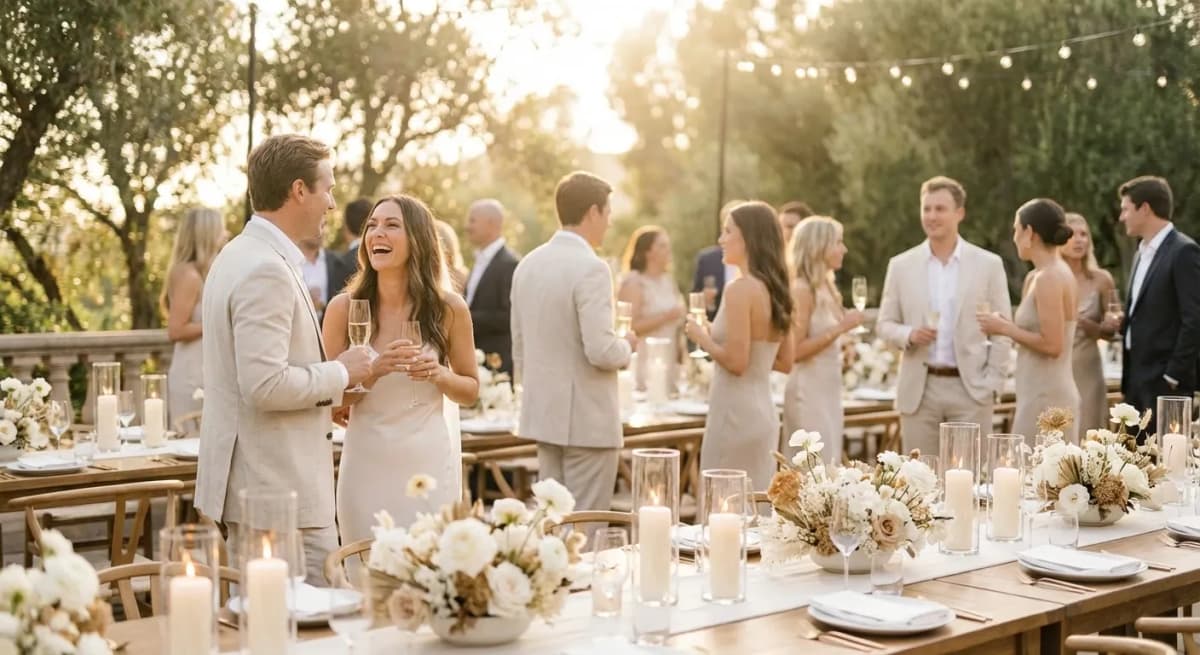
The wedding reception is often the most memorable part of the day, but it can also be the trickiest to plan.
While the ceremony follows a set structure, the reception usually lasts 4 to 6 hours and includes many moving parts. Without a good plan, timing can get off track and stress can build up.
This is where many couples run into trouble.
We hear the same questions again and again:
- When should speeches actually happen?
- Will the cake cutting stop the dancing?
- How long does dinner really take in real life?
This hour-by-hour wedding reception timeline is designed to make planning easier. It shares a planner’s point of view and focuses on what actually works, balancing tradition, guest experience, and realistic timing. It also covers details that many timelines overlook.
Get a clear, realistic hour-by-hour reception plan that keeps your night flowing smoothly, from cocktail hour to dancing, with smart timing for dinner, speeches, and traditions.
Start planning for freeThe Anatomy of a Reception: What Is the Ideal Duration?
Before you plan your reception in detail, it’s helpful to look at the big picture and understand the overall structure.
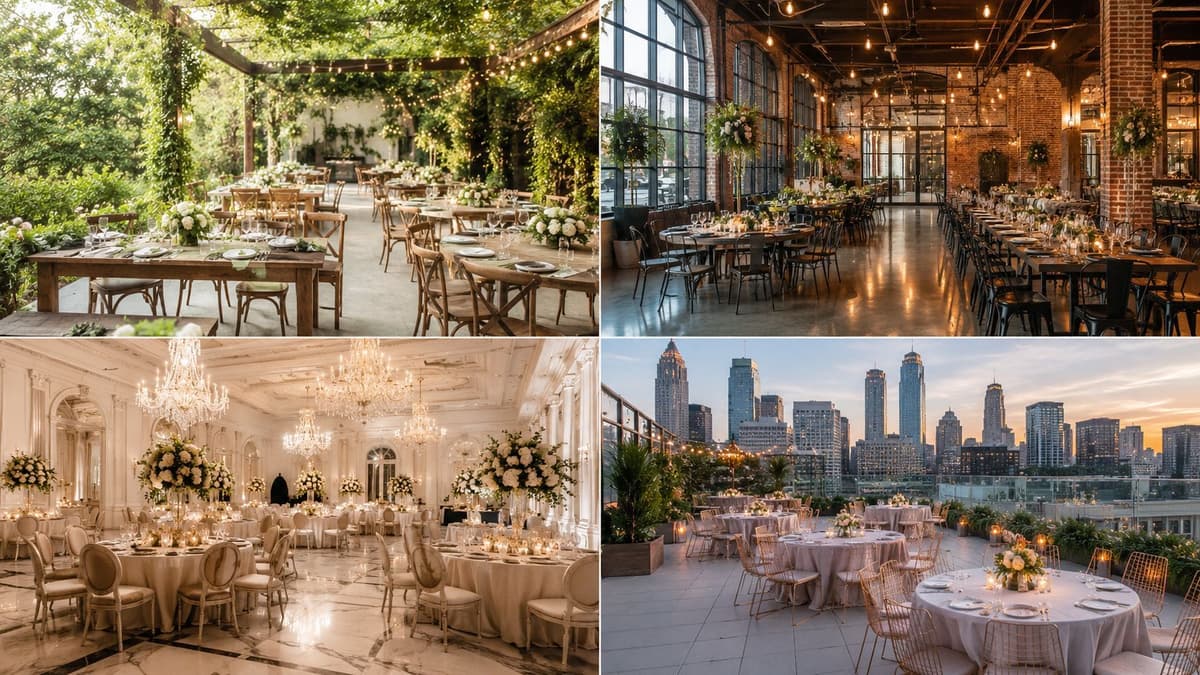
Most wedding receptions last 4 to 6 hours, and there are good reasons for that. The timing is usually set by a few key factors:
- Your venue rental window
- Local noise restrictions or mandatory end times
- Whether your ceremony and reception take place in the same location
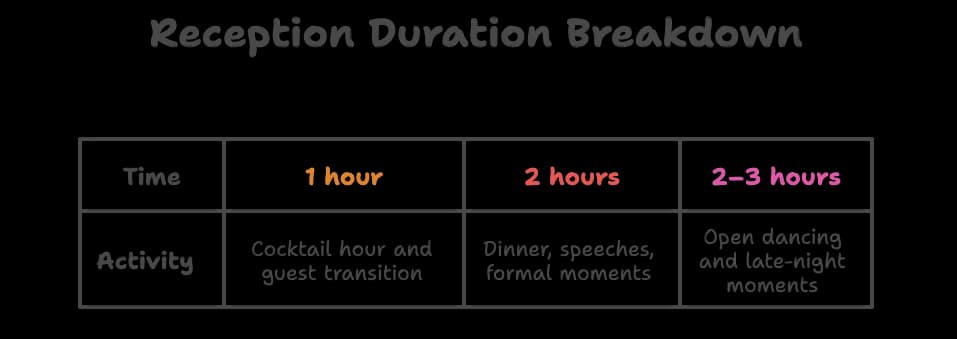
A typical reception flow looks like this:
- 1 hour: Cocktail hour and guest transition
- 2 hours: Dinner, speeches, and formal moments
- 2–3 hours: Open dancing and late-night moments
If your venue has a set end time, it’s best to plan by starting at the end of the night and working backward. This makes it easier to decide when to schedule things like speeches and cake cutting.
What Actually Influences Reception Length (Planner Insight)
As a planner, I know that three main things shape your whole reception timeline:
- Guest count: The more guests you have, the longer it takes to seat everyone, serve dinner, and move between moments.
- Venue layout: When cocktail hour, dinner, and dancing take place in different spaces, transitions take longer than couples expect.
- Catering style: Plated, multi-course meals always require more time than buffets or family-style service.
Knowing these factors ahead of time helps you build a timeline that feels relaxed and well-planned, instead of rushed or constantly behind schedule.

Phase 1: The Guest Arrival Flow (Cocktail Hour)
Mastering the Cocktail Hour (60 to 90 Critical Minutes)
Cocktail hour plays two important roles at once:
- Guests get time to relax, mingle, and enjoy a drink
- You get breathing room to finish post-ceremony photos without pressure
Recommended duration: 60–90 minutes
A cocktail hour acts as a safety net for your schedule. Photos can take longer than expected, transportation can be delayed, and small issues can come up. This buffer helps keep the rest of the evening on track.
Be sure to allow a 15–30 minute buffer between announcing dinner and when guests are actually seated and ready to eat. Seating almost always takes longer than couples expect, especially with larger guest lists.
The Grand Entrance and Seating Call (5–10 Minutes)
Once guests are seated, your DJ or band will cue:
- The wedding party entrance
- Your grand entrance
Make this moment fun and keep it moving. A smooth entrance lets everyone know the celebration is moving forward and sets the tone for the rest of the night.

Phase 2: The Dinner and Speeches Sequence
Wedding Dinner Timeline: Plated Service vs. Buffet
Dinner is often the longest and most time-sensitive part of the reception.
Plated dinner service:
- 1.5 to 2 hours
- Slower due to multiple courses and table service
- Requires careful coordination with speeches
Buffet or family-style service:
- Generally faster
- Guests control their own pacing
- More flexible, but still needs structure
With plated dinners, patience matters. Servers have to reach every table before moving on, so delays here often affect the rest of the schedule.
This is exactly why your wedding reception dinner and speeches should always be planned together, not as separate blocks.
Common Dinner Timeline Mistakes to Avoid
Even well-planned receptions can lose time during dinner. The most common reasons are:
- Too many speakers scheduled back-to-back
- Toasts starting before all guests are served
- No buffer between courses
A good dinner timeline puts guests’ comfort first and weaves formal moments into the meal, rather than stopping everything for them.
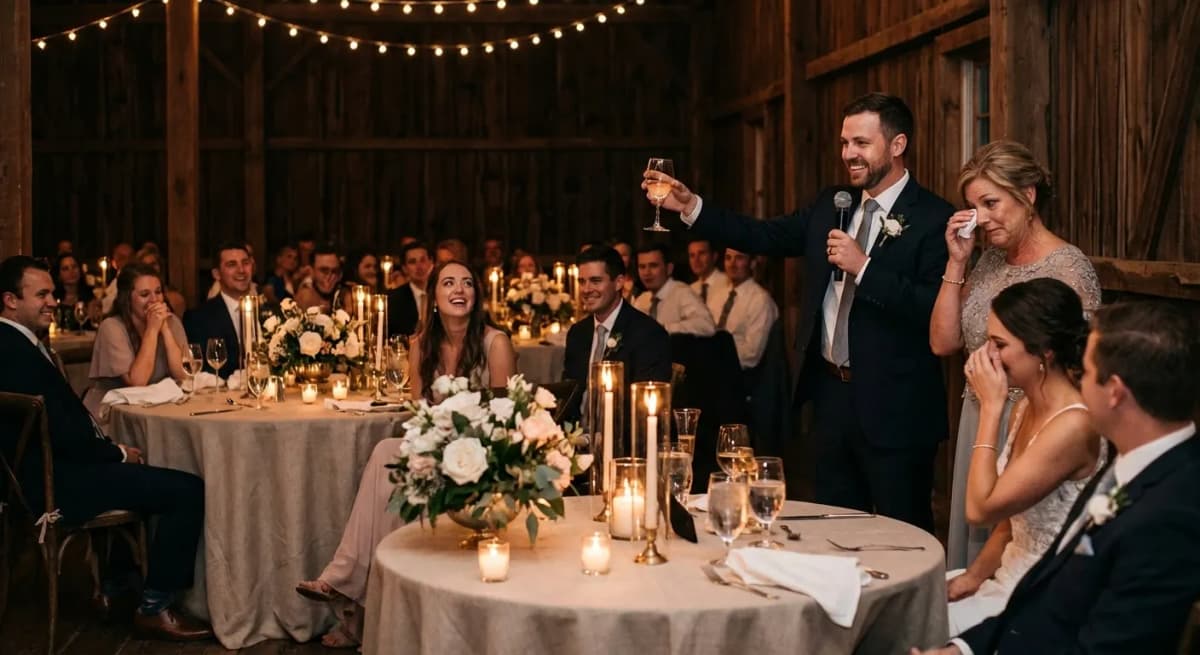
Strategic Toast Placement: When and How Long?
Toasts are special, but they work best when they’re timed well.
Planner guideline:
- 5–10 minutes per speaker
- 30 minutes total maximum
The three most effective placement options are:
- During the main course: guests are seated and attentive
- Right after the grand entrance: gets speeches out of the way early
- After dinner: works only if speakers are disciplined
Long speeches are the number one reason receptions fall behind schedule. Setting clear expectations ahead of time helps keep the evening on track. For a seamless transition between dinner, speeches, and the party, integrate this reception schedule into your Wedding Day Timeline Guide. It helps ensure every part of your day flows together, not just the reception.

Transitioning to the Party
The Cake Cutting: Tradition and Modern Timing Options
The tradition of when to cut the wedding cake has changed, and now most couples choose between two options.
Option 1: Early cake cutting
- Right after dinner or speeches
- Allows catering to serve cake sooner
- Works well for venues with early end times
Option 2: Late cake cutting
- Marks the end of formalities
- Creates a natural shift into party mode
- Works best once dancing is already underway
No matter which option you choose, cake cutting should take 10–15 minutes. Keep it simple, purposeful, and make sure your photographer is ready.
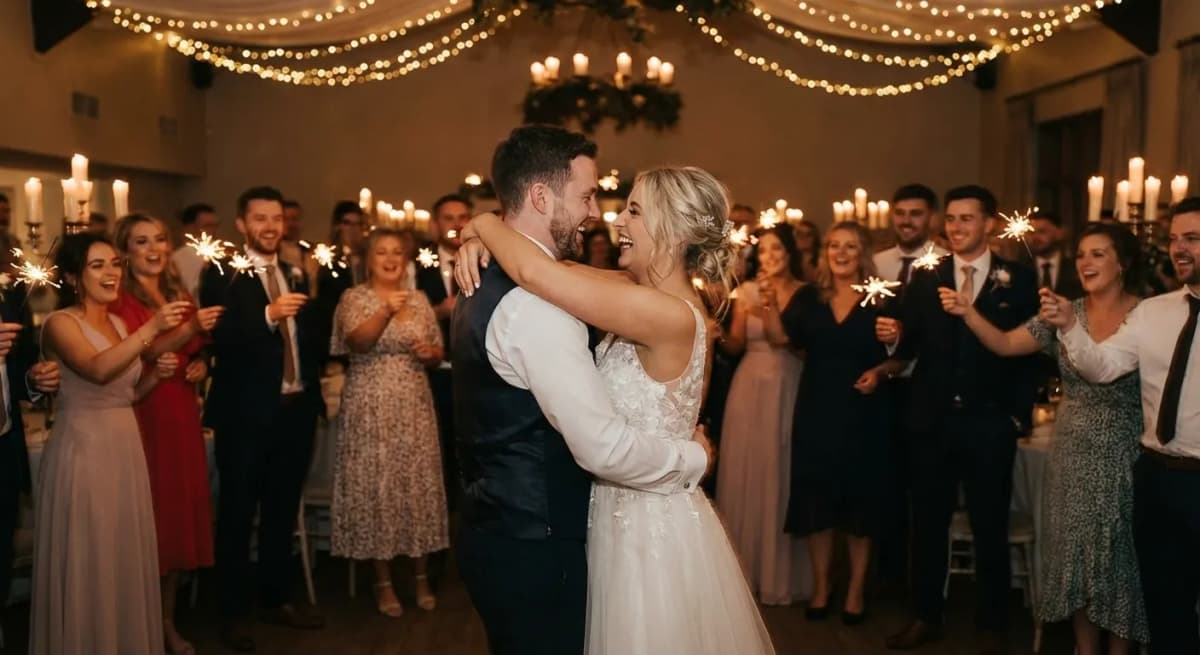
First Dance and Parent Dances: Opening the Floor
Plan your first dance right after the last formal moment, whether that’s the speeches or the cake cutting.
Why?
Momentum.
This order creates a smooth emotional flow:
Formal → romantic → celebratory
You can do parent dances one at a time or combine them into one moment to keep the energy up and transitions smooth.
The Dancing Window and Late-Night Bites
Once the dance floor opens, plan for:
- 2–3 hours of open dancing
- The highest energy in the first 90 minutes
Late-night snacks are usually served around 9:30 PM. They give guests a boost and help keep the party going without interrupting the fun.

Wedding Reception Timeline FAQ
How long should a wedding reception really last?
Most wedding receptions last between 4 and 6 hours. This allows enough time for cocktail hour, dinner, speeches, and dancing without the evening feeling rushed. The exact length often depends on your venue’s end time, guest count, and catering style.
Is it better to do speeches before or after dinner?
In most cases, during dinner works best. Guests are already seated and attentive, and speeches don’t interrupt dancing later. If speeches happen after dinner, they should be tightly timed to avoid slowing down the party.
Will formal moments ruin the dance floor energy?
Not if they’re placed correctly. Formal moments like cake cutting or the first dance should happen before open dancing or early in the party. When the last formality flows directly into the first dance, it actually helps build momentum instead of stopping it.
Planner’s Checklist: Expert Tips for a Flawless Flow
Before finalizing your wedding reception timeline hour by hour, double-check that:
- DJ/band and caterer timelines are fully aligned
- Speeches are confirmed, timed, and approved
- Vendor exit times don’t overlap key moments
- There’s no “dead air” between transitions
Even short pauses can disrupt the flow of the evening.
Ready to turn this timeline into your own wedding night schedule? Start planning your full reception flow in minutes, free to begin.
Start planning for freeFinal Thoughts: Turn Your Timeline Into Confidence
A well-planned wedding reception isn’t stiff — it’s flexible and resilient.
When you know how long each part of the evening takes, you can adapt without stress. That’s the difference between reacting all night and truly enjoying your celebration.
If you want to see how this reception timeline fits into your whole day, from getting ready to your final exit, check out our complete Wedding Day Timeline Guide and Templates to plan with confidence from start to finish.