First Steps to Planning a Wedding A Calm and Actionable Guide
Author
The ItsaYes TeamAuthor
So, you're engaged! Huge congratulations. Before you dive headfirst into a sea of venues, caterers, and color swatches, let's talk about the real first steps. It's not about booking anything just yet. It's about building a strong, shared foundation with your partner so the entire process feels like a team sport, not a tug-of-war.
Think of this phase as creating the blueprint. It's about alignment, not just action. Getting this right turns potential stress into a collaborative win before the details even have a chance to take over.
Finding Your Calm Before the Wedding Plan
Honestly, the most important work you’ll do happens right now, probably over a coffee at your kitchen table. This is your chance to get on the same page and build the bedrock for every single decision that follows. So many couples I've seen rush past this part, only to find themselves overwhelmed and misaligned a few months down the road.
Let's not do that. Instead, we're going to focus on three key conversations that will define your entire planning journey. Instead of juggling spreadsheets and scattered notes, an AI-powered wedding planning system like ItsaYes brings your vision, tasks, and budget into one calm, intuitive workspace.
Define Your Shared Wedding Vision
Okay, time for a little homework. Separately, I want each of you to jot down three words that describe the feeling of your ideal wedding day. Is it "intimate, cozy, and romantic"? Or maybe it's "energetic, modern, and fun"?
Now, compare notes. This is often one of the most revealing (and fun!) parts of the whole process.
This simple exercise helps you move beyond specific themes ("rustic chic," anyone?) and get to the heart of the atmosphere you want to create for yourselves and your guests. This shared vision becomes your North Star, making it so much easier to say "yes" or "no" to the endless options for venues, decor, and vendors that will soon be coming your way.
First Steps to Planning a Wedding A Calm and Actionable Guide
Agree on a Realistic Budget
This is the big one. The budget conversation is non-negotiable, and it needs to happen right away. It’s the single biggest factor that will shape your guest list, your venue, and pretty much every vendor you hire. Being totally honest about finances now saves you from some seriously stressful surprises later.
Let's be real, the numbers can be a bit intimidating. In 2025, the average wedding budget has crept up to around $32,000-$33,000, a noticeable jump from just a few years ago. This new reality is exactly why setting your financial guardrails early is so important. If you're curious, you can learn more about these wedding industry trends to get a better sense of the current landscape.
Key Takeaway: Your budget isn't a restriction; it's a tool for creative problem-solving. Knowing your number empowers you to pour money into what actually matters most to you, whether that's mind-blowing food, a band that keeps everyone dancing, or a photographer who captures the day perfectly.
Draft a Preliminary Guest List
Your guest count is tied directly to your budget. More people means higher costs for everything from catering and rentals to the size of the venue you'll need. Sit down together and start making a draft list.
A simple, drama-free way to approach this is by creating three tiers:
A-List: These are your non-negotiables. The people you absolutely cannot imagine the day without.
B-List: Your close friends, extended family, and colleagues you’d really love to have there.
C-List: The "nice-to-haves" who you can invite if the budget and space allow.
This method gives you a clear, logical way to make what can be some really tough decisions. It helps you and your families prioritize invitations without the emotion taking over, ensuring you're surrounded by the people who mean the most.
To help you get started, here's a quick look at the most important tasks to tackle in your first month. Think of this as your jumpstart to a calm and organized planning process.
Your First Month Wedding Planning Checklist
Priority Action
Key Goal
How ItsaYes Helps
Dream Up Your Vision
Define the "feel" of your wedding with 3-5 keywords.
The Design Studio turns your keywords into a visual moodboard instantly.
Set Your Budget
Establish a realistic, all-in number you both agree on.
Track everything with the smart Budget Tool, which adjusts as you plan.
Draft the Guest List
Create your A, B, and C lists to estimate your headcount.
The Guest List Manager lets you easily categorize guests and track RSVPs.
Explore Timelines
Pick a potential season or a few specific dates.
The dynamic timeline builds a custom plan based on your wedding date.
Getting these four pillars locked in will make every subsequent decision feel less overwhelming and more intentional. You've got this
Turning Your Vision Into a Real Wedding
Okay, let's be real. Your Pinterest board is probably a beautiful, chaotic explosion of wedding ideas. And that's fantastic! But how do you get from that digital collage to an actual, tangible event that feels cohesive and, well, real?
This is the part where so many couples get stuck. The secret is learning how to distill all that inspiration into a clear, actionable vision. This goes way beyond just picking colors, it’s about defining the entire atmosphere of your celebration, from the music playing during dinner to the paper your invitations are printed on.
From Pins to a Plan
First things first: look for the patterns. Sit down together, scroll through everything you've saved, and start calling out the recurring themes. Are you both constantly pinning images with clean lines, muted colors, and cool architectural details? You're probably leaning toward modern minimalism.
Or maybe your board is overflowing with wildflowers, flickering candlelight, and rough-hewn wood textures. In that case, something like rustic romance is likely your North Star. Just identifying these core concepts helps you move from a jumble of disconnected ideas to a real direction.
Think of your wedding vision as the filter for every single decision you'll make from here on out. It’s what ensures every choice, from the venue down to the favors, feels connected and authentically you. It’s your best defense against the dreaded "Franken-wedding" where nothing quite fits together.
Once you spot those patterns, try to nail down a handful of keywords and craft a simple vision statement. This isn't a formal essay! It’s just a sentence or two that captures the soul of your day.
Here's a real-world example:
One couple knew they wanted their wedding to feel "cozy, joyful, and full of personal touches." But what does that actually look like?
Cozy: They picked a venue with a huge fireplace, filled the space with warm, amber lighting, and set up comfy lounge areas for guests to relax.
Joyful: Instead of a typical DJ, they hired a high-energy funk and soul band that kept everyone on the dance floor.
Personal Touches: Each table was named after a place they'd traveled to together, and a handwritten thank-you note was waiting at every single place setting.
See how abstract feelings became concrete, actionable choices? That's the goal.
Crafting Your Mood Board
This is where your vision becomes a visual tool. A mood board is more than just pretty pictures; it’s a curated collection of images, textures, and colors that tells the story of your wedding's look and feel. It’s the single document you’ll share with every vendor to get them on the exact same page.
Ready to build one? Try this simple exercise:
Select Your All-Stars: Go back to your Pinterest board and choose just 5-10 images that best represent the vision you've defined. This is the hardest part!
Pull Out the Details: From those core images, identify specific colors, textures (like velvet, linen, or ripped-edge paper), and moods (like "dramatic," "serene," or "playful").
Put It All Together: Arrange these elements on a single board. Tools like Canva are perfect for this, but honestly, a simple Google Doc works just fine.
Bringing all your ideas into one intuitive workspace is precisely why we built ItsaYes. You begin by defining your style and ideas, and the platform helps turn that inspiration into a clear, manageable plan. If you're feeling stuck, you can even explore how an AI wedding mood board generator can seriously simplify this process.
This focused mood board quickly becomes one of your most valuable planning assets. When you meet with a florist, you can show them exactly what you mean by "organic and lush" instead of hoping they understand your description. Suddenly, your vision isn't just an idea in your head anymore—it’s a practical guide for building your perfect day.
Building Your Wedding Guest List Without Drama
The guest list. This is often where the blissful, dreamy phase of being engaged bumps up against its first dose of reality. It’s an emotional minefield that has a direct, and massive, impact on your budget, your venue choice, and the entire feel of your wedding day.
Figuring out how to approach it with a clear head is one of the most important things you can do right at the start.
Instead of trying to wrestle with one giant, overwhelming list of names, I always tell couples to think in layers. It's a compassionate but practical way for you and your families to figure out who to invite without getting tangled up in hurt feelings. The goal is to fill the room with people you are genuinely, truly excited to celebrate with.
The A-List, B-List, C-List Method
This tiered approach brings some much-needed structure to what is a deeply personal process. It transforms a potentially chaotic, emotional discussion into a more logical exercise, giving you a clear framework for making those tough calls together.
Here’s how you break it down:
The A-List: These are your non-negotiables. We're talking immediate family, your wedding party, and your absolute best friends—the people you simply cannot imagine getting married without by your side.
The B-List: This is your next circle out. Think close extended family (favorite aunts, uncles, and cousins), cherished friends from different parts of your life, and important colleagues you'd really love to have there if the numbers work out.
The C-List: These are the "nice-to-haves." This group often includes plus-ones for guests you aren't close with, or those family friends your parents are hoping you'll invite.
This isn’t about ranking the people in your life by importance. Not at all. It's a practical tool for managing the very real constraints of venue capacity and budget. Once you know exactly how many people your venue can hold, you can start with the A-List and work your way down, ensuring your most essential people get their invitations first.
The goal is simple: ensure every single person in that room adds to your joy. Your wedding isn't an obligation; it's a celebration curated by you, for you.
Navigating Difficult Conversations
Bringing parents into the guest list conversation requires a bit of finesse. The best way to start is by sitting down with them and sharing your overall vision and, crucially, your budget limitations.
Walk them through your tiered system so they understand the logic behind your choices. A calm, unified front between you and your partner is your greatest asset here.
When the conversation gets a little sticky, lean on gentle but firm phrasing. Try something like, "We would absolutely love to include everyone, but our venue has a strict limit of 150 guests," or "We're really focusing on keeping the day intimate, so we're prioritizing family and our closest friends first."
Setting these boundaries early and kindly prevents so many misunderstandings down the road. It also ensures the final guest count actually aligns with the wedding you want to have. Trying to keep all these moving parts straight is exactly why a dedicated wedding guest list app can be a lifesaver, helping you organize contacts, track RSVPs, and visualize everything in one calm, central place.
Crafting a Realistic Wedding Timeline
A good timeline is your secret weapon for staying sane during your engagement. Forget those generic, one-size-fits-all checklists you find online. Your plan should be built around your priorities, turning what feels like a mountain of tasks into a series of calm, manageable steps.
The trick is to think in phases, not just individual to-do items. This gives your planning a natural rhythm and ensures you’re making the right decisions at the right time. For instance, The Knot's 2025 Real Weddings Study found that 52% of couples start planning about 12 months out. This is a strategic sweet spot that gives you breathing room for thoughtful choices instead of panicked bookings.
The Foundation: Months 1 to 3
This first phase is all about locking in your cornerstones. These are the big-picture decisions that every other choice will hinge upon. Without them, you’re just guessing.
During these first three months, your only goals should be to:
Finalize Your Budget: You've already got a rough idea; now it's time to make it concrete.
Solidify Your Guest List: Move from a dreamy draft to a near-final list with your A, B, and C tiers.
Book Your Venue: This is the anchor. Your venue choice dictates your date, capacity, and the entire feel of the day.
Booking your venue first is non-negotiable. It’s the domino that sets everything else in motion. You simply can't hire a caterer or photographer until you know where and when the wedding is happening.
A smart planning platform like ItsaYes automates this for you. Your personal AI assistant is available 24/7 to suggest priorities and break the next 6 to 12 months into simple, manageable steps, keeping everything moving forward without overwhelm.
The Core Vendors: Months 4 to 6
With your date and location secured, you can now focus on assembling your creative team. This is the time to book the vendors who can typically only handle one event per day and are always in high demand.
Think of this as securing the talent that will capture the memories and create the atmosphere. Your priorities now shift to people like your photographer, videographer, band or DJ, and caterer. These pros often book up a year or more in advance, especially for popular dates, so acting decisively in this window is crucial.
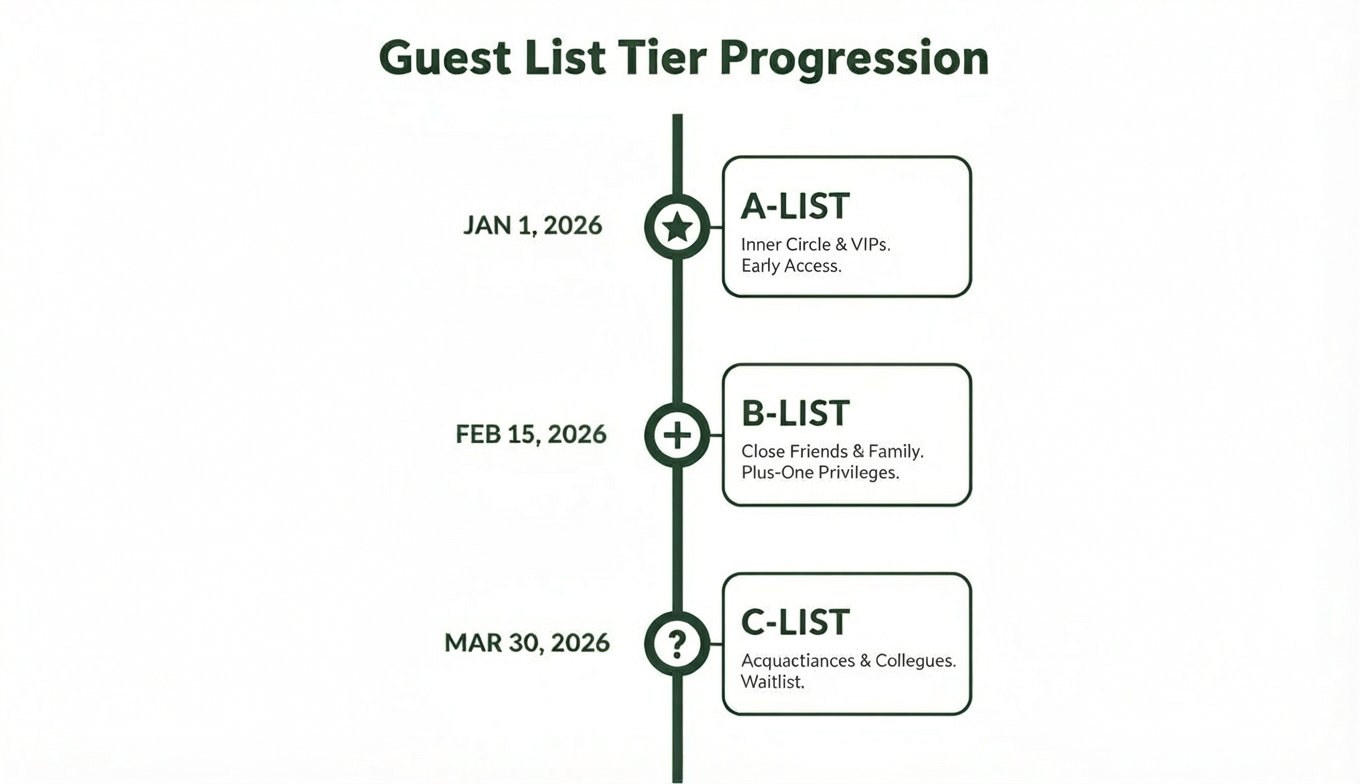
This visual shows how that tiered guest list approach works—a foundational task that directly influences your venue search.
This method provides a logical framework for making what can be very emotional decisions, ensuring your most important people are locked in first.
The Finer Details: Months 7 to 10
Now that the big structural pieces are in place, you can move on to the more personal and aesthetic elements. This is often the most exciting phase, where your vision truly starts coming to life in tangible ways.
During these months, you’ll get to focus on the fun stuff:
Wedding Attire: Shopping for dresses, suits, and all the accessories.
Invitations: Designing and ordering your stationery suite.
Florals and Decor: Finalizing the look and feel with your florist.
Wedding Website: Publishing all the key details for your guests.
By breaking the year down this way, the process feels less like a mountain to climb and more like a series of achievable milestones. If you're curious how all these pieces will eventually fit together on the actual day, our wedding day timeline generator can help you map out the event from start to finish.
Assembling Your Wedding Vendor A-Team
Okay, deep breath. You’ve got your vision, you’ve wrestled with the budget, and you have a rough timeline. Now for the really fun part: building the dream team that will actually bring your wedding to life.
Assembling your crew of vendors is about so much more than just finding people who are free on your date. You're looking for creative partners who get you—people who hear your vision and are genuinely excited to make it happen.
The secret to doing this without losing your mind? Booking them in the right order. A little strategy here goes a long way in making sure you get your first-choice pros before they’re snatched up.
Prioritizing Your Bookings
Think of it like a puzzle. Certain pieces have to be placed before others will fit. Some of your vendors, like the venue or your photographer, can only be in one place at one time. They are your top priority.
Venue & Wedding Planner: These are your non-negotiable first two bookings. The venue locks in your date and location, which you can't do anything without. A planner, on the other hand, is your guide from day one, often pointing you to incredible vendors you'd never find on your own and saving you a ton of stress (and often, money).
Photographer & Videographer: Great photographers and videographers—the ones with a distinct style you fell in love with—are artists in high demand. They often book up 12-18 months out. These photos and videos are what you'll have forever, so once your date is set, make this your very next call.
Band or DJ: The music dictates the entire energy of your reception. A killer band that gets everyone dancing is one of the most memorable parts of a wedding, and the best ones have calendars that fill up lightning-fast. Lock in your entertainment as soon as the venue is confirmed.
Once you have these cornerstone vendors secured, you can breathe a little easier and move on to booking the pros with a bit more flexibility, like your florist, caterer (if your venue doesn't provide one), and officiant.
Your vendor team should feel like a natural extension of your vision. When you find professionals who are genuinely excited about your ideas, the planning process becomes collaborative and joyful, not just a series of transactions.
Research and Consultations
Finding the right people is all about smart research. Start by asking for recommendations from your venue coordinator or any recently married friends whose taste you trust. Instagram is basically a visual search engine for this stuff, and wedding blogs are fantastic for seeing real work.
When you get to the consultation phase, don't just talk about packages and pricing. You're trying to figure out if you vibe with this person.
Ask questions that get to the heart of how they work:
"How would you describe your approach to a wedding day?"
"Can you walk me through how you’ve handled a challenge at a past wedding?"
"What do you love most about working on weddings like ours?"
Listen carefully to their answers. Do they sound passionate? Calm under pressure? Do they sound like someone you'd actually want to hang out with? You'll be spending a lot of time with them, so a personality fit is huge.
An integrated platform like ItsaYes helps keep this entire process from turning into chaos. You can manage all your vendor contacts, contracts, and conversations in one sane, organized workspace instead of digging through a hundred different email threads and notebooks. This is one of the most important first steps to planning a wedding that feels structured, not stressful.
The Big Questions Every Newly Engaged Couple Asks
Okay, so you said "yes." The champagne has been popped, the ring selfie has been posted (after calling your mom, of course), and the initial wave of pure joy is... well, it's still there, but now it's mingling with a new feeling. A tiny voice in the back of your head whispering, "Now what?"
Deep breaths. You are not alone. Every couple goes through this. Moving from the magic of the proposal to the logistics of planning is a huge shift, and it’s completely normal to have a million questions swirling around.
Let's tackle the biggest ones head-on. Think of this as your practical, no-fluff guide to the first few hurdles. We're turning that "What do we do now?" anxiety into a confident "Okay, we've got this."
How Much Is This Actually Going to Cost?
This is the big one, isn't it? The money talk. You've probably seen articles throwing around average wedding costs, often around $30,000, but that number is practically useless without context. An "average" wedding doesn't account for your city, your guest count, or your priorities.
A realistic budget isn't a number you pick from the sky. It's a number that reflects your actual financial life. The best place to start is with a completely honest, judgment-free conversation about what you can comfortably spend without starting your marriage in debt.
Before you even think about a total number, get clear on the moving parts:
Your Own Savings: What do you both have saved up, and how much of that are you genuinely comfortable putting towards one day? Be honest.
Family Help: Are parents or other family members chipping in? This can be a tricky conversation, but it needs to happen. Get a clear number and, just as importantly, ask if any strings are attached to that money.
Your "Big Three": What are your top three non-negotiables? If you know you'd regret skimping on an amazing photographer, incredible food, or a live band that keeps everyone dancing, that tells you exactly where your money should go first. Knowing this helps you happily cut back on the things that matter less to you.
Do We Really Need a Wedding Planner?
Short answer: No, it's not a requirement. Long answer: It can be an absolute game-changer, depending on your situation.
A full-service planner is like a project manager for your wedding, handling everything from budget tracking to vendor negotiations. A "day-of" coordinator (who really starts working with you a month or two out) is more like a stage manager, making sure the wedding day itself goes off without a hitch.
Hiring a planner might be a brilliant move if:
You and your partner both have demanding jobs with very little free time.
You're planning a destination wedding or have a ton of complex moving parts (like a multi-day event).
The very thought of reading vendor contracts and managing a dozen different timelines makes you break out in a cold sweat.
But if you're a super-organized person who genuinely loves the idea of planning, you might not need one. That's where modern planning tools come in, offering the structure of a planner without the six-figure price tag.
A platform like ItsaYes acts like your digital planning assistant. It guides you on what to do next, organizes tasks, and keeps all your vendor info in one place—giving you that planner-level confidence 24/7 so you can enjoy the process and feel in control.
What's the "Right" Way to Announce Our Engagement?
There’s no single right way, but there is a thoughtful way. Before you blast the news all over social media, pause and think about your inner circle.
Your parents, siblings, and best friends should hear the news from you personally, not see it on their Instagram feed. A quick phone call or a FaceTime where they can see your happy faces means the world. It’s a small gesture of respect and love that they will absolutely remember.
Once your VIPs have been celebrated with, then by all means, share your joy with the world! A simple, heartfelt post is perfect.
When Should We Send Save-the-Dates?
The golden rule here is to mail your save-the-dates 6 to 8 months before the wedding. This gives everyone plenty of notice to mark their calendars and request time off work.
However, if you're planning a destination wedding or getting married on a popular holiday weekend (like Memorial Day or New Year's Eve), you need to give people even more runway. For those situations, aim to send them out 9 to 12 months in advance so guests have ample time to book flights and hotels.
Just remember: once a save-the-date is sent, that person is officially on the guest list. There’s no going back. Make sure your "A-list" is set in stone before you drop them in the mail.