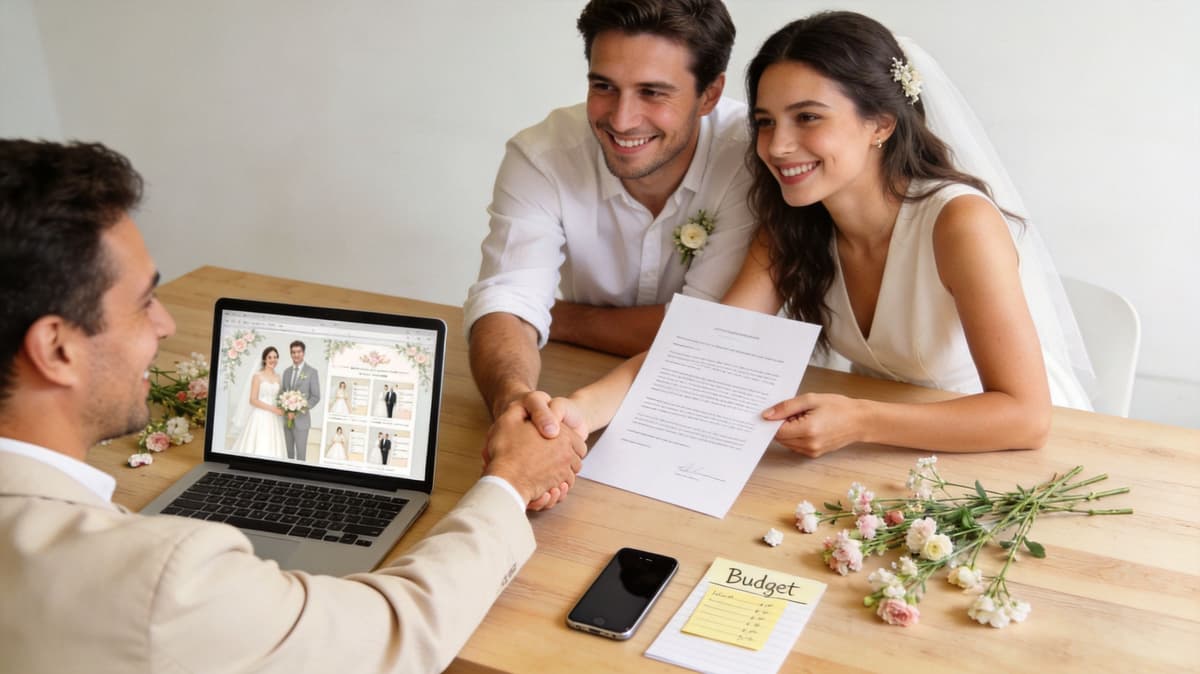
You open a vendor proposal, scan the package details, and then jump straight to the total. It's higher than you expected. Suddenly the fun parts of planning feel a little less fun.
That moment is where a lot of couples freeze. They either assume the quote is fixed, or they swing too far the other way and worry that negotiating will make them sound difficult. Neither reaction helps much.
How to negotiate with vendors is really about getting clear, asking smart questions, and shaping an agreement that works for both sides. Good vendors expect that conversation. The calmest negotiations usually come from couples who know what they want, what they can spend, and which details matter most.
Why Wedding Negotiation Is Your New Best Friend
Wedding negotiation gets a bad reputation because people picture aggressive haggling. In practice, the best version of it looks much more normal. You ask for clarity. You compare options. You adjust the scope. You make sure the contract matches what you discussed.
Adding or removing extras based on your priorities
Confirming deliverables in writing so there are no surprises later
A florist may not lower their fee, but they may redesign the plan around in-season flowers. A photographer may hold their rate, but include a small add-on if your date fits their schedule. A venue may keep the rental price the same, but offer more flexibility on setup timing or vendor access.
That's still a successful negotiation.
Practical rule: A good negotiation leaves both sides feeling clear, respected, and able to deliver what they promised.
What doesn't work
Couples usually get into trouble when they negotiate from stress instead of structure. That often sounds like vague budget complaints, random comparison shopping, or asking for discounts without understanding what's included.
Vendors notice that immediately. So do planners.
What works better is simple: know your numbers, know your priorities, and speak in specifics. “We love your work. We're deciding between a few options. Our target for this category is X, and we'd love to see whether there's a package version that fits” is far more effective than “Can you do better on price?”
Negotiation isn't a last-minute rescue move. It's one of the tools that helps you protect your budget without lowering your standards.
Build Your Negotiation Foundation Before You Talk to Anyone
Most negotiation problems start before the first email. If you and your partner aren't aligned, your budget is fuzzy, and your idea of “reasonable pricing” comes from random TikToks and old forum threads, every vendor conversation will feel harder than it needs to.
Preparation fixes that.
Start with alignment at home
Before you negotiate with a venue, caterer, photographer, or DJ, get honest with each other first. If one of you cares most about food and the other cares most about photography, but both of you say “we just want a nice wedding,” you'll make soft decisions and expensive compromises.
Sit down and sort each vendor category into three buckets:
Must-haves
These are the elements that affect your experience or memories in a major way. Maybe that's full-service planning, documentary-style photography, or a venue that doesn't require a lot of decor.
Nice-to-haves
These are lovely, but not core. Think custom lounge furniture, late-night snacks, upgraded stationery textures, or extra ceremony musicians.
No-thanks items
This is the most useful list because it stops budget leakage. If you already know you don't care about a champagne tower or printed table numbers, you won't accidentally negotiate around things you never wanted.
Give every category a ceiling
A total wedding budget is not enough. You need category ceilings.
If your total number lives only in your head, every quote will feel negotiable in theory and stressful in reality. When you assign a target range to each vendor category, you can respond quickly and clearly. You also avoid the pattern where one early booking consumes money meant for three later decisions.
A simple planning sheet should include:
Vendor category
Target budget
Absolute max
Notes
Venue
Set by you
Set by you
Include service fees and any required add-ons
Catering
Set by you
Set by you
Note guest count assumptions and service style
Photography
Set by you
Set by you
Include hours, second shooter, and album questions
Florals
Set by you
Set by you
Separate personal flowers from installations
Keep it boring and clear. Boring wins here.
Use market research instead of guesswork
This is the part couples skip, and it's why they either overpay or send unrealistic inquiries.
A projected Gartner figure cited in Lucrum Consulting's vendor negotiation article says that by 2026, 45% of wedding planners will use AI for budgeting and negotiations. The same source says couples using these tools are saving 18-25% on vendor costs by using data-backed benchmarks for their style and location.
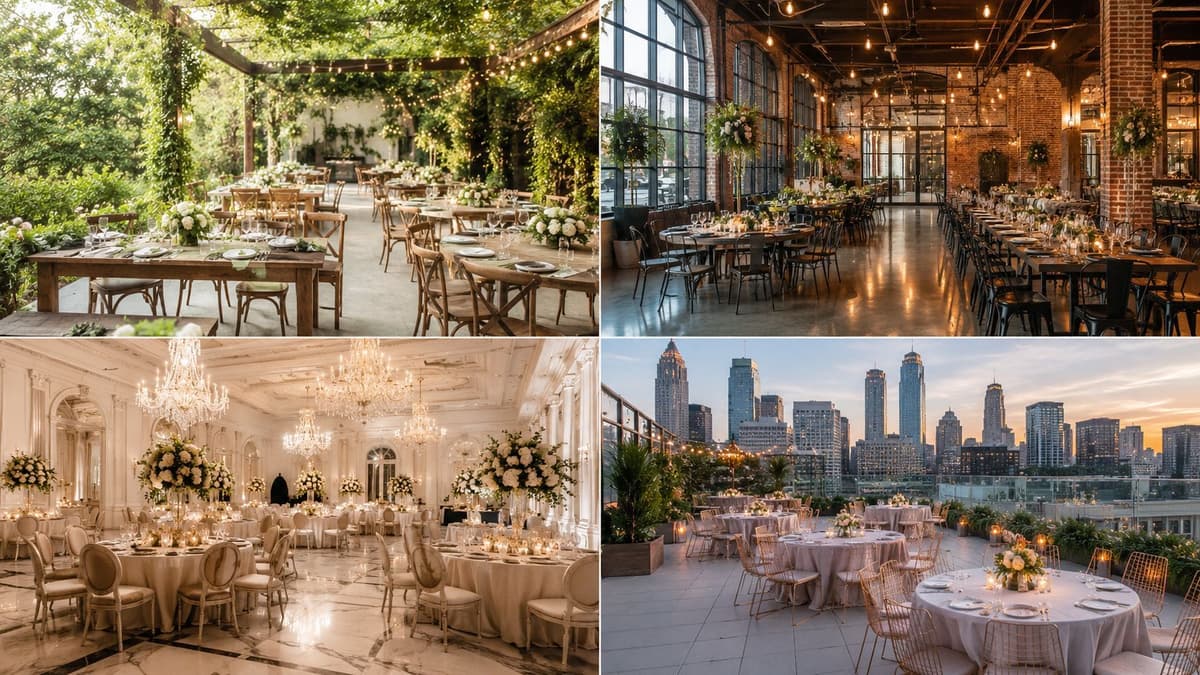
That matters because wedding pricing is contextual. A clean, modern city wedding with premium lighting, custom rentals, and a high-demand Saturday date won't price like a backyard brunch wedding, even if both have the same guest count.
Use tools that help you organize real comparisons, not just inspiration images. A structured vendor workspace like a wedding vendor manager makes it easier to line up quotes, compare inclusions, and spot where one proposal is stronger than another.
To shift your perspective, it can also be beneficial to review examples from outside the wedding industry. A resource such as this LA Law Group settlement negotiation guide is valuable because it demonstrates the same fundamental principle in a different context: thorough preparation provides you with an advantage, whereas emotion alone does not.
The strongest negotiator in the room usually isn't the most forceful. It's the person with the clearest brief.
When you've done this prep well, your vendor conversations change fast. You stop asking, “Can we afford this?” and start asking, “Does this match our priorities, and if not, what can we adjust?”
How to Make First Contact and Set a Collaborative Tone
Your first inquiry does more than ask for availability. It tells a vendor what kind of client you'll be.
A rushed message with no date, no venue, and no sense of scope usually creates slow replies and vague estimates. A thoughtful message does the opposite. It makes it easier for the vendor to answer clearly, and it signals that you're organized, respectful, and serious.
What to include in the first message
Think of your inquiry as a mini brief. You don't need to write a novel, but you do need enough detail for the vendor to price and respond intelligently.
Include:
Your wedding date or date range if flexible
Venue or location
Estimated guest count
Style summary such as modern, garden, editorial, classic, colorful
What service you need and any known timing details
A realistic budget range for that category
One specific reason you reached out to them
That last point matters. “We loved the way you photographed candlelit receptions” lands better than “Saw your Instagram.”
A copy-paste inquiry template
Use this as a starting point and customize it.
Hi [Vendor Name],
We're planning our wedding for [date] at [venue/location], with around [guest count] guests. We're looking for [service needed], and our overall style is [brief style description].
We reached out because we really liked [specific detail about their work].
Our target budget for this category is [your range], depending on what's included. If you're available, we'd love to see your packages and learn what options might fit best.
Helpful details on our side: [timeline notes, multi-service interest, flexibility, or priorities].
Thank you,
[Names]
The tone that gets better responses
You don't need to sound corporate. You do need to sound clear.
Good first messages do three things at once:
They reduce guesswork for the vendor
They invite discussion instead of demanding a discount
They set up future negotiation because everyone starts with the same facts
A message like “Our target budget is around this range, but we're open to adjusting scope for the right fit” is especially useful. It tells the vendor you're not blindly shopping for the cheapest option. You're trying to match value to budget.
That collaborative tone makes later conversations easier because the vendor already sees you as someone trying to solve for fit, not just price.
The Art of the Ask With Wedding Negotiation Scripts and Tactics
As proposals arrive, couples often feel either more confident or more flustered. The difference usually comes down to language. You don't need a sharp sales personality. You need a few calm scripts that keep the conversation open.
One of the most useful principles here comes from procurement. Procurement Tactics notes that experts advocate the 70/30 rule, meaning you spend 70% of negotiation time listening, and that 55% of people accept a first offer. That's a strong reminder to pause, ask, and learn before reacting.
Listen before you counter
A lot of couples respond to a high quote too quickly. They go straight to “Can you lower it?” without understanding what's driving the number.
Instead, ask questions that reveal room to move:
“Can you walk us through what's included in this package?”
“Which parts of this proposal are most flexible?”
“If we needed to bring this closer to our budget, where would you suggest adjusting first?”
“Are there options for changing timing, scope, or add-ons without changing the overall quality?”
Those questions do two things. They show respect for the vendor's work, and they often uncover better solutions than a blunt price cut request.
Ask questions that help the vendor solve the problem with you.
Script when the quote is over budget
This is one of the most common wedding planning moments, and it doesn't need drama.
Try:
“Thank you for sending this over. We really like your work, and the proposal helps us understand your process much better. It's currently above the range we set for this category, so I wanted to ask whether there's a way to adjust the scope or package to bring it closer to our budget without losing the parts that matter most.”
That script works because it doesn't insult the pricing. It doesn't force an immediate yes or no. It opens the door.
If the vendor can't move on price, they may still be able to change hours, coverage structure, rental quantities, staffing, delivery windows, or included extras.
Script for asking for an add-on
Sometimes the proposal is close, but you want one more thing.
For example:
“We're very interested in moving forward. Before we finalize, I wanted to ask whether it would be possible to include one additional hour of coverage at the same package rate, or as a small adjustment, so the timeline feels fully covered from start to finish.”
That phrasing is better than demanding a freebie. It signals commitment while still making the ask.
For more examples of smart outreach and comparison questions, this guide on questions to ask wedding vendors is a useful planning companion.
Script for comparing two proposals
This one takes a little tact. Don't use one vendor as a weapon against another. Use comparisons to clarify value.
Try:
“We're deciding between a couple of strong options, and I want to make sure we understand the differences clearly. Another proposal we received includes [specific element]. Is that something you'd be able to match, or is there another way you'd structure the package so we can compare on equal terms?”
This keeps the conversation constructive. It also gives the vendor a chance to explain why their package is built differently.
A short visual break can help if you're about to have this conversation by phone or video:
What to say when bundling could help
Bundling often works well when one business offers multiple services, such as photo and video, planning and design, or venue and catering coordination.
Use language like:
“We're also considering [second service] and wanted to ask whether booking both together changes the package structure at all. If there's a bundled option, we'd love to review it.”
This gives the vendor room to create value without cornering them.
A quick guide to tone
Here's the simplest way I'd frame it:
If you say this
It can sound like this
Try this instead
“That's too expensive”
Dismissive
“This is above the range we planned for”
“Can you do it cheaper?”
Transactional
“Is there a package version that fits our target budget?”
“Another vendor is less”
Defensive
“We're comparing proposals and want to understand the differences in value”
“Throw this in for free”
Casual pressure
“Would you be open to including this as part of the final package?”
The best negotiations in weddings rarely sound dramatic. They sound calm, specific, and collaborative.
Negotiating the Wedding Contract Beyond Just the Price
A proposal tells you what you might get. A contract tells you what you can rely on.
Many couples relax too early at this stage. They reach a number they can live with, skim the paperwork, sign fast, and assume the hard part is over. It isn't. Contract details protect your budget, your expectations, and your ability to handle stress if something changes.
Price matters, but these parts often matter more once planning gets real:
Payment schedule
Look at due dates, deposit terms, and what triggers additional charges. Make sure the schedule is practical for your cash flow.
Scope of services
Check what's explicitly included and what is not. If setup, teardown, travel, second shooters, rentals, revisions, tastings, or delivery are missing from the written scope, ask before signing.
Cancellation and postponement terms
Life happens. Read the policy carefully so you know what changes are allowed and what happens financially if plans shift.
Timing and deliverables
For photographers, that may be gallery timing and final image delivery. For florists, it may be install and breakdown windows. For caterers, it may be service duration and staffing assumptions.
Negotiate for clarity, not just concessions
A better contract is often about cleaner language.
If a clause feels vague, ask for specifics. If a promise was made on a call, ask for it in writing. If a package includes “reasonable revisions” or “as needed support,” ask what that means in practice.
Contract check: If you can't explain a clause in plain language, don't sign it yet.
That doesn't mean every vendor is hiding something. Many small businesses use standard templates that need a little cleanup for each event.
Watch for practical gaps
Wedding contracts often get weak around logistics. This is especially true when multiple vendors depend on one another.
For example, layout affects rentals, floral installation, DJ setup, and guest flow. If you're finalizing floor plans, a practical visual tool like this guide on how to share layout with contractor can help everyone work from the same version instead of passing around mismatched screenshots and annotated PDFs.
Use that same mindset with every contract detail. The less ambiguity you leave in the documents, the fewer “we assumed” problems you'll deal with later.
A clean contract checklist
Before you sign, confirm that the agreement clearly covers:
Names, date, and location
Full service description
What's included and excluded
Payment amounts and due dates
Change, cancellation, or postponement terms
Timing expectations
Insurance or venue compliance requirements if relevant
Any verbal promises added in writing
That last one matters a lot. If the vendor said, “We can probably include that,” probably is not a contract term.
Sealing the Deal and Knowing When to Walk Away
There's a point where negotiation should end and decision-making should begin. If the fit is good, the scope is clear, and the contract matches the conversation, sign confidently and move on. Lingering too long can create more confusion than value.
But not every deal should be saved.
A successful negotiation doesn't always end with a signed contract. Sometimes it ends with a polite no, and that's the smartest possible outcome.
What to do before you sign
Once you're ready to move forward:
Get the final version in writing before sending payment
Check that all edits are included and not just discussed in email
Save the signed contract and invoice in one easy-to-find folder
Confirm the next milestone so you know what happens after booking
This is also the moment to trust patterns, not just promises. If communication has already been messy, booking won't magically make it cleaner.
Red flags worth taking seriously
Walk away, or at least pause hard, if you notice any of these:
Pressure to sign immediately
Urgency can be real, but heavy pressure usually creates bad decisions.
Refusal to put details in writing
If someone says, “Don't worry, we'll handle it,” but won't update the contract, that's a problem.
Vague proposals or incomplete contracts
If you still can't tell what's included, you're not ready to commit.
Defensive reactions to reasonable questions
You're hiring a partner, not trying to win a debate.
Poor communication early on
Slow replies happen. Confusing replies are different.
For pricing context in adjacent creative industries, even resources like this 2026 guide to model photoshoot rates can be useful as a reminder that service pricing is shaped by time, experience, usage, and production demands, not just the visible final product. Weddings work the same way. The cheapest quote is not automatically the best value.
A practical reference point can also help when you're trying to spot fit versus friction. This article with tips for choosing wedding vendors is useful for checking whether the issue is price, or whether the vendor relationship itself feels off.
Walking away from a bad fit is not a failed negotiation. It's a protected budget, a protected timeline, and often a much better decision.
The right vendors don't just fit your numbers. They fit your way of planning, your communication style, and the kind of wedding experience you want to build.
If you want a calmer way to organize vendor research, compare proposals, and turn scattered inspiration into a structured plan, ItsaYes gives you one place to manage your vision, budget, tasks, and next steps without the spreadsheet chaos.