Your Enchanted Forest Themed Wedding Planning Guide
17 min
Your Enchanted Forest Themed Wedding Planning Guide
Author
The ItsaYes TeamAuthor
You've probably saved a version of the same wedding twenty different times.
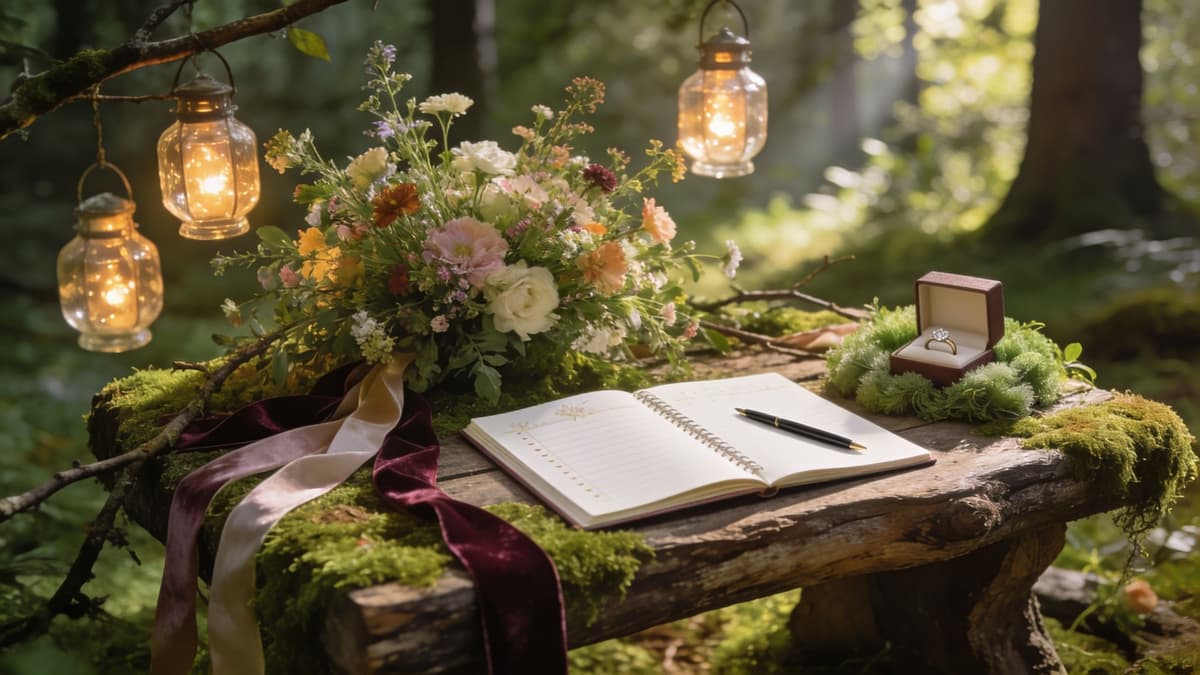
One pin has hanging candles in the trees. Another has mossy tables, velvet ribbons, and dark fruit. Another looks airy and romantic, with pale flowers and glowing string lights. They all feel like an enchanted forest themed wedding, but they don't necessarily belong to the same event.
That's where couples get stuck. The idea is strong, but the plan is blurry.
The good news is that this style is no longer a fringe concept. That matters because it means you're not trying to invent a wedding type from scratch. You're making decisions inside a real planning category with proven venue formats, familiar vendors, and clear design language.
The key is to stop treating the theme like a mood board and start treating it like a project. Once you define the version of “enchanted” you want, everything else gets easier: venue, florals, attire, paper goods, budget, and timeline.
Defining Your Enchanted Vision
Pinterest overload usually comes from mixing multiple wedding personalities into one board. A forest wedding can be soft and luminous, dark and dramatic, or natural and understated. If you don't name your version early, every later choice feels harder than it should.
Start with feeling, not objects. Don't ask whether you want lanterns or moss runners yet. Ask what you want the room, or the woods, to feel like when guests arrive.
Choose one emotional direction
Most enchanted forest weddings fall into a few distinct lanes. You don't need to fit perfectly into one, but you do need a dominant direction.
means soft color, delicate movement, candlelight glow, and details that feel airy rather than dense.
Moody fairytale leans into shadow, contrast, velvet, richer florals, dramatic silhouettes, and a stronger sense of drama.
Rustic woodland focuses on the forest environment itself, with less fantasy styling and more natural texture, wood, greenery, and relaxed elegance.
A useful filter is this question: if your ceremony happened with no added decor, would you want it to feel luminous, cinematic, or organic?
Practical rule: Pick one primary mood and one supporting note. “Moody with romantic softness” is usable. “Whimsical, gothic, boho, celestial, woodland, luxury, rustic” is not.
Build a mood board that makes decisions easier
A working mood board should narrow options, not expand them. Limit it to a small set of images that clearly agree with each other. If one image introduces a new visual language, remove it.
Use this four-part checklist while editing your board:
Light quality
Is your dream wedding misty and bright, warm and candlelit, or dark with focused pools of glow?
Color family
Keep your palette restrained. Forest weddings already have a lot of visual information from trees, ground cover, and natural variation.
Texture
Decide whether your wedding should feel polished, wild-grown, velvety, weathered, or somewhere in between.
Fantasy level
There's a big difference between “woodland inspired” and “storybook set design.” Both can work. Confusing them creates budget and styling problems later.
Turn the vision into a sentence
Before you book anything, write one sentence that describes the wedding in plain language.
Try something like: “We want an intimate, candlelit woodland celebration that feels moody, elegant, and grounded in the natural setting.”
That sentence becomes your filter. If a floral recipe, invitation design, or dress doesn't match it, it probably belongs on someone else's board, not yours.
Finding Your Magical Venue
For this theme, the venue isn't just a location. It's the production base, design anchor, and logistics test all at once. If the site already gives you canopy, depth, and atmosphere, your decor can support the setting. If it doesn't, you'll spend more trying to manufacture what nature would have given you for free.
Guidance for this style consistently points couples to the same starting point: choose either a real wooded site or an indoor venue that can be fully transformed, then design around what the property already offers instead of trying to conceal it. That venue-first approach is outlined in Zola's advice on creating an enchanted forest wedding theme.
Outdoor forest venue versus indoor transformation
The cleanest way to decide is to compare the trade-offs.
Weather backup, guest access, power, uneven ground, darkness after sunset
Indoor venue with transformation potential
Better control over weather, flooring, power, catering flow, guest comfort
More styling required, higher decor dependence, risk of looking themed instead of immersive
Outdoor venues usually produce the most convincing enchanted effect because the depth is real. Trees create scale, shade, and framing that decor alone can't replicate. But couples often underestimate the operational side. A beautiful clearing still needs restrooms, pathways, electricity, and a rain plan that doesn't feel like an afterthought.
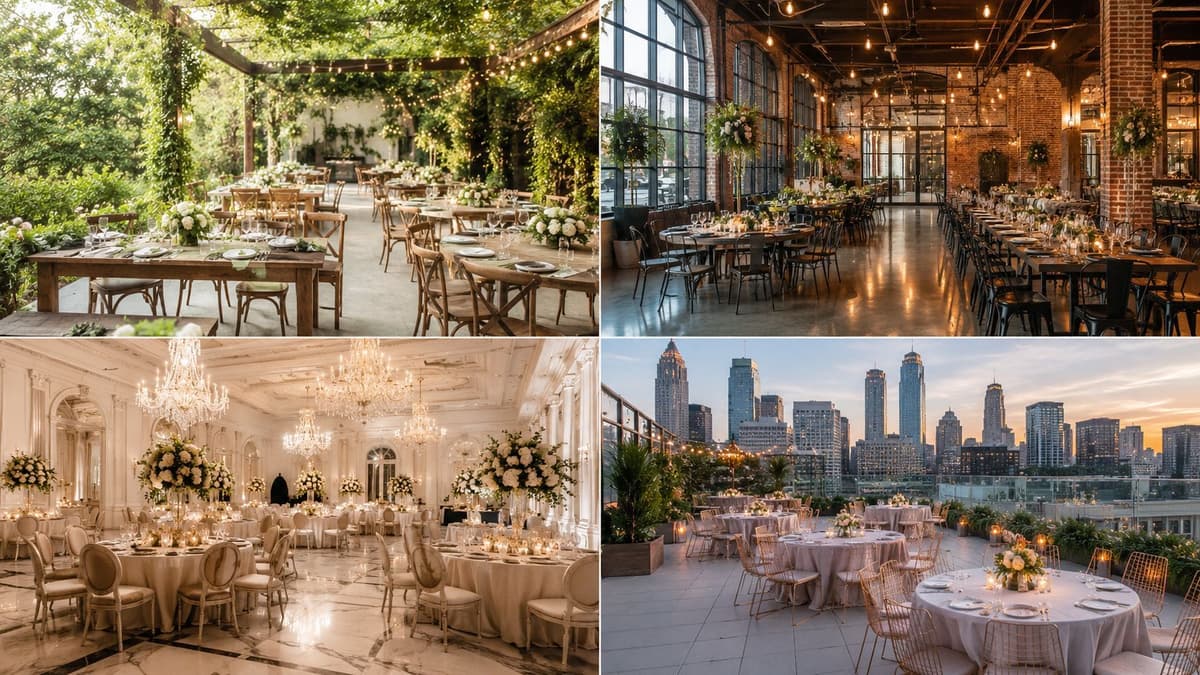
Indoor spaces can still work, especially if they have height, architectural restraint, and staff who are comfortable with production-heavy installs. A ballroom with low ceilings and generic carpeting is a difficult canvas. A loft, greenhouse, conservatory, tented structure, or raw venue with strong bones is a different story.
Use real market constraints when you shortlist
This is a structured venue segment now, not just an aesthetic concept. A North Carolina roundup of enchanted forest wedding venues shows formats ranging from a micro wedding site for 40 guests to woodland settings that can host up to 160 guests, with weekend pricing examples of $6,750 and $8,950 depending on package structure and onsite guest allowances, as outlined in this enchanted forest venue roundup.
That kind of data is useful because it forces practical questions early:
Guest count fit
Don't fall in love with a ceremony grove that can't support your actual list.
Package structure
Compare what's included. A lower venue fee can still become a more expensive event if you need rentals, lighting, transport support, or extensive backup infrastructure.
Site personality
Some venues are naturally intimate. Others are better for a larger celebration with more open circulation.
A venue can be gorgeous in photos and still fail on comfort, flow, or contingency planning.
What to inspect during a visit
Walk the venue like a planner, not just a couple in love with the trees.
Look at the ground. Guests in formalwear need stable footing. Look at the transitions. The route from ceremony to cocktails to dinner matters more in a wooded setting because natural beauty doesn't solve confusion. Stay until the light changes if you can. A forest that feels magical at midday can become visually flat by evening if there's no usable lighting infrastructure.
Ask direct questions about these points:
Power access for lighting, sound, and catering support
Weather backup that still aligns with your aesthetic
Accessibility for older guests, heels, mobility devices, and vendors carrying equipment
Noise and timing rules that affect music, lighting install, or end time
The right venue makes the enchanted forest themed wedding feel effortless. The wrong one turns every later decision into compensation.
Crafting the Atmosphere with Light and Florals
Most couples think the magic comes from “decor.” It doesn't. It comes from control of atmosphere. In this style, that usually comes down to three design pillars: lighting, floral volume, and natural texture.
Industry planning guidance for this theme repeatedly points to that combination, along with one major warning: under-lighting can make a woodland or tented setting look muddy in photos. That's why the strongest enchanted forest designs layer warm light sources, substantial florals, and tactile natural materials, as described in Peerspace's enchanted forest wedding planning ideas.
Start with light, not flowers
If you get lighting wrong, every other design choice loses impact. Flowers disappear. Texture flattens. The room feels dim instead of immersive.
Use lighting in layers:
Overhead glow from string lights or chandeliers to establish mood
Targeted focus on the ceremony, sweetheart table, and key photo areas
Low-level warmth from lanterns or candles to soften tables and pathways
This isn't only about romance. It's about visual structure. Guests need to know where to look, and your photographer needs contrast and definition after sunset.
Then add floral mass where it matters
Enchanted forest florals work best when they feel abundant but not overly formal. Think in clusters and grounded installations rather than evenly distributed symmetry.
Prioritize these zones first:
Ceremony entry and altar area
Your theme first reads clearly in photos here.
Head table or sweetheart table
It carries a lot of visual weight throughout the night.
One or two statement photo moments
That might be a bar backdrop, escort card table, or cake area.
Couples often spread the floral budget too thin by trying to make every table equally dramatic. It's usually more effective to build volume in a few focal areas and let smaller tables carry candlelight and texture.
If you want the room to feel lush, concentrate your effort. Don't dilute it.
A quick visual reference can help when you're mapping those layers into a real space.
Use texture to hide what breaks the spell
Texture is often the missing piece. It's what makes a styled venue feel integrated rather than decorated.
Use fabric to soften tent poles, plain walls, harsh corners, or rental structures. Use moss, branches, wood, and layered greens to connect man-made elements back to the setting. The goal isn't to pile on “forest props.” The goal is to make the space feel like it grew into place.
What usually doesn't work:
Too many fantasy motifs at once, which can make the design feel themed rather than elegant
Tiny decor items in a large outdoor setting, because forests absorb visual detail
Cold or sparse lighting, which shifts the mood from magical to flat
The couples who get this right usually think like production designers. They decide where the eye should go, where the warmth should sit, and where the camera will find depth.
Weaving the Theme into Attire and Stationery
The wedding starts to feel personal rather than merely well styled at this point. Venue and decor create the environment. Attire and paper goods tell guests what kind of story they're entering.
A couple planning a soft fairytale version of this theme might choose a gown with light movement, sheer layers, delicate embroidery, and a veil that catches warm light well. Their stationery could use soft botanical illustration, vellum overlays, and a restrained palette that hints at the surroundings without becoming literal. Nothing needs to shout “forest.” It just needs to feel like it belongs there.
A different couple might go in a darker direction. The bride chooses a structured gown or dramatic sleeves. The groom wears velvet or a richer tonal suit. Their invitation suite leans into deeper paper stock, botanical line work, and typography that feels cinematic rather than playful.
Let the attire follow the setting
A practical mistake is choosing clothing in isolation from the venue conditions.
If your ceremony is in a genuine woodland setting, think about movement, hem length, terrain, and temperature. A heavily embellished gown can be beautiful, but if it catches on roots and damp ground all day, it changes how you move through the wedding. The same goes for shoes. Forest weddings punish shoes that only work on polished floors.
For suits and tuxedos, fabric matters more than people expect. Matte textures, richer tones, and softer structure usually photograph better in wooded settings than very stark formalwear. That doesn't mean the look has to be casual. It means the clothing should sit naturally inside the environment.
Let the stationery set expectations
Guests first meet your wedding through paper goods or digital stationery. If the invitation says “formal black tie ballroom” but the wedding is candlelit woodland romance, the story breaks before the day even starts.
Use your stationery to preview three things:
Mood through color, illustration style, and typography
Formality through wording and paper choices
Environment through subtle clues, not costume-level graphics
The invitation should feel like the opening page of the same story your guests will step into later.
This is also a place to keep the theme disciplined. If the design is already atmospheric, you don't need leaf motifs on every piece and a wax seal and gold edges and illustrated mushrooms and script piled on top. Pick the signals that fit your version of enchanted.
The strongest forest weddings carry one visual language from invitation to aisle. That continuity is what makes the whole thing feel intentional.
Assembling Your Vendor Dream Team
A forest wedding usually looks simple on a mood board. In practice, it asks vendors to solve a series of production problems without breaking the atmosphere. Setup routes may be uneven. Power may be limited. Sunset can compress your photo window faster than expected. If your team treats the day like a standard indoor event with prettier decor, the design will suffer.
Hire for setting-specific judgment first, style second.
Choose vendors who can work in the environment you booked
Your photographer, florist, planner, caterer, rental company, and lighting team all affect whether the wedding feels immersive or improvised. Each one needs to understand how wooded settings change timing, access, and setup.
A photographer should be able to show full galleries from shaded ceremonies, overcast afternoons, and candlelit receptions. A few strong portrait images are not enough. Ask how they expose for faces under tree cover, how they handle mixed light at dusk, and how they protect timeline space when the best light arrives later than expected.
Florists need a similar kind of range. Enchanted forest design often relies on texture, scale, and placement that looks natural against the site. That requires more than pretty bouquets. Ask to see aisle meadows, ground-level ceremony work, branch installations, and reception pieces that still read clearly in lower light.
Screen for decision-making under pressure
Good answers are usually specific.
Ask each vendor what they would change if the ground is too wet for your original ceremony layout, if the access path slows load-in, or if wind makes open flames unrealistic. A vendor who has handled outdoor weddings will answer with alternatives, not vague reassurance.
I also listen for how they coordinate with other vendors. Forest weddings punish siloed planning. The florist needs to know when rentals arrive. The photographer needs to know when lighting turns on. The caterer needs a realistic plan for service if the kitchen is remote from the dining area. A strong team can explain those handoffs clearly.
Put your budget where failure would be expensive
DIY still has a place, but it should stay in low-risk categories. Welcome signage, favors, table numbers, or a guestbook display are usually manageable if you have time and storage space.
Anything tied to safety, weather protection, installation labor, electrical load, or tight setup timing should stay with professionals. That usually includes coordination, photography, floral installation, lighting, tenting, and sound. Those are the categories where a mistake becomes visible fast, costs more to fix on-site, or puts stress on the day itself.
Hire out the pieces that are hard to redo once guests arrive.
That one filter helps couples make cleaner decisions. If a job requires ladders, power planning, transport logistics, weather calls, or a backup plan, it belongs on a professional's run sheet, not on a family member's to-do list.
The 18-Month Enchanted Forest Planning Timeline
The easiest way to calm planning overwhelm is to stop treating every task as equally urgent. An enchanted forest wedding has a clear dependency chain. Venue first. Then the vendors tied most closely to the setting. Then design decisions that rely on the venue's conditions and layout. Then the personal details that complete the story.
This kind of wedding benefits from a longer runway because so many decisions build on one another. If you start with decor before the venue, or attire before the season and terrain are clear, you'll end up revising expensive choices.
18 to 15 months out
This phase is about locking the framework.
Choose the overall mood, estimate guest count, and shortlist venue types that can realistically support both. Visit venues with logistics in mind, not just aesthetics. Once the venue is booked, reserve the photographer and planner or coordinator next, since both will shape how the design gets translated into a functioning event.
Focus on:
Venue selection based on setting, flow, and backup options
Core creative hires including planner and photographer
Budget structure that separates essential production from nice-to-have decor
12 to 9 months out
The wedding becomes visually coherent here.
Refine your palette, lighting direction, floral style, attire, and invitation language. If the venue is outdoors or partially outdoors, confirm any rental, power, and layout implications before finalizing design-heavy choices. Bring your florist and planner into the same conversation early so floral ambition aligns with install reality.
A strong working list for this stage looks like this:
Timeframe
Priority
Why it belongs here
Around 12 months
Finalize design concept
It gives every later decision a visual filter
Around 10 to 9 months
Book florist and key rentals
Availability and design lead time matter
Around 9 months
Confirm lighting approach
Lighting needs to reflect the actual venue conditions
8 to 5 months out
Now the design needs operational clarity.
Order attire with the venue and season in mind. Finalize invitations and guest communications so they match the tone of the event and explain any practical details guests will need for an outdoor setting. Confirm catering flow, bar setup, transportation if needed, and the rain plan in plain terms.
A backup plan only works if it still feels like your wedding, not a stripped-down emergency version of it.
At this stage, review every major guest touchpoint from arrival to departure. Forest weddings often feel magical during the ceremony and chaotic during transitions if no one has mapped movement carefully.
4 months to wedding week
The final stretch is about simplification and confirmation.
Create the detailed run of show. Finalize ceremony placement, lighting zones, table layouts, and setup timing. Confirm who is responsible for every item that has to arrive, be installed, be lit, be moved, or be packed out.
Keep your attention on these last-mile tasks:
Weather contingencies that are fully communicated
Photo priorities tied to changing natural light
Decor edits so the design stays focused instead of overcrowded
Vendor confirmations with access times, placement plans, and contact flow
In the last month, avoid adding new themed elements just because you've seen fresh inspiration online. By then, the work is no longer about generating ideas. It's about protecting coherence.
A successful enchanted forest themed wedding doesn't come from collecting the prettiest references. It comes from making a series of aligned decisions in the right order, then giving each vendor enough clarity to execute their part without guesswork.
If you want a calmer way to turn your ideas into an actual plan, ItsaYes can help you organize your style direction, tasks, budget, and timeline in one place. For couples planning an enchanted forest wedding, that's especially useful when you're trying to connect mood boards, stationery, vendor decisions, and a realistic month-by-month schedule without juggling scattered notes.