How to Design a Perfect Floor Plan for Wedding Success
16 min
How to Design a Perfect Floor Plan for Wedding Success
Author
The ItsaYes TeamAuthor
You walk into your venue after booking it, and the room suddenly feels very different from the way it looked online. Empty spaces get loud in your head. The windows are gorgeous. The ceiling is perfect. And then the practical questions start arriving all at once.
Where does the dance floor go so it feels lively without blocking dinner service? Which tables will have a good view of the speeches? Can older relatives move through the room easily? If the ceremony and reception happen in the same place, what needs to move, and when?
That's why a floor plan for wedding planning matters so much. It isn't a side task. It's the master blueprint for the guest experience. It shapes how people enter, where they gather, how they eat, how they move, how they hear, and whether the whole night feels smooth or awkward.
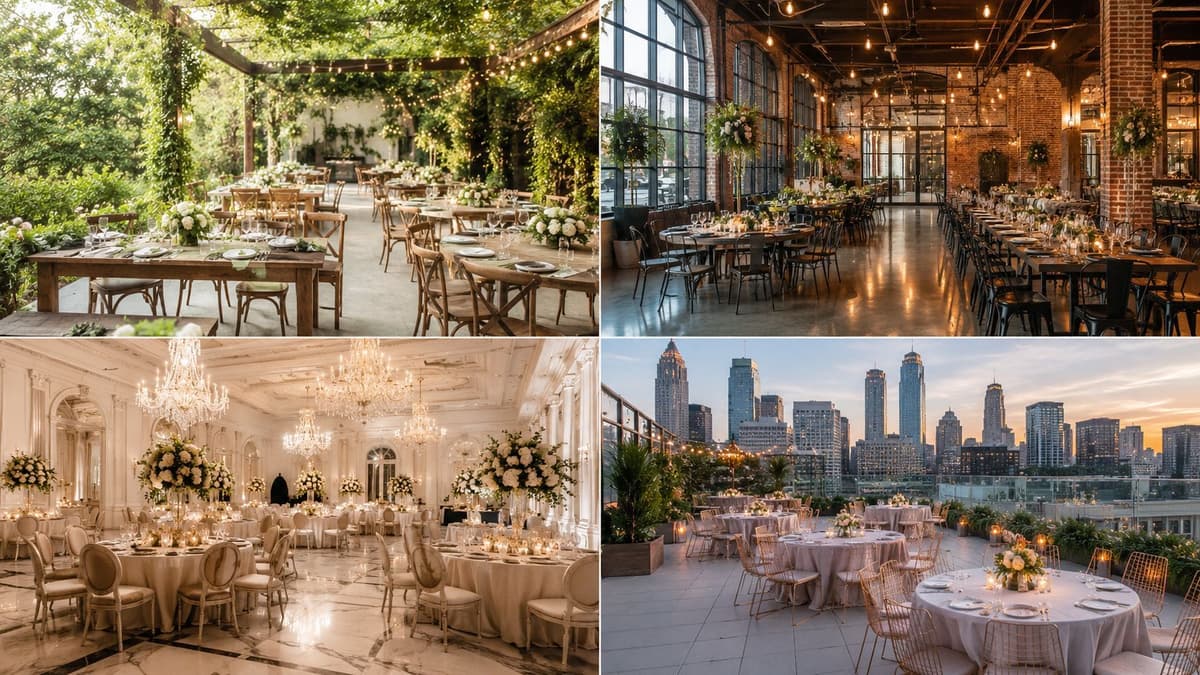
When couples get stuck here, it's usually because they think the floor plan is only about furniture placement. It's not. It's where style meets logistics. If you're collecting inspiration, galleries of modern wedding reception ideas can help you spot layouts and zone concepts you want to build around, instead of trying to force a generic ballroom setup onto your day.
A good plan calms everything down. It turns a blank room into decisions. It gives your vendors a shared reference. It helps you catch crowding, dead corners, and bottlenecks before they happen. Above all, it lets you design a celebration that feels effortless to your guests, even though a lot of thought went into it.
The couples who handle floor plans well usually stop treating them like a last-minute diagram. They treat them like the event's operating system.
A reception can look beautiful on paper and still function badly in real life. I've seen layouts where the sweetheart table was framed perfectly for photos but placed so close to the speaker that guests near the front couldn't hear each other. I've also seen simple rooms feel amazing because the plan respected sightlines, walking paths, and where people naturally wanted to gather.
Practical rule: If a layout only looks good from above but feels awkward at ground level, it isn't finished.
Think about the wedding from your guests' point of view. They don't experience your event as a PDF. They experience it in sequences:
Arrival: Is the entrance clear, welcoming, and easy to understand?
Ceremony or cocktail transition: Do people know where to go next without being herded?
Dinner: Can servers move cleanly through the room without clipping chairs?
Toasts and dancing: Can guests see, hear, and participate without leaving their seats frustrated?
Break moments: Is there somewhere quieter to sit, talk, or regroup?
That's what your layout controls.
The best floor plans also hold your style together. If you want a candlelit, intimate dinner, long tables may support that mood better than a room full of identical rounds. If you want a high-energy dance party, the dance floor needs to feel central enough that guests are drawn in instead of orbiting around the edges.
A solid floor plan for wedding success doesn't remove personality. It protects it. It gives your ideas structure so they can work in the actual space, with actual people, in actual shoes, carrying drinks, pushing strollers, using walkers, or trying to find the restroom between speeches.
Gathering Your Foundational Measurements
Before choosing table shapes or styling the bar, get the hard facts about the room. This is the part that prevents wishful thinking from turning into a cramped setup.
What to request from your venue
Ask your venue coordinator for a to-scale diagram of the room. You also need the practical details that don't show up in styled photos.
Use this checklist:
Room dimensions: Full length and width of each event space.
Fixed elements: Columns, built-in bars, fireplaces, stairs, low ceilings, radiators, and anything that can't move.
Doors and exits: Guest entry points, service doors, emergency exits, and which doors need to stay unobstructed.
Utilities: Power outlets, lighting controls, and load-in access for DJ, band, caterer, and photo booth teams.
Restroom and kitchen proximity: These affect traffic flow more than most couples expect.
Furniture inventory: What tables and chairs the venue already has, and their sizes.
Outdoor contingencies: If you're using a tent, terrace, or lawn, get measurements for the backup setup too.
If you're still evaluating spaces, a venue guide like how to find a wedding venue helps you ask better questions before a pretty room wins you over.
How much space you actually need
Planning becomes more grounded at this stage. For a standard reception using 60-inch round tables with 8 guests each, you need about 144 square feet per table for seating and movement. A 100-guest wedding requires at least 1,800 square feet for dining, plus around 400 square feet for a dance floor and 500 square feet for service areas like the bar and buffet, totaling about 2,700 square feet according to SeatPlan's wedding floor plan guide.
That number surprises people because the tables themselves aren't the whole story. Chairs pull back. Servers need room. Guests stand up and mingle. Lines form at the bar and buffet.
Here's a quick reference based on the verified planning data.
Guest Count
Approx. Dining Tables (8-top)
Recommended Minimum Space
100
13
2,700 sq ft
150
19
3,500 sq ft
200
25
4,500 sq ft
250
32
5,500 sq ft
300
38
6,500 sq ft
Measure twice, plan once
If the venue doesn't have a usable template, take your own notes during a walkthrough. Don't rely on memory, and don't assume “it looked big” is useful.
Bring:
A measuring tool: Tape measure or laser measurer
A printed sketch or notebook: Mark dimensions as you go
Your phone camera: Photograph corners, outlet locations, doors, and obstructions
A questions list: So you don't forget setup logistics in the moment
A room can be large and still be hard to plan if the usable area is broken up by doors, pillars, and service paths.
This stage isn't glamorous, but it's where a floor plan for wedding design becomes realistic. Once the canvas is accurate, the creative choices get much easier.
Choosing Your Layout and Seating Style
Once you know the room can physically support your guest count, the next question is what kind of experience you want the room to create. Layout drives mood fast. Formal, relaxed, communal, energetic, editorial. Most of that starts with how guests are seated and what the room asks them to do.
Round tables versus long tables
Round tables are the default for a reason. They support conversation well, make it easier to group mixed ages and personalities, and usually work cleanly in ballrooms and hotel venues.
Long rectangular tables feel more directional and dramatic. They create a shared dining line that photographs beautifully and can make a large room feel more intentional. They also demand more care with placement. If the room is narrow, long tables can either solve the layout or make it much harder.
A simple comparison helps:
Seating style
What works well
What can go wrong
Round tables
Easier conversation, flexible grouping, familiar service flow
Can look repetitive if every table is identical
Long trestles
Strong visual impact, communal feel, great for family-style dining
Harder in tight rooms, less flexible for uneven guest groups
Theater style
Clear ceremony sightlines, efficient use of space
Not suitable for dinner unless it's a ceremony-only setup
Mixing table sizes is often smarter
Uniformity looks tidy on a spreadsheet. Real guest groups rarely behave that way.
Planners often recommend mixing table sizes for flexibility. A 60-inch round table seats 8 comfortably, while a 72-inch round can accommodate up to 12 for larger family groups. For 100 guests, using ten 60-inch rounds and two 72-inch rounds offers more flexible grouping options than thirteen identical tables, as explained in this guide to venue floor plans and seating management.
That matters when you're trying to seat nine cousins together or keep a friend group intact without forcing one awkward split table.
A polished layout doesn't come from making every table match. It comes from making every table make sense.
Assigned seating versus open seating
This is usually less about etiquette and more about complexity.
Assigned seating works better when:
you have a larger guest list
family dynamics need care
dinner service is formal
you want to avoid people circling the room with plates
Open seating works better when:
the event is more casual
you're hosting a smaller group
cocktail-style or mixed lounge seating is part of the plan
your crowd is comfortable choosing their own spot
If you're still waiting on RSVPs, your floor plan and guest list need to move together. Systems that help you track wedding attendance make layout decisions easier because table counts only work when your headcount is current.
One room or a room flip
If your ceremony and reception share one space, the layout needs to do double duty. That can work beautifully, but only if the furniture shift is simple.
Good flip layouts usually have:
ceremony chairs that can be repurposed
reception tables pre-placed around the perimeter or already dressed
a clear reset plan for staff
no fragile decor in the path of movement
What doesn't work is designing two completely different rooms in the same footprint and hoping the transition will somehow be quick. If a flip depends on too many moving parts, it often feels rushed.
Placing Your Key Zones for Optimal Flow
A strong reception layout behaves like a map. Guests should understand it without being told where to go every few minutes.
Start with the dance floor
For most receptions, the dance floor is the anchor. It doesn't have to sit dead center in every room, but it should feel intentional. Guests should be able to find it easily, watch what's happening, and move toward it without cutting through dinner service.
Build outward from that zone. Then place the DJ or band where they can support energy without dominating every table conversation. Good sound placement matters. So does line of sight for first dances, toasts, and parent dances.
The support areas need just as much attention:
Bar placement: Put it somewhere easy to reach without sending every guest through the center of the dining area.
Buffet line: Keep it out of primary walkways so the queue doesn't block tables.
Cake or dessert display: Visible enough to feel part of the design, but not in a path where staff and guests keep colliding.
Photo booth or activity station: Better on the edge of the room than near the main entrance.
If you're planning guest activities beyond dancing, options like interactive wedding entertainment by PSW Events are easier to integrate when you treat them as their own zone instead of squeezing them into leftover space.
Design with accessibility from the beginning
This is the part many layouts miss. Accessibility shouldn't be a correction made after everything “pretty” has been placed.
A 2025 survey found 28% of couples have family with mobility issues, and planning for 36-inch wide aisles, per ADA guidelines, helps guests using wheelchairs or walkers move through the space according to St Bon Avenue's guide on wedding reception floor plans.
That should affect the whole plan:
Aisles: Keep primary routes wide and direct.
Restroom access: Don't make guests pass through crowded dance or buffet zones to get there.
Sightlines: Seat guests with mobility needs where they can see key moments without repeatedly standing.
Quiet corner: A lounge or low-stimulation space helps guests who need a sensory break.
Entry thresholds and outdoor surfaces: Check them early if the event includes lawn, gravel, or transitions between spaces.
Good hospitality is visible in the floor plan long before guests feel it in the room.
For home celebrations or outdoor setups, the same principle applies. A tent or backyard can feel relaxed, but circulation still needs structure. Guides to backyard wedding ideas are useful because they force you to think through pathways, stations, and utility access in spaces that weren't built for events.
Review the room in motion
A floor plan isn't finished until you test it mentally in sequence.
Ask these questions:
When dinner starts, where do servers walk?
When speeches happen, who can't see?
When dancing opens, where do seated guests retreat?
When older relatives leave early, can they exit without crossing the busiest zone?
If it rains or the room flips, what gets moved first?
This walkthrough gives a helpful visual sense of how layouts work in practice:
The best layouts don't force guests to think. They guide them.
Creating and Sharing Your Diagram
At some point, the layout in your notes has to become a real diagram that other people can use. Many couples often lose clarity during this transition. They've made decisions, but the plan still lives across screenshots, texts, mood boards, and a half-finished sketch.
When to draft it
Professional planners recommend creating a rough draft of the floor plan 60 days pre-wedding during a final venue tour, and using digital collaboration tools with vendors can reduce day-of setup delays by as much as 40% by removing confusion, according to Elisabeth Kramer's floor plan guide.
That timing works because major vendors are usually booked, your design direction is clearer, and your guest count is moving from estimate to near-final reality.
Don't wait for every RSVP before drafting. Start with your likely count, then refine. A floor plan gets stronger through iteration.
Paper versus digital tools
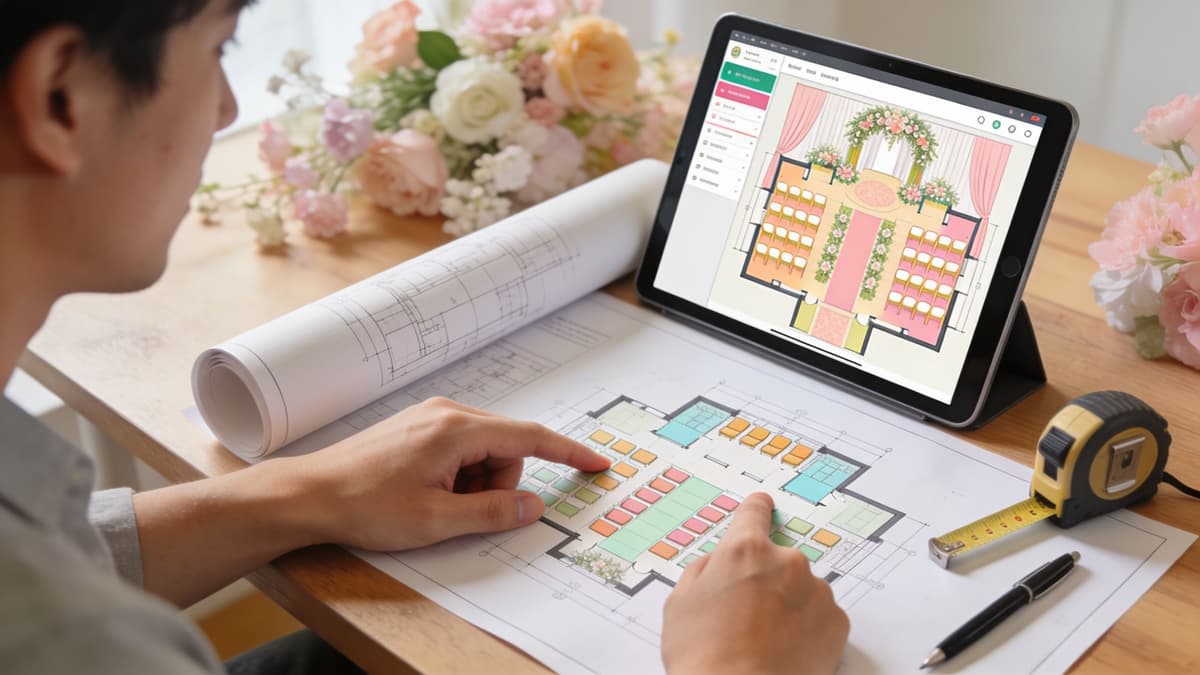
Graph paper still works for quick thinking. It's useful when you want to test spacing ideas fast or sketch during a venue visit. But for a final floor plan for wedding logistics, digital tools are easier to revise and share.
A practical setup often looks like this:
Sketch first: Rough options on paper or tablet
Build to scale: Use a digital planning tool with room dimensions
Match layout to guest list: Update tables as RSVPs change
Export one clean version: Send the same plan to every vendor who needs it
If you want your layout connected to the rest of your planning, a workspace like ItsaYes Wedding Design Studio can sit alongside other tools you may already use for seating charts, timelines, and inspiration. The useful part is having one current version instead of multiple almost-final ones floating around.
Who needs the final version
Your floor plan isn't private admin. It's an operations document. Share it with the people building the day.
At minimum, send it to:
Venue coordinator: For compliance, setup, and staffing
Caterer: For service routes, buffet, bar, and prep tables
DJ or band: For power, placement, and speaker orientation
Florist: For installations, table counts, and structure locations
Rental company: For exact quantities and placements
Photographer and videographer: For ceremony angles, key backdrops, and movement paths
One clear diagram usually solves more day-of questions than ten separate email threads.
Label tables consistently. Name zones clearly. Mark doors, exits, DJ setup, cake table, bar, and any accessibility considerations. If there's a rain plan or ceremony flip, create separate versions instead of cramming multiple scenarios onto one page.
Common Floor Plan Problems and How to Solve Them
Most layout issues don't come from bad taste. They come from one unchecked assumption. “We'll make it fit” is the usual culprit.
The room has an awkward pillar
Don't fight it by pretending it isn't there. Use it. A pillar can anchor a floral arrangement, define a lounge edge, or help separate a photo booth from the dining area. What it should not do is block the view from a key guest table or create a hidden collision point near the bar.
The guest count crept up
This happens all the time. The fix isn't always adding another full table. Sometimes it means revisiting table mix, adjusting who sits where, or changing the seating style in one part of the room.
If the added guests make the layout feel tense, that's your answer. A packed room doesn't feel abundant. It feels hard to move through.
The buffet or bar creates a traffic jam
That usually means the queue is pointed into the wrong zone. Rotate it. Pull it away from the main path between tables and restrooms. Give people a place to wait that doesn't cut across seated guests.
The draft looks fine, but something still feels off
Run a final review:
Check exits: Nothing decorative should narrow a clear egress path.
Check vendor tables: DJ, photo booth, and service stations often get forgotten.
Check chair pull-back space: A pretty rendering can still fail once every chair is occupied.
Check visibility: Parents, grandparents, and VIP tables should see key moments comfortably.
Check transitions: Guest arrival, dinner service, dancing, and departure should each make sense on their own.
If one zone only works when no one is standing, carrying a drink, or pushing a chair back, it doesn't work yet.
The strongest floor plans usually get one final round of simplification. Not more stuff. Better spacing.
Frequently Asked Questions About Wedding Floor Plans
When should I finalize my floor plan for wedding planning
Draft it well before the final rush, then refine it as RSVPs settle. The important part is not leaving the first version until the last minute, because layout decisions affect rentals, staffing, and service flow.
Should the dance floor always be in the middle
No. It often works well as a visual anchor, but the right placement depends on room shape, acoustics, and traffic patterns. “Central” matters more than “exactly centered.”
Are round or rectangular tables better
Neither is automatically better. Round tables are often easier for conversation and flexible seating. Rectangular tables create a stronger visual statement and suit communal dining. Many weddings benefit from using both.
Do I really need assigned seats
Not always. You do need a seating strategy. Open seating sounds easy, but it can create uncertainty if the guest count is larger or the dinner style is formal.
How do I make the layout feel inclusive
Start by planning for mobility, clear pathways, comfortable sightlines, and lower-stimulation spaces. Inclusivity works best when it shapes the first draft, not the emergency edits.
What if I'm planning a wedding at home or outdoors
Treat it with the same discipline as a venue ballroom. Measure everything, plan guest paths, define service zones, and create a backup version if weather could change the setup.
If your wedding ideas are currently spread across notes, screenshots, and separate checklists, ItsaYes gives you one place to turn them into a structured plan. You can organize your vision, tasks, and timeline in a calmer workflow, so decisions like your floor plan connect to the rest of the day instead of living in isolation.