Before you touch a single spreadsheet or download a budget template, you and your partner need to sit down and have a real conversation. Planning a wedding on a budget isn't about starting with a number; it's about starting with what actually matters to you.
This initial chat is your foundation. Get this right, and every other financial decision becomes infinitely easier.
First, Define Your Vision. Then, Build the Budget.
The journey to an affordable wedding doesn't start with cutting costs. It begins with a heartfelt talk about your shared priorities. Before you even think about venues or vendors, you have to agree on the 3 to 5 things that will make this day feel like your wedding.
Is it about capturing every moment with a world-class photographer? Or maybe it’s a live band that keeps the dance floor packed all night? Perhaps what you really care about is an incredible meal that your guests will talk about for years.
This isn't about money yet, it’s about defining the soul of your celebration.
Why is this so critical? Because it prevents the slow, stressful budget creep that plagues so many couples. A recent study found that a staggering 56% of couples overspent their original wedding budgets, showing just how easily costs spiral without a clear North Star. When you set your priorities first, you create a powerful filter for every decision, making sure your money is spent on what you truly value. You can dig into more wedding spending trends from recent research.
Create Your "Priority Pyramid"
A "Priority Pyramid" is a simple but incredibly effective way to visualize what you both care about most. Think of it as a hierarchy for your wedding dreams. The goal is to identify the top 3-5 elements that will get the lion's share of your attention and your budget.
Tier 1 (The Peak): Your absolute, can't-live-without-it must-haves. For one couple, this might be the Venue and the Photographer.
Tier 2 (The Middle): Things that are really important, but where you have some wiggle room. This could be the Guest Experience (Food & Drink) and Music.
Tier 3 (The Base): Everything else. These are the areas where you're happy to save, simplify, or even DIY. Think Decor, Invitations, and Favors.
This framework gives you permission to spend with intention. If photography is at the top of your pyramid, you'll feel confident investing in a top-tier professional. And you’ll feel just as good about saving money with digital invitations, because you know it serves your bigger goal.
Modern planning systems are built around this exact principle. A tool like ItsaYes is an AI-powered wedding planning system designed for couples who want clarity from the very start. You begin by defining your style and ideas, and the platform helps you turn that inspiration into a clear plan, laying the groundwork for a solid budget from day one.
The most successful budget weddings aren't the cheapest—they're the most intentional. By defining your priorities upfront, you're not just saving money; you're investing it in the memories that will matter most for years to come.
With your priorities set, it’s time to get real about the money. Building a wedding budget isn't about slapping a number on a spreadsheet and hoping for the best; it's about turning that "Priority Pyramid" you just built into a smart, actionable spending plan.
This is the step that separates a dream wedding from a stressful one. The goal isn't just to pick a total number, but to understand exactly how that number will break down across every vendor, deposit, and late-night purchase. Getting this clarity upfront is what prevents those heart-stopping budget overruns that can suck the joy out of planning.
Think of your budget as a tool that empowers you. It lets you spend lavishly and confidently on the things you care about most, while giving you permission to be creative and thrifty on everything else.
From Big Picture to Line Items
First things first: forget those generic percentage charts you’ve seen online. Your budget needs to be a direct reflection of your priorities, not someone else's. If incredible food and a top-shelf photographer are at the peak of your pyramid, your spending breakdown will look totally different from a couple who's all about a killer live band and an open bar.
Your "Priority Pyramid" is your North Star here. The items at the top get the biggest slice of the pie. The stuff at the bottom? That's where you start looking for ways to save.
Let's look at a real-world example:
Imagine two different couples, both working with a $25,000 wedding budget.
Couple A (Priorities: Venue & Food): The guest experience is their absolute non-negotiable. They might allocate a whopping $15,000 (60%) to lock in a stunning venue with an amazing catering package. To make that work, they’ll get creative elsewhere—maybe by sending digital invitations and DIY-ing their floral arrangements.
Couple B (Priorities: Photography & Entertainment): They're focused on capturing the memories and creating an epic party. They might drop $5,000 on their dream photographer and another $5,000 on a high-energy band they love. To balance the books, they could opt for a more affordable, non-traditional venue (like a local park pavilion) and choose a fun, buffet-style meal over a formal plated dinner.
See how that works? Your money should follow your values for the day.
Uncovering the Hidden Wedding Costs
One of the biggest traps in wedding budgeting is forgetting about all the "invisible" expenses. I'm talking about the sneaky taxes, service fees, and tips that almost never show up in a vendor's initial quote.
If you're not careful, these costs can easily tack on an extra 20-30% to your final bills. It’s a shocker if you aren't prepared for it.
Key Takeaway: When you talk to vendors, always, always ask for an "out-the-door" or "all-in" price. This simple question forces them to include all the service charges, taxes, and mandatory gratuities in the quote, giving you a true picture of the total cost right from the start.
Here are the most common culprits to build into your budget from day one:
Sales Tax: This applies to nearly everything, from the venue rental to your wedding dress.
Service Fees & Gratuities: Caterers and venues often add a mandatory service charge of 18-25% on top of the food and beverage bill. This is rarely optional.
Overtime Fees: Your contracts should clearly state the hours of service. Asking your DJ or photographer to stay "just one more hour" can come with a surprisingly hefty price tag.
Postage: Don't just buy a book of stamps! Weigh a fully assembled invitation suite before you do. Heavier paper, wax seals, or extra inserts can drive up postage costs significantly.
Alterations: The price on your wedding dress tag is just the beginning. Plan on budgeting at least several hundred dollars for professional alterations to get that perfect fit.
Centralize Your Financial Tracking
Once you've drafted your budget, you absolutely need a single, central place to track every single dollar. Trying to juggle scattered notes in your phone, flagged emails, and a messy spreadsheet is a guaranteed recipe for overwhelm and overspending. A centralized system is non-negotiable for staying in control.
This is where a dedicated planning platform can be a total game-changer. Instead of juggling spreadsheets, Pinterest boards, and scattered notes, ItsaYes brings your vision, tasks, budget, and timeline into one calm, intuitive workspace.
An intelligent wedding budget app can act like a personal financial assistant, logging your spending in real-time and flagging potential overages before they even happen. It keeps your entire financial picture organized, moving you from reactive damage control to proactive financial management. That's how you get to actually enjoy the process with confidence.
Laying Out Your Wedding Planning Timeline
When you're trying to pull off an incredible wedding on a budget, time is your single greatest asset. Seriously. Booking vendors early doesn't just give you more options; it almost always locks in better prices. A smart timeline is what stands between you and the last-minute panic that inevitably leads to overspending.
Think of your timeline as the roadmap for this entire adventure. It takes what feels like a massive, overwhelming project and breaks it down into a calm, logical series of steps spread out over months. This is how you stay in control and avoid missing those critical, money-saving deadlines.
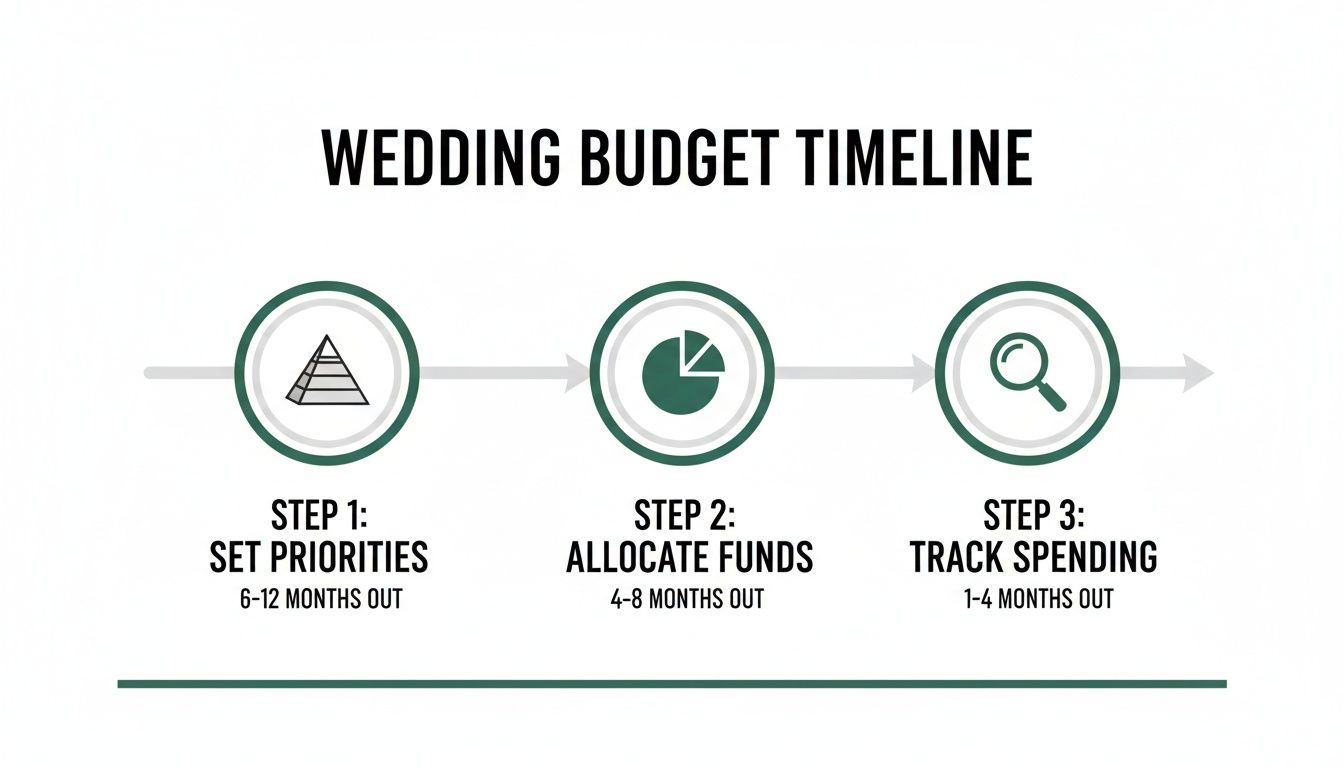
It's not just about what you do, but when you do it. The whole process follows a natural flow, from big-picture vision to the nitty-gritty details.
As you can see, a solid budget isn't something you just "set and forget." It's a living thing that starts with your core vision, moves into allocating funds, and absolutely relies on consistent tracking to keep everything on course.
The Standard Track: A 9-18 Month Timeline
For couples who prefer to take a deep breath and enjoy the process, this longer timeline gives you plenty of room. You can research vendors without feeling the pressure and often snag early-bird discounts.
9-12+ Months Out
This is all about laying the foundation. Your goal here is to lock in the big-ticket, high-demand vendors whose schedules dictate everything else.
Nail Down Your Budget & Guest List: Before you can do anything else, you need a firm number for your total spend and a rough draft of your guest list. These two things will define the scale of your entire wedding.
Book Your Venue: This is the cornerstone. The venue's availability sets your date and often has a ripple effect on which other vendors you can even consider.
Hire Your Photographer: The best photographers are often booked more than a year out. If you have your heart set on someone, you need to move quickly, especially for a popular Saturday.
Hire a Wedding Planner (If You're Using One): If a pro is in the budget, now's the time. They can help steer you toward smart vendor choices from the very beginning.
6-9 Months Out
With the major pillars in place, you can now shift your focus to the vendors who shape the experience for your guests.
Book Your Key Vendors: This is the sweet spot for booking your DJ or band, caterer (if the venue doesn't provide one), and your florist.
Shop for Your Outfits: A wedding dress can take months to order and alter, so it's time to start looking. This is also a good time to start thinking about bridesmaid dresses.
Send Out Save-the-Dates: Give everyone, especially out-of-towners, a generous heads-up so they can make travel plans.
4-6 Months Out
The finer details are starting to come into sharp focus now.
Finalize Rentals: This is when you'll order anything your venue doesn't provide, like specialty chairs, linens, or that dance floor you've been dreaming of.
Book Transportation: Arrange any shuttles for guests or your getaway car.
Schedule Tastings: Time for the fun part! Work with your caterer to lock in that perfect menu.
The Express Track: A 6-9 Month Timeline
Working with a shorter engagement? It’s completely doable. You just need to be focused, decisive, and ready to act fast. There's no time to agonize over every choice, but you can absolutely still have a beautiful, budget-friendly day. The trick is to combine steps and make decisions efficiently.
First 30-60 Days (All-In Sprint): You’re essentially cramming the entire "9-12+ Months Out" phase into the first month or two. Your absolute top priority is to set the budget, draft a guest list, and book your venue and photographer. You'll likely need to be more flexible on your date and vendor choices.
Months 4-5: This is your window to book all remaining major vendors: entertainment, catering, and florals. You also need to order your wedding attire and, importantly, send out your invitations now—you'll be skipping separate save-the-dates.
Months 1-3: The final stretch is all about confirming details with every single vendor, getting your marriage license, and creating a detailed day-of schedule to make sure everything runs smoothly.
An organized system is your best friend on any timeline, but it's non-negotiable for a condensed plan. A platform like ItsaYes can break the next 6 to 12 months into simple, manageable steps. Your personal AI assistant is available 24/7 to suggest priorities, organize tasks, and keep everything moving forward without overwhelm.
Whichever path you're on, a clear timeline is your best defense against stress and overspending. If you need a hand organizing the big day itself, feel free to use our free wedding day timeline generator.
Finding and Negotiating with Wedding Vendors
Securing your team of vendors is the moment your wedding vision starts to feel real. It's also your biggest opportunity to protect your budget. This isn’t about aggressive haggling—it's about smart, respectful communication. The goal is to build great relationships with the creative pros who will bring your day to life, all while making sure every dollar is spent wisely.
Confidence is your best friend here. Before you send a single email, get your ducks in a row: know your total budget, your target guest count, and your ideal date (or a flexible range of dates). Walking into a conversation with this information shows vendors you’re serious and organized, and it makes them far more willing to work with you to find a solution that fits.
Asking the Right Questions to Find Savings
When you first reach out, the questions you ask can unlock savings that vendors don't advertise on their websites. Going beyond a simple "what's your pricing?" can reveal a ton of flexibility.
Here are a few questions I always recommend asking different vendors:
For Venues: "Are your rates different for a Friday or Sunday wedding?" or "Do you have any off-season dates with lower food and beverage minimums?" An off-peak booking can sometimes save you 20% or more right off the bat.
For Photographers: "Do you offer a reduced rate for fewer hours of coverage, say, six hours instead of eight?" or "Is there a discount if we book an engagement session and the wedding day package together?"
For Caterers: "What's the price difference between a plated dinner, a buffet, and family-style service?" and "Can we provide our own alcohol if we pay a corkage fee?" That last one can be a massive cost-saver, depending on the venue.
These questions aren't just about cutting costs; they're about finding the perfect fit for your specific wedding. A vendor who's happy to have these conversations is probably a vendor who will be an amazing partner throughout the whole process.
The Art of a Good Negotiation
Negotiation doesn't have to be scary. It's just a conversation about value. The best approach is to be polite, totally transparent about what you can spend, and crystal clear about what you're looking for.
Key Takeaway: Your most powerful negotiation tool is flexibility. If you can be flexible on your date, the day of the week, or even the specific menu items, vendors will have much more room to work with your budget.
Here’s a sample email script you can tweak when you find a vendor you love whose package is just a little out of reach:
"Dear [Vendor Name],
We absolutely love your work and feel your style would be a perfect fit for our wedding on [Date] at [Venue].
We are working with a total photography budget of [Your Budget], and while your [Package Name] is a bit beyond our range, we were hoping there might be an opportunity to create a custom package. For instance, would it be possible to reduce the hours of coverage or forego the second shooter to better align with our budget?
We are flexible and would be grateful for any suggestions you might have.
Thank you so much,
[Your Names]"
This approach is respectful, shows you’ve done your homework, and opens the door for collaboration instead of making a demand. It's also critical to ground your budget in reality. Where you get married dramatically impacts your costs, we're talking a difference of up to 400% from one state to another. An average wedding in Washington, D.C. can hover around $70,600, while the same celebration in Utah might be closer to $17,000. You can find more details on how location impacts wedding costs on nchstats.com. Understanding this regional landscape is key to having realistic conversations with vendors.
Reading Contracts to Avoid Budget Traps
Before you sign on that dotted line, read every single word of the vendor contract. Seriously. This document is your protection, and it's where budget traps love to hide in the fine print.
Pay close attention to these key areas:
Overtime Clauses: What happens if your reception runs an hour late? Make sure the hourly rate for overtime is clearly stated.
Cancellation Policy: Know exactly what the financial penalties are if you have to cancel or postpone.
"Final" Numbers Deadline: When does the caterer need your final guest count? Adding guests after this date can be incredibly expensive.
Hidden Fees: Look for mentions of cake-cutting fees, corkage fees, or charges for using vendors who aren't on their "preferred" list.
Trying to manage all these inquiries, proposals, and contracts can feel like a full-time job. Using an AI-powered system like ItsaYes keeps all your vendor details in one intuitive workspace. Your AI assistant can help track payment deadlines and suggest what to tackle next, making sure nothing falls through the cracks and your budget stays right on track. You can even check out our guide on how much a professional wedding planner should cost to see how these services compare.
Smart Strategies on Where to Splurge and Save
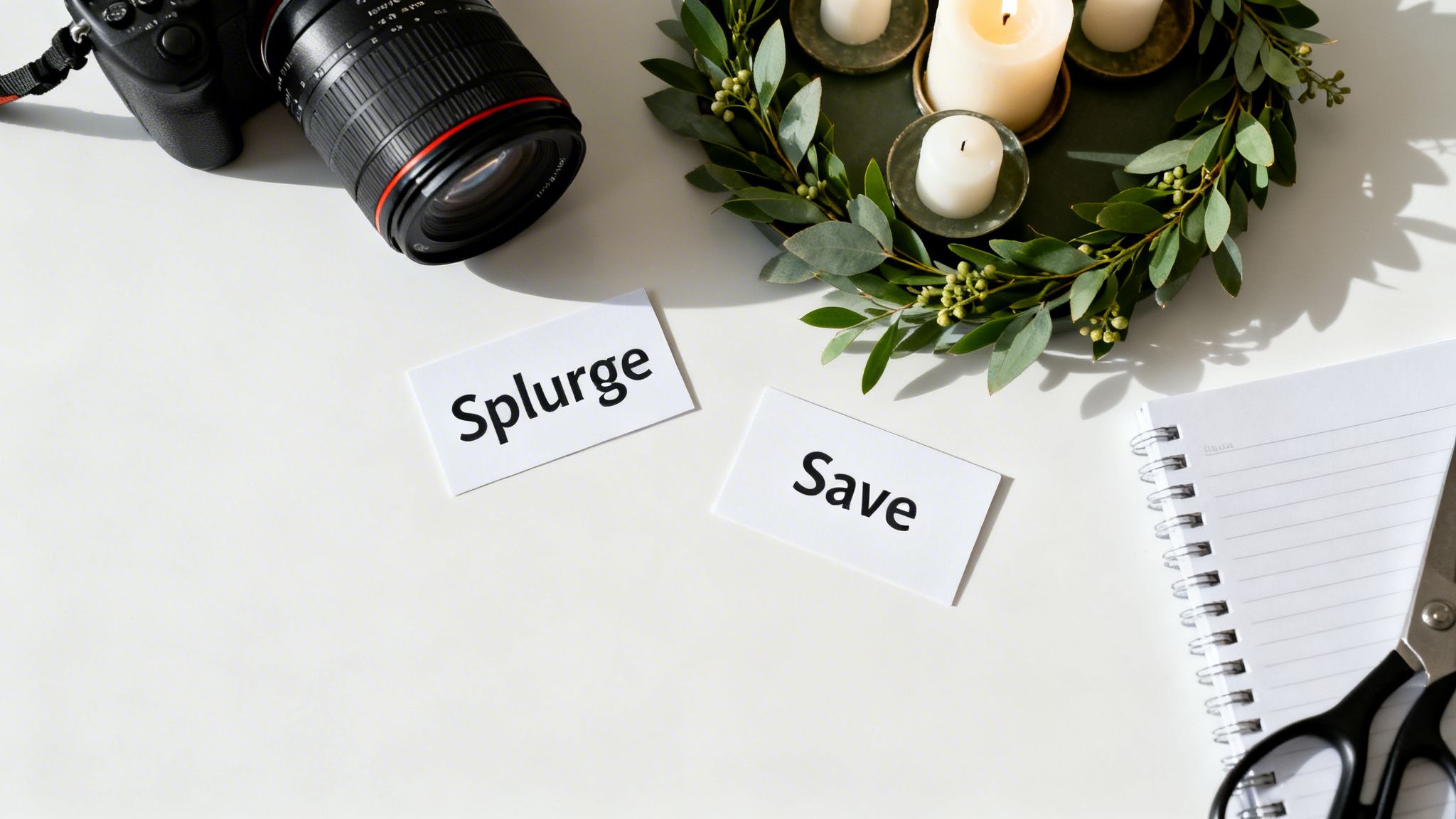
A budget-friendly wedding isn’t about cutting corners on everything. It’s about being intentional with your money. The real secret is making strategic choices that elevate the day for you and your guests while ruthlessly cutting costs on the things that just don’t matter in the long run. This is your splurge-versus-save framework, and it's the key to protecting your bottom line without sacrificing an ounce of style.
It all comes down to focusing on the elements with the biggest impact. By figuring out where to invest and where you can find clever, beautiful alternatives, you can make every dollar work harder. This approach ensures your spending directly contributes to the vision you and your partner have for your day.
Areas Worth the Splurge
Some parts of your wedding day leave a lasting impression long after the last song has played. These are the areas where investing a bit more can give you a massive return in terms of your own joy and the memories you'll look back on forever.
Photography: Your photos are one of the only tangible things you'll have left after the wedding is over. Splurging on an experienced photographer whose style you absolutely love is almost always a wise investment. They don't just snap pictures; they capture the emotion and the entire feel of the day.
Guest Comfort and Experience: This is a broad category, but it really just means making your guests feel welcomed and cared for. This could mean splurging on an amazing band that keeps the dance floor packed or ensuring the food is delicious and memorable. Happy guests make for a happy wedding.
The Venue: While you can definitely find budget-friendly venues, sometimes spending more on a space that needs minimal decoration can actually save you money (and stress) in the long run. A venue with natural beauty often requires a lot less floral and decor spending to feel truly special.
High-Impact Ways to Save
Saving money doesn't have to mean cheapening your wedding. Smart savings are about being creative and resourceful in areas that guests are less likely to notice or care about. You can save thousands without anyone being the wiser.
Invitations: Beautiful stationery is lovely, but let's be honest—most guests eventually throw it away. You can save a significant amount on printing and postage by opting for stylish digital invitations or minimalist paper designs.
Flowers and Centerpieces: Instead of over-the-top, expensive floral arrangements, think about minimalist greenery, romantic clusters of candles, or a single type of in-season bloom. These options can look incredibly chic and modern for a fraction of the cost.
Wedding Attire: You do not need a multi-thousand-dollar dress or suit to look and feel incredible. Explore sample sales, look into buying a pre-owned outfit from a site like Stillwhite, or even consider renting. The savings can be enormous.
Your budget strategy should reflect a shift we're seeing across the industry: couples are investing more in the experience for each guest rather than just accommodating a larger crowd. By focusing on per-person value, you create a more intimate and memorable event while keeping total costs in check.
This trend is backed by industry data, which shows a rise in per-attendee spending even as couples make more intentional budget choices. The average spending per guest has climbed, reflecting a focus on quality over quantity. Understanding that 61% of British couples rely on family contributions also highlights the need for clear, strategic planning. You can see more data on how couples are adapting their budgets from The Knot Worldwide.
The DIY Dilemma: When to Do It Yourself
DIY projects can be a fantastic way to personalize your wedding and save money, but they can also become a major source of stress and unexpected expenses. Before you dive headfirst into a project, ask yourself three honest questions: Do I have the skills? Do I truly have the time? And will it actually save money once I buy all the supplies?
Projects That Are Often Worth It:
Signage: Creating welcome signs, seating charts, and menu boards with templates from places like Etsy is simple and effective.
Simple Favors: Assembling small, thoughtful favors like bags of local coffee or custom playlists can be a lovely touch.
Guest Book Alternatives: Setting up a Polaroid station or a Jenga set for guests to sign is easy, engaging, and much more fun than a traditional book.
Projects to Approach with Caution:
Complex Floral Arrangements: Arranging your own bouquets and centerpieces is much, much harder than it looks. It can be incredibly stressful to tackle the day before your wedding when you should be relaxing.
Catering: Unless you're a professional chef, just don't. Catering your own wedding is a logistical nightmare that is almost never worth the risk or the stress.
Day-of Coordination: You cannot be your own wedding coordinator. You deserve to actually enjoy your day. At a minimum, ask a trusted, hyper-organized friend to be the point person for vendors.
Juggling all these decisions, splurging here, saving there, and figuring out what to DIY, can feel overwhelming. This is where an AI-powered system like ItsaYes brings clarity to the chaos. It’s built for newly engaged couples who want to enjoy the process, stay organized, and feel confident, from first inspiration to a fully structured plan. It turns a complex balancing act into a simple, manageable process.
Your Biggest Wedding Budget Questions, Answered
Once you dive into wedding planning, the questions start popping up fast. How do we handle the guest list without causing a family feud? Are those all-inclusive venues really a good deal? It’s easy to feel like you’re stumbling from one tricky financial decision to the next.
Let's clear things up. Think of this as your practical, no-nonsense guide to the most common budgeting hurdles. With the right perspective, you can navigate these challenges calmly and keep your wedding plan right on track.
How Do We Create a Guest List That Doesn't Break the Bank?
Let’s be honest: the guest list is often the most emotionally charged part of planning a wedding on a budget. The secret? You and your partner need to establish firm, fair rules before you bring anyone else into the conversation. Your guest count is the number one driver of your total cost, affecting everything from your catering bill to the number of chairs you need to rent.
A game-changing strategy is the "Tier System." It helps you prioritize your guest list logically, taking some of the raw emotion out of the toughest decisions.
Here’s the breakdown:
Tier 1: Your non-negotiables. This is your immediate family (parents, siblings), your entire wedding party, and your absolute closest, ride-or-die friends.
Tier 2: The next circle out. Think extended family you're genuinely close with (favorite aunts, uncles, cousins) and good friends you see on a regular basis.
Tier 3: The final group. This includes your parents' friends, coworkers you aren't close with outside of work, and "plus-ones" for guests who aren't in serious, long-term relationships.
Start by building out your Tier 1 list. Only when that’s complete should you even think about moving to Tier 2, and only if your venue and budget can handle it. A great litmus test is to ask yourselves, "Would we take this person out for an expensive dinner?" If the answer is no, they probably shouldn't make the final cut.
This structured approach also gives you a solid framework for navigating those tricky conversations with parents. Instead of asking for their entire wish list, you can allocate a specific number of seats to each family. This gives them the autonomy to invite their most important guests while still respecting the financial boundaries you’ve set.
Are All-Inclusive Venues Actually a Good Deal?
All-inclusive venues can be a fantastic way to simplify your planning and lock in some serious savings, but you have to read the fine print. These places often bundle the location fee, catering, bar service, and basic rentals (linens, tables, chairs) into a single per-person price, which can make budgeting feel much more predictable.
The biggest pro is convenience. Managing one contract instead of five or six separate ones is a massive stress reducer. However, "all-inclusive" rarely means everything is included.
Before you sign anything, always ask for a detailed breakdown of what’s covered and, more importantly, a list of potential up-charges. That clarity is the only way to do a true cost comparison.
Common things that might cost you extra:
Upgrades to premium liquor or extending bar hours
Specialty linens or chairs that aren't the house standard
Vendor meals for your photographer, DJ, and other on-site pros
Fees for cutting and serving your wedding cake
To figure out if it's a good deal, compare the venue's per-person price against an itemized budget you'd build by hiring all those vendors separately. For couples who value a streamlined process and predictable costs, an all-inclusive package is often the smartest financial choice you can make.
What Are the Biggest Hidden Costs I Should Plan For?
Hidden costs are the number one reason couples blow their wedding budget. These are the sneaky expenses that aren't usually in the initial vendor quotes but can add up to thousands of dollars by the time all is said and done.
The biggest culprits are taxes and service fees, which can easily add 20-30% to your final catering and venue bills. Always, always ask vendors for an "out-the-door" price to make sure those are factored in from the start.
Other common hidden costs to watch out for:
Postage: Don't just budget for standard stamps. A full invitation suite with multiple inserts and a thicker cardstock will almost certainly require extra postage. Weigh a complete set at the post office before you buy.
Alterations: That price tag on the wedding dress or suit? That’s just the beginning. Professional alterations are almost always necessary and can run you several hundred dollars.
Vendor Meals: Your on-site team, the photographer, videographer, band members, and planner, will need a meal during the reception.
Marriage License: The fee for your official marriage license is a small but non-negotiable cost that's incredibly easy to forget about.
Welcome Bags: If you're putting together welcome bags for out-of-town guests, the costs for the bags themselves, snacks, drinks, and local goodies can add up surprisingly fast.
Your best defense against these budget busters is a dedicated contingency fund. Set aside 5-10% of your total budget as a safety net specifically for these inevitable and unexpected expenses.
Can We Realistically Plan a Nice Wedding for Under $10,000?
Yes, a beautiful and memorable wedding for under $10,000 is absolutely possible. It just requires a healthy dose of creativity, flexibility, and a laser focus on what truly matters to you. The entire plan hinges on aggressively managing your two biggest expenses: the venue and the guest list.
First, a smaller guest count is non-negotiable. Aiming for 50 guests or fewer is the single most effective way to keep costs down across the board.
Next, you have to get creative with your venue and catering.
Think outside the ballroom. Look into a public park pavilion, a local community center, a favorite restaurant with a private room, or an intimate celebration in a friend's backyard.
Reimagine the meal. A formal, plated dinner is almost always the priciest option. A stylish brunch reception, a cocktail-style party with heavy appetizers, or even hiring a popular local food truck can create an amazing guest experience for a fraction of the cost.
For everything else, smart swaps make a huge difference. Use a curated Spotify playlist instead of a DJ, send digital invitations and manage RSVPs online, and look for a gorgeous dress at a sample sale or a high-street retailer.
Planning a wedding on a tight budget demands exceptional organization. Trying to juggle all these moving parts without a clear system can lead to serious stress and costly mistakes. This is precisely why having a centralized workspace is so important.
Planning a wedding should be a joyful experience, not a source of financial stress. With ItsaYes, you can bring your vision, budget, and timeline into one calm, intuitive platform. Your personal AI assistant helps you turn inspiration into a structured plan, suggesting priorities and organizing tasks to keep everything moving forward without overwhelm. Start planning with clarity from day one. Learn more about ItsaYes.