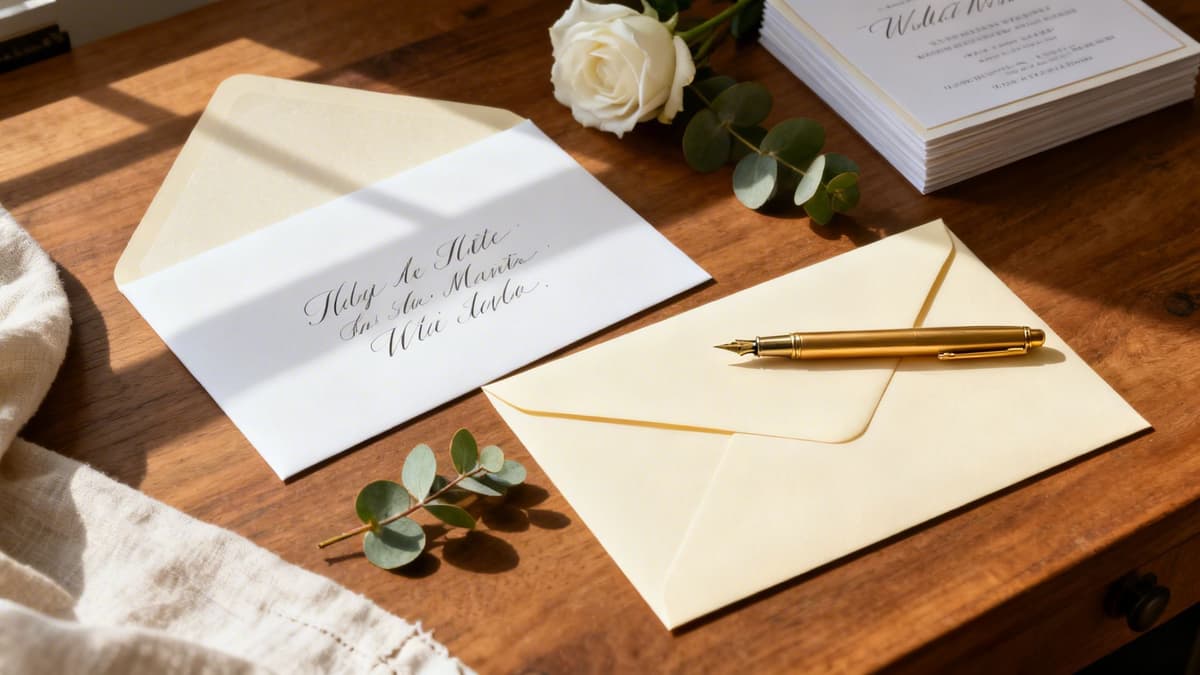
Addressing your wedding invitations is the very first piece of your wedding story your guests will experience. It’s their first real clue about the day you’re planning. That little envelope landing on their doormat sets the tone, communicates the formality, and, most importantly, shows you care.
Think of it less as a mailing task and more as a gesture of hospitality, one with surprisingly deep roots in tradition.
Your First Impression: The Art of Addressing Invitations
The way you address your invitations is more than just getting them from point A to point B; it’s a subtle preview of your entire event. A crisp, formal address with full titles immediately signals a black-tie affair. A more modern, first-name-basis approach? It suggests a relaxed, contemporary celebration. This small detail is your first chance to make every single guest feel personally welcomed and valued.
Let's be honest, though. This process can feel like navigating a complex maze of unwritten rules, adding another layer of stress to your already-full plate. But instead of seeing it as a chore, try to think of it as an art form, a chance to show thoughtful consideration for the people you love. Once you understand the why behind the etiquette, the how becomes so much easier.
From Victorian-Era Tradition to Modern Day Practice
The whole practice of sending elaborate, formally addressed invitations isn't new. It dates all the way back to the Victorian era around the 1840s. Back then, engraved invitations became a status symbol, evolving from simple handwritten notes to printed works of art.
Today, this tradition is still going strong, even in our digital world. Google data shows that searches for wedding invitations peak sharply every January as newly engaged couples start planning for summer and fall weddings. (You can see more about how seasons impact planning with these insights on wedding statistics.)
These historical rules established the groundwork for traditions we still use today, most notably the use of double envelopes.
The Outer Envelope: This is the workhorse. It carries the formal address, your return address, and the postage stamp. It’s designed to protect the pristine invitation suite inside from the dirt and scuffs of the postal system. This one is always addressed with guests' full, formal titles and names.
The Inner Envelope: This is where the personal touch comes in. It addresses guests more intimately (like "Aunt Carol and Uncle Bob") and, critically, clarifies exactly who is invited. This is the perfect, polite tool for specifying if children are included or if a guest can bring a plus-one, heading off any awkward questions later.
Understanding the distinct roles of the outer and inner envelopes is a game-changer. It lets you communicate your guest list with clarity and grace, preventing a ton of potential confusion down the line.
Turning Overwhelm into an Organized Plan
For newly engaged couples, the thought of collecting hundreds of addresses, mastering etiquette rules, and keeping track of it all feels completely daunting. This is where spreadsheets become chaotic, Pinterest boards feel scattered, and the stress starts to build.
This is precisely where a modern planning system can completely transform the experience. Instead of juggling multiple documents and a mounting sense of panic, a tool like ItsaYes brings your vision, tasks, and timeline into one calm, intuitive workspace. You begin by defining your style, and the platform helps turn that inspiration into a clear plan, breaking the next 6 to 12 months into simple, manageable steps.
Your personal AI assistant is available 24/7 to suggest priorities, organize tasks, and keep everything moving forward without overwhelm. It turns the task of addressing wedding invitations from a source of stress into just another structured part of your overall plan, helping you feel organized and confident from your first inspiration to a fully structured plan.
So, your guest list is finally coming together. Now for the part that can feel surprisingly tricky: getting all those names and addresses onto the envelopes correctly.
This isn't just about following dusty old etiquette rules. The way you address an invitation is the very first hint your guests get about the formality and feel of your wedding day. It’s also a sign of respect, showing each person you took the time to get the details right.
Let's walk through every common scenario you'll run into, with clear examples for both the outer and inner envelopes. This is your practical playbook, no guesswork needed.
First, take a moment to consider the overall vibe of your wedding. Is it a formal black-tie affair or a relaxed backyard party? The answer will guide your approach. This quick flowchart can help you decide.
As you can see, your event's formality level is the key that unlocks everything else, from the style of your stationery to how you word the addresses.
To make things even easier, here’s a quick-reference table for the most common guest situations you'll encounter.
Quick Guide to Addressing Common Guest Scenarios
Guest Scenario
Outer Envelope Wording
Inner Envelope Wording
Married Couple, Same Last Name
Mr. and Mrs. Robert Belcher
Mr. and Mrs. Belcher
Married Couple, Different Last Names
Mrs. Leslie Knope and Mr. Ben Wyatt
Mrs. Knope and Mr. Wyatt
Unmarried Couple, Living Together
Ms. Rachel Green<br>Mr. Ross Geller
Ms. Green and Mr. Geller
Family with Children Invited
The Simpson Family
Mr. and Mrs. Simpson<br>Bart, Lisa, and Maggie
Guest with a "Plus-One"
Mr. Zachary Morris and guest
Mr. Morris and guest
Guest with a Medical Title
Doctor Michaela Quinn and Mr. Byron Sully
Dr. Quinn and Mr. Sully
This table covers the basics at a glance. Now, let’s dive into the specifics and nuances for each one.
Married Couples
This is the most frequent scenario you’ll handle, but it comes with a few variations depending on names and titles.
Couple with the Same Last Name
The most traditional method is to address the couple jointly. The outer envelope is formal, and the inner one is slightly less so.
Outer Envelope: Mr. and Mrs. Robert Belcher Inner Envelope: Mr. and Mrs. Belcher
For a more modern feel that acknowledges both partners individually, simply list both full names. This approach works for any wedding, from formal to casual.
Outer Envelope: Mr. Robert Belcher and Mrs. Linda Belcher Inner Envelope: Robert and Linda
Couple with Different Last Names
When partners keep their own last names, you'll list both full names on the outer envelope. Traditionally, the woman's name comes first, but it's also perfectly acceptable to list the person you know better first or just go alphabetically.
Outer Envelope: Mrs. Leslie Knope and Mr. Ben Wyatt Inner Envelope: Mrs. Knope and Mr. Wyatt
Unmarried Couples and Plus-Ones
Here, clarity and politeness are key. You want to make it clear who is invited without being awkward.
Unmarried Couple Living Together
For a formal invitation to a cohabiting couple, each name gets its own line. If your wedding is more relaxed, putting them on the same line joined by "and" is completely fine.
Outer Envelope (Formal):
Ms. Rachel Green
Mr. Ross Geller
Inner Envelope:
Ms. Green and Mr. Geller
Single Guest with a "Plus-One"
If you're offering a guest a plus-one, it's always best to ask for their guest's name beforehand. It’s a thoughtful touch that makes their date feel personally welcomed. If you can't get the name in time, "and guest" is the standard fallback. Just note that "guest" is always lowercase.
Outer Envelope: Mr. Zachary Morris and guest Inner Envelope: Mr. Morris and guest
This growing trend toward personalization is a big deal in the wedding world. The greeting card sector, which includes all this beautiful stationery, is projected to grow at a 2.1% compound annual rate through 2030, driven by this very demand for premium, personalized goods.
For couples feeling bogged down by these details, ditching messy spreadsheets for an AI-powered system like ItsaYes provides clarity from the start. You define your style, and the platform helps prioritize tasks, suggest address templates, and track RSVPs in one calm, organized space. It helps you avoid common pitfalls like forgetting to add "and guest" (which can make up 20% of a guest list) or simple zip code errors. You can learn more about the growing printed merchandise market and its impact on wedding trends.
Families with Children
When inviting families, the inner envelope becomes your most important tool for clarity. This is how you avoid any "are my kids invited?" confusion.
When Children Are Invited: You can address the outer envelope to "The Simpson Family." Then, on the inner envelope, list the parents on the first line and the children’s names on the second. For girls under 18, you can use "Miss."
Outer Envelope: The Simpson Family Inner Envelope: Mr. and Mrs. Simpson, Bart, Lisa, and Maggie
When Only Adults Are Invited: Be direct by being specific. Address the invitation only to the parents. The absence of children's names on the inner envelope clearly and politely signals an adults-only celebration.
Outer Envelope: Mr. and Mrs. Homer Simpson Inner Envelope: Mr. and Mrs. Simpson
Guests with Distinguished Titles
Acknowledging a guest's professional, military, or academic title is a sign of respect. The rule is simple: the person with the distinguished title is always listed first, regardless of gender.
Medical Doctors
If one partner is a doctor, their name and title go first. If both are doctors, you have a couple of elegant options.
One Doctor in the Couple: Outer Envelope: Doctor Michaela Quinn and Mr. Byron Sully Inner Envelope: Dr. Quinn and Mr. Sully
Two Doctors in the Couple: Outer Envelope: The Doctors Quartermaine Inner Envelope: The Doctors Quartermaine
Military Personnel
For both active and retired military members, their rank is part of their name. Always spell out the full rank on the outer envelope and list the person with the higher rank first.
One Partner in the Military: Outer Envelope: Captain Benjamin Pierce, U.S. Army, and Major Margaret Houlihan Inner Envelope: Captain Pierce and Major Houlihan
Judges, Clergy, and Other Officials
Always use the formal title for officials. For a judge, the proper title is "The Honorable."
Outer Envelope: The Honorable Ruth Bader Ginsberg and Mr. Martin David Ginsburg Inner Envelope: Judge Ginsburg and Mr. Ginsburg
By following these examples, you can tackle your invitation list with confidence and grace, making sure every guest feels properly and personally welcomed to your celebration.
Streamlining Your Guest List and Address Collection
Before you can even dream about calligraphy pens or formal titles, you need the one thing that makes it all possible: accurate addresses. Let's be honest, the task of gathering and organizing guest information can quickly spiral from a simple to-do into a chaotic mess of emails, texts, and outdated spreadsheet entries.
A little strategy from the start will save you countless headaches down the road. Instead of juggling scattered notes and digging through old contacts, the goal is to create a single, central hub for all guest data. This becomes your master list—the source of truth for everything from save-the-dates to thank-you cards. A well-organized list is the foundation of a smooth invitation process.
Modern Ways to Gather Guest Addresses
Thankfully, the days of making dozens of individual phone calls are behind us. Today, you have several efficient, guest-friendly options for collecting addresses without all the stress.
Shared Spreadsheets: A simple Google Sheet or Excel Online document is a surprisingly powerful starting point. You can create columns for names, mailing addresses, email addresses, and even a spot for a "plus-one" name. Share the link with close family (like your parents) so they can help fill in details for their side of the list.
Address Collection Services: Free services like Postable are designed for this exact purpose. You send your guests a single, elegant link. They fill out a simple form with their contact information, and the service compiles it all into a neat, exportable spreadsheet for you. It's brilliant.
A Polite Email or Message: For a more personal touch, a thoughtfully worded email or text message works wonders. This is especially effective for reaching out to friends or smaller groups where a formal link might feel impersonal.
No matter which method you choose, the goal is to make it as easy as possible for your guests to respond and for you to manage the incoming information.
Keeping It All Together Without the Overwhelm
Gathering addresses is only half the battle; keeping them organized is where many couples start to feel the strain. This is where a central planning system becomes your best friend. While a spreadsheet is a good start, integrating that list into a smarter platform is what truly elevates your organization.
Imagine your guest list not as a static document, but as a dynamic part of your entire wedding plan. This is the shift from just collecting data to actively using it to stay ahead.
This is precisely the clarity ItsaYes is built to provide for newly engaged couples. Instead of your guest list living in isolation on a spreadsheet, you can import it directly into your calm, intuitive workspace. Your personal AI assistant is available 24/7 to help you manage it all in one place.
It can flag incomplete addresses that need a follow-up.
It can link guest data to your RSVP tracking, automatically updating statuses as they come in.
It can help organize your timeline, suggesting priorities like when to send out your address requests in the first place.
This brings your vision, your tasks, and your guest list into one connected system. No more jumping between spreadsheets and scattered notes. It keeps everything moving forward, minus the overwhelm, so you can enjoy the process. For more guidance on building this foundational list, check out our complete guide on how to create your wedding guest list.
How to Politely Ask for Addresses
When you reach out, a little politeness goes a long way. You want your message to be warm and direct, clearly explaining what you need and by when. It takes the guesswork out of it for your guests.
Here is some sample wording you can adapt for an email or message:
"Hi everyone! We are so excited to be sending out our wedding invitations soon and would love for you to be there. Could you please provide us with your current mailing address by [Date]? You can reply to this message or fill out this quick form: [Link to Form]. Thank you so much—we can’t wait to celebrate with you!"
Setting a clear deadline is crucial. It creates a polite sense of urgency and helps you stick to your own timeline for ordering and mailing invitations. This simple, organized approach ensures you have everything you need to finally begin the fun part: addressing your beautiful wedding invitations.
Choosing Your Method: Handwriting, Calligraphy, or Printing
Once your guest list is polished and addresses are triple-checked, you get to move on to one of the more creative parts of the process. It's time to decide how those names and addresses will actually look on your envelopes. This isn't just a logistical choice, it’s the very first impression your guests will have of your wedding.
The three main paths—handwriting, calligraphy, and digital printing—each bring a different blend of personality, formality, and budget to the table. Let's break down what each one really entails so you can find the perfect fit for your wedding style and sanity.
The Personal Touch of Handwriting
For many couples, personally handwriting each address is the ultimate gesture. It feels intimate, warm, and signals a wedding that is deeply personal and heartfelt. This is a wonderful option for smaller guest lists or for couples who really want to be involved in every last detail.
Of course, handwriting 100+ envelopes is a real time commitment. To keep from getting overwhelmed, choose a great pen that flows smoothly and doesn't smudge. My advice? Break the task into smaller chunks. Aiming for 15-20 envelopes per sitting will keep your handwriting consistent and save you from the dreaded hand cramp.
The Elegance of Professional Calligraphy
If you’re planning a formal, traditional, or black-tie affair, nothing can touch the sheer elegance of professional calligraphy. A skilled calligrapher turns each envelope into a little piece of art, setting a tone of unmatched sophistication from the moment it lands in your guests' mailboxes.
When you're ready to hire a calligrapher, be sure to:
Review their portfolio: Every artist has a unique style. Look for one that genuinely matches your wedding's aesthetic.
Book well in advance: The best artists are always in high demand. You’ll want to secure your spot on their calendar 3-4 months before your mail-out date.
Ask about pricing: Costs typically range from $3 to $7 per envelope, depending on the artist’s experience and the complexity of the script.
Calligraphy isn't just about beautiful writing; it's a signal. It tells your guests that the event they're being invited to is important, formal, and something truly special.
The Efficiency of Digital Printing
For modern couples who value a crisp, clean look and want to prioritize efficiency, digital printing is a fantastic choice. This method involves printing guest addresses directly onto your envelopes using a font that perfectly complements your invitation suite. It guarantees a polished, professional result every single time and ensures perfect legibility for the post office.
Digital printing is especially powerful when you have an organized guest list. A well-formatted spreadsheet can be sent straight to a professional printer, saving you countless hours of manual labor.
If you're thinking about tackling this yourself, a great resource on printing on cardstock can help you get flawless, professional-looking results at home. This approach isn't just efficient; it’s also incredibly customizable, giving you access to thousands of fonts to match your vision perfectly.
This is another one of those areas where an integrated planning system makes a world of difference. Instead of wrestling with spreadsheet formatting for a printer, ItsaYes simplifies the entire process. The platform is designed to bring your vision and tasks into one calm workspace—and that absolutely includes managing your guest data.
You can easily export your guest list in a printer-ready format, which helps prevent costly errors and saves you precious time. What could be a tedious, frustrating task becomes a simple, manageable step. If you're looking for more ways to create beautiful and efficient invites, you might want to explore our AI wedding invitations generator.
Ultimately, the best method is the one that aligns with your wedding’s tone, your timeline, and your budget. Whether you choose the heartfelt touch of your own hand, the classic elegance of calligraphy, or the modern efficiency of printing, making the right choice will help you feel confident and excited as you prepare to share your happy news.
Dodging Common Invitation Mishaps
Small mistakes on an envelope can cause surprisingly big problems. A simple error, a forgotten apartment number or an illegible street name, can lead to returned invitations, confused guests, and a dose of stress you just don't need.
This guide is all about helping you sidestep those common pitfalls so your beautiful stationery arrives perfectly the first time around.
Think of it this way: a single returned invitation means another trip to the post office and another delay in getting your final guest count. When you’re dealing with hundreds of invites, those small issues multiply fast, turning a minor annoyance into a major headache.
The Most Frequent Addressing Errors
Even with the best intentions, it's easy for tiny slip-ups to happen when you're addressing dozens of envelopes. Being aware of the most common mistakes is the first step toward avoiding them completely.
Here are the top issues we see that cause delivery failures or guest confusion:
Using Abbreviations on Outer Envelopes: The post office prefers things spelled out. Always write "Street," "Avenue," "Boulevard," and state names in full. While "St." might be fine for a casual inner envelope, the outer one should be formal and clear.
Forgetting Apartment or Unit Numbers: This is one of the biggest culprits for returned mail. An address without a specific unit number is incomplete and often undeliverable. It's a simple detail that's easy to miss.
Using Informal Nicknames: Save the casual names for the inner envelope. The outer envelope should always use your guests' full, formal names (think "Robert" instead of "Bob").
Illegible Handwriting: If the postal service's scanners can't read your beautiful script, your invitation won't make it. If you're handwriting them yourself, take your time and prioritize clarity over fancy flourishes.
A Proactive Approach to Accuracy
The most effective way to avoid these mistakes is to build a system of checks and balances into your process from the start. This doesn't have to be complicated; it’s really just about staying organized and using the right tools for the job.
The ultimate goal is to catch any error before the stamp ever goes on the envelope. Double-checking everything is your best defense against that dreaded "Return to Sender" stamp.
This is where a dedicated planning tool like ItsaYes provides incredible value. Instead of wrestling with a chaotic spreadsheet, your personal AI assistant can turn address management into a calm, structured task. By helping organize your guest list and suggesting priorities, the platform keeps everything in one organized workspace, dramatically cutting down on that feeling of overwhelm.
Before you seal those envelopes, consider one final verification step. A free resource like the USPS ZIP Code Lookup tool can help you confirm that every address is valid and formatted correctly. Taking five extra minutes to verify an address is always better than spending five days waiting for a returned invitation to show up in your mailbox.
Of all the wedding planning tasks, addressing the invitations seems to be the one that trips couples up the most. Even when you’ve got the main rules down, there are always a few tricky scenarios that leave you hesitating, pen in hand.
This is your go-to guide for those final, lingering questions. From mailing timelines to navigating sensitive family situations, here are the clear, straightforward answers you need to get those invitations out the door with confidence.
When Should We Mail Our Wedding Invitations?
Timing is everything. Send them too early, and they get lost in the shuffle of daily life. Send them too late, and you’ll have stressed-out guests and a messy RSVP count.
For a traditional wedding, you’ll want to mail your invitations 8 to 12 weeks before the big day. This is the sweet spot, it gives everyone plenty of time to check their calendars, book a babysitter, and send back their RSVP without feeling rushed.
If you’re planning a destination wedding, the timeline shifts. Get those invites in the mail 12 to 16 weeks ahead of time. This extra buffer is crucial for guests who need to book flights, arrange hotels, and request time off from work.
Pro Tip: It's so easy for a deadline like this to slip when you're juggling a hundred other to-dos. This is where an AI-powered planner like ItsaYes can be a lifesaver. You can set an automatic reminder in your personalized timeline, ensuring you nail this critical date and keep the whole process feeling calm and under control.
Is It Okay to Use Printed Labels?
While there’s no denying the efficiency of printed address labels, they’re generally considered too informal for wedding invitations. Think of your invitation suite as the first tangible piece of your wedding that guests will hold. It sets the tone for the entire event.
A handwritten or professionally printed address just feels more personal and special. It shows a level of care that signals this is a truly significant occasion.
Of course, there are exceptions. If you're hosting an ultra-casual backyard barbecue, printed labels might fit the relaxed vibe just fine. But for most weddings, from semi-formal affairs to black-tie celebrations, taking the extra step to hand-address or digitally print the envelopes is the more elegant and appropriate choice.
How Do I Address an Invitation to Someone Recently Widowed?
This situation calls for extra sensitivity and thoughtfulness. The most important thing here is to be respectful of their feelings during a difficult time.
Traditional etiquette suggests waiting about a year before omitting the deceased spouse's name from social mail. If the loss was very recent, it’s best to address the invitation only to the individual (for example, "Mrs. Jane Smith"). For the inner envelope, you can keep it even simpler with just "Mrs. Smith."
Resist the urge to add "and guest" unless you’re certain they would want to bring someone. Forcing the issue can create unintended pressure. If you have a close relationship and aren't sure what they would prefer, the kindest approach is always a brief, warm phone call to gently ask.
Are Inner Envelopes Really Necessary?
Ah, the inner envelope. It’s a classic tradition that, while not strictly required today, still serves a couple of incredibly useful purposes and is a hallmark of formal wedding stationery.
Here’s why they’re still so valuable:
Protection: They act as a beautiful liner, keeping your invitation suite pristine and safe from any wear and tear it might encounter in the mail.
Clarity: This is their most important modern function. The inner envelope clarifies exactly who is invited, leaving no room for awkward misunderstandings.
For instance, your outer envelope might be formally addressed to "The Rodriguez Family." The inner envelope then specifies, "Mr. and Mrs. Rodriguez, Sofia, and Mateo," making it crystal clear that the children are welcome. On the flip side, addressing the inner envelope to just "Mr. and Mrs. Rodriguez" politely signals an adults-only reception. It’s also the perfect, discreet way to specify a "plus-one" without cluttering the outer envelope.
Feeling confident about your wedding plan, from addressing invitations to finalizing your day-of timeline, is what every couple deserves. Instead of juggling scattered notes and overwhelming spreadsheets, let ItsaYes bring your vision into a single, calm workspace. Our AI-powered system turns your inspiration into a clear, manageable plan, so you can enjoy the process from start to finish. Get clarity from the very beginning at https://itsayes.io.