You’re probably at the stage where the wedding is over, your camera roll is full, and one last question is sitting on your list. Do we get our planner a gift?
It can feel oddly hard to answer. Your planner was part logistics lead, part steady voice, part behind-the-scenes protector of your day. You want to say thank you in a way that feels warm and appropriate, not forced, overly expensive, or generic.
A good gift for wedding planner works best when it reflects the relationship you built during the planning process. That is the difference between handing over one more object and giving a gesture that lands. The most appreciated gifts tend to be the ones that show you noticed how your planner works, what they value, and what kind of support or delight would feel good after a busy season.
The easiest way to choose well is to stop asking, “What do people usually buy?” and start asking, “What would feel meaningful for this specific person?” That shift makes the whole decision calmer.
Why A Thank You Gift for Your Planner Matters
By the end of a wedding, couples often feel a very specific kind of gratitude. It is not just for a job completed. It is for the person who solved problems before you noticed them, kept everyone moving, and protected your experience when emotions and timelines were both running high.
That is why a thank you gift matters. Not because you are required to give one, but because wedding planning is a relationship business. According to The Planner’s Vault on wedding planner gifts to couples, up to 70% of a planner’s business can stem from word-of-mouth referrals, and planners commonly budget 2% to 4% of their own fee for client gifts as part of nurturing that relationship.
Your planner has likely spent months doing small things that made your life easier. That might have looked like timeline revisions, vendor coordination, last-minute reassurance, or answering the same anxious question twice with patience. A thoughtful gift acknowledges that labor in a personal way.
Appreciation has personal and professional value
A planner does not usually expect a grand gesture. What they remember is whether your thanks felt specific.
A useful gift says, “We saw your effort.”
A handwritten card says, “We remember how you made us feel.”
A public review says, “We trust you enough to recommend you.”
Those three together are powerful.
Tip: If your budget is tight, pair a small gift with a detailed review. The review often has lasting professional value because it helps future couples understand what your planner is like to work with.
What works better than obligation
The best planner gifts do not try to impress. They connect.
That could mean a gift tied to an inside detail from the planning season, a practical item your planner will use, or something restorative after a demanding event. What usually falls flat is the gift chosen purely because it looked “wedding-ish.”
A meaningful gift closes the planning experience with the same care that shaped it. It turns the final handoff into a moment of mutual respect, not another errand.
How to Set a Thoughtful Gift Budget
The awkward part is usually not whether to give a gift. It is how much to spend.
Most couples do better with a range than a rule. In the global wedding market, gifting often follows clear tiers, and couples can use the same framework planners use for client gifting. KJ & Co. notes that planners work across price points from $10+ to $100+, and for couples choosing a planner gift, $25, $50, and $100+ are practical budget tiers.
A simple way to choose your range
Start with your comfort level first. A thank you gift should not create fresh stress after the wedding.
Then look at the relationship itself.
Keep it around $25 if you want a warm, polished gesture. This works well for a great handwritten note plus a small treat, such as a favorite coffee shop card, a thoughtful desk item, or a well-chosen gourmet item.
Move toward $50 if your planner played a close, steady role in the process and you want something that feels more substantial.
Consider $100+ if your planner went well beyond scope, handled unusual complexity, or became a major source of stability throughout planning.
Use context, not pressure
Not every planner relationship feels the same. A large-agency planner with a support team may appreciate one kind of gift. A solo business owner may appreciate something very different.
A few questions help:
Situation
Budget direction
Why
Mostly logistical relationship
Lower tier
A concise, thoughtful gesture is enough
Strong personal rapport
Mid tier
The relationship supports a more personalized gift
Planner handled unusual stress with grace
Higher tier if comfortable
Recognition can match the level of care provided
This is also where your overall planning budget can help you frame decisions. If you are still trying to understand vendor spending in context, this breakdown on how much a wedding planner should cost can make the bigger picture easier to assess.
Price matters less than fit
A mismatched expensive gift can feel less thoughtful than a modest gift chosen with care.
For example, a generic luxury candle may look elevated but feel impersonal. A smaller gift tied to your planner’s real habits or preferences often lands better. If they were always arriving with an iced coffee, a gift card to that exact place plus a note about how much that calm energy helped you can feel far more personal than a random premium object.
Key takeaway: Set a number that feels comfortable, then spend your effort on relevance. Couples rarely regret a well-chosen modest gift. They do regret panic-buying something expensive and generic.
Choosing a Gift Category That Resonates
Once you have a budget, the next decision is not the exact item. It is the category.
That sounds small, but it changes everything. When people get stuck, it is usually because they are scrolling products before they have decided what the gift is supposed to communicate. Relief. Recognition. Celebration. Usefulness. Memory.
A strong approach is to think the way planners do when they choose gifts for clients. The Planner’s Vault explains that top planners map preferences and use a mind-mapping approach, and that this style of matching can deliver 85% higher perceived value because the gift fits the recipient’s actual interests and needs.
Start with a simple mind map
Write your planner’s name in the center of a page. Around it, add the clues you noticed during planning:
Work habits like always traveling, carrying samples, or living in their calendar
Personal preferences like a favorite snack, coffee order, neighborhood, or hobby
Personality cues like minimalist, sentimental, design-focused, practical, funny
Pain points like long weekends, constant phone use, rushed meals, or admin overload
Patterns show up quickly. Those patterns point you toward the right category.
Five categories that tend to work
Practical tools
These gifts say, “I respect how hard you work.”
Think portable chargers, elevated notebooks, quality tote organizers, compact tech pouches, or a refined insulated tumbler from a brand they would carry. These are especially good for planners who are visibly operational and always moving.
Practical gifts work because they enter real life. They are not decorative praise. They are useful support.
Self-care and decompression
Some planners spend months holding everyone else together. A restorative gift can be the right counterbalance.
This might be a massage certificate, a sleep set, a premium tea collection, bath products with a clean scent profile, or a local wellness gift card. The best version feels calming, not cliché.
Experiences
Experience gifts say, “You deserve a moment that is only for you.”
Restaurant cards, cooking classes, floral workshops, wine tastings, or tickets tied to their interests can feel fresh and memorable. If you know they have mentioned a favorite date-night spot or a local place they love, this category becomes much more personal.
Keepsakes with meaning
This category is easiest to overdo, but when done well, it is lovely.
A framed note, a custom illustration connected to your wedding location, or a small memento tied to a meaningful detail from the day can work. If you want ideas for tasteful personalized wedding gifts, it helps to look at examples that feel intentional rather than mass-produced.
Time-saving digital support
This is often the smartest category for a planner who runs a demanding business. A digital tool, premium subscription, or service credit can feel thoughtful because it gives back time.
This category is best when you know enough about how they work to avoid guessing wrong. If you are unsure, choose a more universal category.
Tip: If you cannot decide between “useful” and “personal,” combine them. A practical gift with a handwritten note attached often feels stronger than a sentimental object on its own.
What usually misses the mark
Generic mugs. Random journals. Wedding-themed décor they did not ask for. Scent-heavy gifts without any clue whether they enjoy fragrance. Anything that creates clutter.
The right category should match the planner, not the occasion alone. That is what makes the gift feel observant.
Making Your Gift Personal and Memorable
Personalization is not about adding initials to an item and calling it done. It is about showing that you paid attention.
The strongest personalized gifts usually come from details gathered casually over time. A planner mentions their favorite bakery while scouting your venue. They joke about needing a quiet weekend after wedding season. They always recommend the same local coffee place. Those details are useful. They tell you what will feel specific, and they save you from buying something polished but empty.
Solo planner or agency planner
One distinction most gift guides miss is business structure. The Knot notes that many guides fail to separate self-employed planners from corporate planners, even though solo planners often value gifts that support work-life balance and time-saving more than generic mugs or journals.
That matters.
A solo planner may be handling client communication, invoicing, vendor coordination, social media, emergency problem-solving, and post-event follow-up without a team buffer. A corporate or agency planner may still work hard, but the pain points can differ.
Here is a practical framework:
For a solo planner choose gifts that reduce friction or support recovery. That could be a meal delivery card, a service-based gift, a local spa certificate, or something that makes busy weeks easier.
For an agency planner lean into personal taste, refinement, or commemoration. Their gift can be less about operational survival and more about individual appreciation.
If you need help sharpening your instincts around finding meaningful gifts, it can help to borrow ideas from gift guides that focus on emotional fit rather than occasion-specific clichés.
Small details create the memory
A gift becomes memorable when the note connects the item to a real moment.
Examples:
“You were always the calmest person in the room, even when the weather changed.”
“You remembered details about us that made the whole weekend feel personal.”
“Every time we saw your coffee in hand, we knew things were under control.”
That kind of specificity changes the tone immediately.
For couples who want help writing that note, this guide to wedding thank-you card wording can help you shape language that feels warm without sounding stiff.
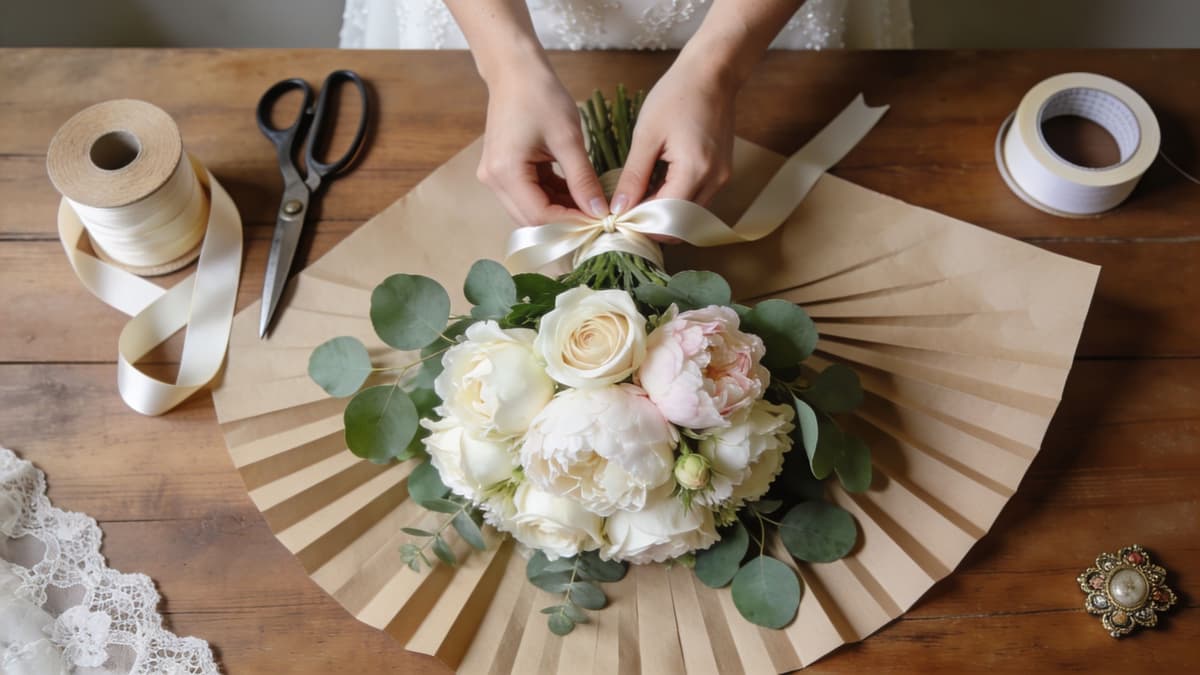
A short visual break can help if you are wrapping the gift yourself:
Key takeaway: Personal does not have to mean elaborate. It means accurate. The best gifts feel like they could only have come from this couple to this planner.
How and When to Present Your Gift
Timing affects how a gift is received.
If it gets handed over in the middle of wedding-day chaos, your planner may barely have a second to register it. If it arrives too late without context, it can feel disconnected from the experience you shared. Thoughtful delivery solves that.
A useful rule is to tie the gift to a natural milestone after the event. As noted earlier in the article, industry guidance warns against generic gifting and missed delivery moments. For couples, that usually means choosing a planned handoff point such as the final review meeting or after returning from the honeymoon.
Best times to give the gift
These options tend to work well:
At the final post-wedding meeting if you have one. This is often the cleanest moment because there is time for a real thank you.
Sent shortly after the honeymoon if you want to include a reflective note once everything has settled.
Delivered with care to their office or studio if your planner works from a professional location and shipping is easier than coordinating in person.
The main thing is intention. Do not leave the gift floating as an afterthought.
What to include with it
The card matters as much as the object. Keep it short, specific, and warm.
Try one of these frameworks:
Option one
Thank you for guiding us through every stage of our wedding with such steadiness and care. You made the process feel manageable, and our day felt beautifully supported because of you.
Option two
We are so grateful for your calm, professionalism, and attention to detail. You helped us enjoy our wedding instead of worrying through it, and we will always remember that.
Option three
Thank you for everything you did behind the scenes and in front of us. Your work made a real difference to our experience, and we feel very lucky to have had you in our corner.
If you are also thinking about gratuity and how that differs from a gift, this guide on whether to tip wedding vendors can help you separate the etiquette clearly.
Tip: If you are mailing the gift, send a short email or text letting your planner know it is on the way. That removes uncertainty and makes sure the gesture is received, not misplaced.
A Final Thank You to Your Planning Partner
A thoughtful gift is a lovely closing gesture, but it is not the only one that matters.
The most valuable thank you is often a combination of private appreciation and public support. Your planner will remember the note you wrote. Their business will benefit from the detailed review you leave and the referrals you make when friends ask who kept your wedding running so smoothly.
That combination is what makes the thank you complete. The gift handles the personal side. The review and referral support the professional side.
If you are choosing a gift for wedding planner, keep the standard simple. Pick something that fits the relationship, reflects what you noticed, and feels comfortable for your budget. That is enough. In most cases, it is more than enough.
A calm ending to the planning process should feel like the rest of a well-managed wedding. Clear. Warm. Intentional.
ItsaYes helps couples stay organized from the first idea to the final thank you. If you want one calm place to manage your vision, budget, tasks, and timeline without relying on scattered notes and spreadsheets, explore ItsaYes.