How to find a wedding venue: Your 2026 guide to planning perfect spaces
23 min
How to find a wedding venue: Your 2026 guide to planning perfect spaces
Author
The ItsaYes TeamAuthor
Before you ever step foot in a potential wedding venue, the most important work happens right at your kitchen table. The difference between a calm, confident venue search and a chaotic, overwhelming one comes down to three things: your vision, your guest count, and your budget.
Get this foundation right, and you'll be searching with purpose, not panic.
Building Your Foundation for a Stress-Free Venue Search
It’s so easy to fall down the Instagram rabbit hole and find a stunning venue that’s three times your budget and can only fit half your guests. But starting your search without a plan is like going grocery shopping without a list when you’re starving, you’ll end up with a cart full of things you don’t need and a massive bill.
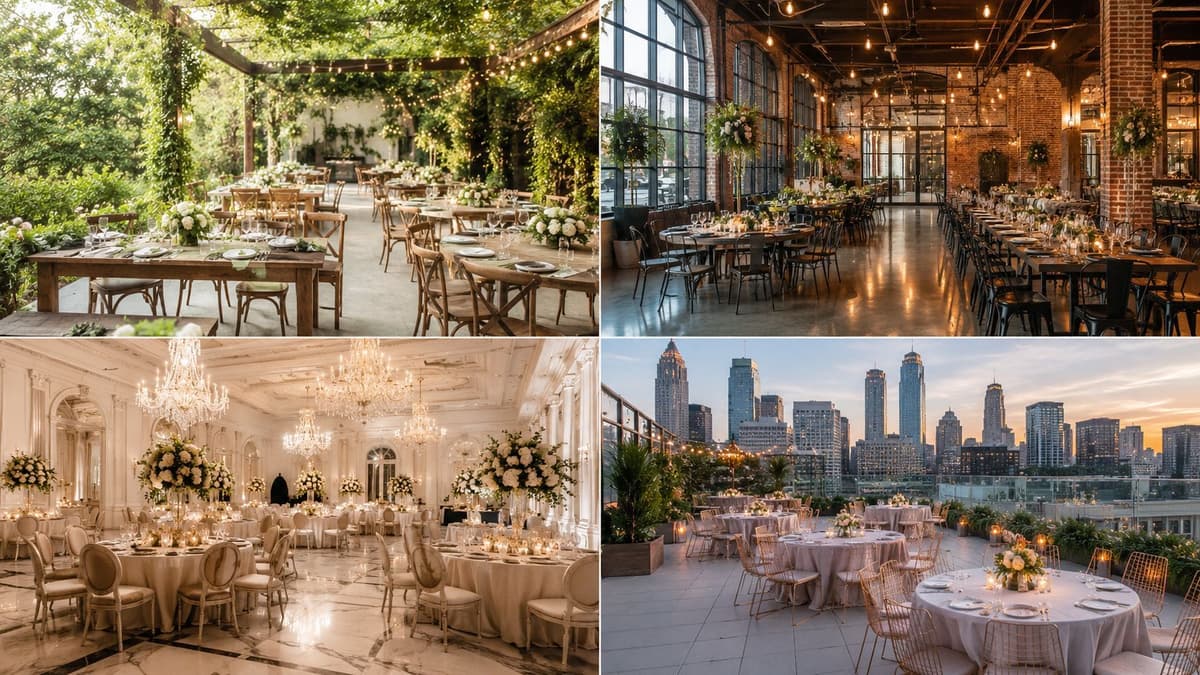
This first step isn’t just about logistics; it’s about defining the entire soul of your wedding day. Are you picturing a rustic barn party with long wooden tables and string lights? Or is it a chic city loft celebration with skyline views and craft cocktails? Getting clear on this now saves you from a world of confusion later.
Settle on Your Vision and Guest Count
First things first: sit down with your partner and get on the same page about your non-negotiables. This is where you decide on the big three: style, location, and guest count. The venue you choose will set the tone for everything else. For some couples, an outdoor setting with mountain views is a dealbreaker. For others, staying close to the city for guest convenience is the top priority.
Your guest count is the most practical filter you have. A list of 50 people opens up a world of intimate restaurant spaces and unique galleries. A list of 200, on the other hand, immediately narrows your search to larger ballrooms, estates, and specialized event halls.
Be realistic here. It’s far easier to add a few people to your list later than to realize you have to cut it in half because you fell for a venue that’s way too small. If you need a little help getting started, our guide on the is a fantastic resource.
Now for the number that drives everything: your budget. The venue and catering are almost always the biggest line items, often eating up to 50% of your total wedding cost. This is a huge chunk of change.
The market has only gotten more competitive, too. With the average wedding cost climbing to $36,000 in 2025, it’s more critical than ever to have a firm number in mind before you even start browsing.
These three elements—vision, guests, and budget—are completely interconnected. If you decide to invite 50 more people, your budget has to go up, or the style of venue you can afford will change. Think of them as three legs of a stool; if one is out of whack, the whole thing wobbles.
Treat these three pillars, vision, guests, and budget, as the unbreakable foundation of your entire plan. Without them, you're just browsing. With them, you have a powerful filter to find exactly what you need.
This is exactly why ItsaYes was built. Instead of juggling spreadsheets, Pinterest boards, and scattered notes, ItsaYes brings your vision, tasks, budget, and timeline into one calm, intuitive workspace.
For a more comprehensive overview of the entire selection journey, this guide on how to choose a wedding venue is a great read before you dive any deeper.
Alright, you’ve got your vision, a realistic budget, and a good idea of who’s making the guest list. Now for the fun part: the venue hunt. This is where your Pinterest boards and daydreams start turning into actual, tangible options.
But let’s be honest, knowing how to find a wedding venue isn't about aimlessly scrolling. It's about smart, strategic searching that cuts through the noise and gets you to the good stuff, fast.
Mastering the Art of Your Venue Search
Ditch the Generic Google Search
Your first instinct might be to type "wedding venues near me" into Google. Don't. You’ll just get a firehose of options, most of which won’t be a good fit. The real key is to get specific. Think of it less like searching and more like giving the internet a direct order.
Use your non-negotiables to build search queries that do the filtering for you.
Here’s how to level up your search game:
Instead of: "outdoor wedding venue"
Try: "garden wedding venue with mountain views for 100 guests"
Instead of: "barn wedding venue near me"
Try: "rustic modern barn venue with on-site lodging within 1 hour of Chicago"
Instead of: "unique wedding venues"
Try: "industrial loft wedding venue with in-house catering for 75 guests in Brooklyn"
This simple shift will save you hours of sifting through venues that were never right in the first place. And don't forget about visual platforms. Search geotags on Instagram (like "#McCallWedding") or location tags on Pinterest to see real, unfiltered weddings at the spots you're eyeing.
Local Celebration vs. Destination Dream
One of the first forks in the road you'll hit is deciding where to get married. A local wedding is all about convenience. Site visits are easy, your vendors are nearby, and the logistics are generally more straightforward for your guests.
A destination wedding, on the other hand, is about creating an entire experience. It turns your wedding day into a multi-day getaway for you and your closest crew. It's an option that's exploding in popularity. In fact, the destination wedding market is projected to leap from $36.22 billion in 2024 to $47.69 billion in 2025, a jaw-dropping 31.7% growth rate.
This trend shows just how much couples are craving unique experiences. But it also means you’ll be planning from a distance, leaning heavily on virtual tours, curated blogs, and travel guides. You can dig into the numbers in the full report on the booming destination wedding market. Your search strategy will need to adapt depending on which path you choose.
How to Create a Longlist Without the Chaos
As you start finding venues you love, you'll quickly run into the next big problem: organization. Most couples end up in a digital mess of 50 open browser tabs, random screenshots on their phone, and a half-built spreadsheet that gets abandoned after a week. This is where the fun part of planning starts to feel like a full-time job.
The goal is not just to find venues, but to collect them in a structured way that makes comparison easy. A messy search leads to a messy decision.
This is exactly the kind of chaos an integrated planning system like ItsaYes is built to solve. Instead of scattering your research across the internet, you can save every promising venue directly into a calm, intuitive workspace.
Your longlist should become a central hub for each potential spot, containing:
Venue Name and Link: So you can get back to their site in one click.
Contact Information: The email and phone number for the venue coordinator.
Initial Impressions: A quick note like, "Love the ceremony backdrop," or "Great all-inclusive package."
Key Details: Capacity, location, and any standout features.
By capturing all this information in one place from the start, you turn a bunch of random links into a real, actionable plan. Your personal AI assistant is available 24/7 to suggest priorities, organize tasks, and keep everything moving forward without overwhelm. ItsaYes is built for newly engaged couples who want to enjoy the process, stay organized, and feel confident—from first inspiration to a fully structured plan.
How to Vet Venues and Create Your Shortlist
Alright, your initial search is done. You have a folder, a Pinterest board, or maybe just a frantic list of screenshots with about 10-15 beautiful venues that gave you that "wow" feeling. Now comes the single most important step for saving your time and sanity: vetting.
This is the work you do before you set foot in a single venue. It’s how you turn that dreamy, overwhelming list into a powerful shortlist of your top 3 to 5 contenders. We’re moving past the pretty pictures and getting into the nitty-gritty of what each place actually costs and what their rules are.
The Pre-Tour Vetting Checklist
Before you even think about scheduling a visit, you're going to send a polite but very direct inquiry email to every venue on your longlist. The mission is to gather hard data so you can make a real, apples-to-apples comparison. Don’t waste an afternoon on a site visit only to find out your date is already gone.
Your initial outreach should ask for four key things:
Date Availability: This is non-negotiable. Confirm they have your ideal date (or a few alternatives) open before you go any further.
Pricing & Packages: Ask for their most current pricing guides. You need to know exactly what’s included in the base rental fee and what is priced à la carte.
Vendor Policies: Do they have a required vendor list? Or just a preferred one? This is critical if you’ve already fallen in love with a specific caterer or photographer.
Capacity & Minimums: Reconfirm their max capacity, but more importantly, ask about food and beverage minimums or guest count minimums that could trip you up later.
This first email is also your first test. A venue that’s slow to respond or cagey about pricing is telling you a lot about how they do business. Pay attention.
A transparent and responsive venue coordinator during the inquiry stage is often a good indicator of the service you'll receive throughout your entire planning process. Vague answers are a red flag.
Decoding Venue Proposals
Once the brochures and pricing sheets start rolling in, you’ll notice two common models: the “blank-canvas” space and the “all-inclusive” package. Neither is better than the other, but one will absolutely be better for you.
Let's walk through a real-world scenario for a 120-person wedding.
Scenario A: The Blank-Canvas Loft
Rental Fee:$7,000
Includes: The raw space for 10 hours. That’s it.
You Must Provide: Every single thing. Tables, chairs, linens, catering, bar service, staff, lighting, décor—you name it, you’re sourcing it. This offers incredible creative freedom but is a massive coordination and budgeting job.
Scenario B: The All-Inclusive Hotel
Price Per Person:$180 (for a $21,600 total)
Includes: A 5-hour reception, open bar, cocktail hour appetizers, a three-course dinner, wedding cake, all tables, chairs, linens, staffing, and a venue coordinator.
Hidden Costs to Check: The big ones are service charges (often 20-25% on top of the total), taxes, and sometimes extra fees for things like cake-cutting.
At first glance, the loft seems way cheaper. But once you start pricing out catering and rentals, its total cost can easily climb past what the hotel charges. The hotel, on the other hand, offers convenience and budget predictability. The right choice comes down to your priorities: total creative control or streamlined simplicity?
As you compare these options, think about what makes certain spaces feel special. Looking at iconic venues can give you great ideas about the power of unique architecture and ambiance.
This is where a tool like ItsaYes becomes your best friend. Instead of juggling a dozen PDFs and messy spreadsheets, you can upload each proposal, make notes on those hidden fees, and see a clear financial breakdown side-by-side. It makes deciding who gets a site visit incredibly straightforward.
You’ve done the digital deep dive and your longlist is now a shortlist of a few top contenders. Now comes the moment of truth: the site visit. This is where the glossy brochures and perfectly-lit Instagram photos meet reality.
A venue tour is your only chance to see if the space actually feels right, but more importantly, if it functions for the day you’ve spent months picturing. It's so much more than a quick look around. You’re there to be a detective, not just a prospective client, sniffing out potential problems and hidden opportunities. A productive tour is your best defense against those awful day-of surprises.
Think Like a Guest (and a DJ)
When you arrive, it's easy to get swept up in the sales coordinator's practiced script. Resist. Instead, force yourself to experience the space through the eyes of your guests and your vendors. Pay close attention to the flow from one part of the day to the next.
Imagine your guests pulling up. Where do they park? Is it a long, confusing walk to the ceremony site, especially for older relatives? If the ceremony and reception are in different spots, what does that transition actually feel like? A stunning venue with a logistically awkward layout can absolutely kill the energy of your event.
As you walk, look for the practical, unglamorous details that marketing materials conveniently ignore.
Ask the Questions That Truly Matter
The venue coordinator will have their sales pitch polished and ready. You need to come armed with questions that cut through the fluff and get to the operational reality of the space. While you’ve probably covered the basics over email, this is your time to dig deeper.
Don't be shy about asking the tough stuff. A great venue coordinator will have confident answers. A bad one will get flustered.
The single most crucial, yet often glossed-over, question is this: "What, specifically, is your Plan B for bad weather?" If their rain plan is cramming 150 guests into a stuffy, windowless conference room, you need to know that before a single dollar is spent.
Another critical area is staffing. Ask about their typical staff-to-guest ratio for both catering and the bar. A low ratio is a red flag for long drink lines and slow dinner service, two things that can tank your guests' experience.
Create a Detailed Site Visit Checklist
To avoid getting overwhelmed and forgetting crucial details, a structured checklist is non-negotiable. This ensures you gather the same data points for each venue, making for a fair and easy comparison later.
Essential Site Visit Checklist
Here’s a table you can use to methodically document your observations during each tour.
Category
Question/Item to Check
Your Notes & Observations
Arrival & Parking
Is parking free? Is it ample for our guest count? Is the walk to the entrance clear and easy? Is there a designated drop-off area?
Ceremony Space
What's the natural light like at our ceremony time? Where are the power outlets for sound? What's the rain plan space like really?
Reception Space
Are the lights dimmable? Where are the outlets for the DJ/band? Is there a good spot for the dance floor? Where will the bar be set up?
Getting Ready Suites
Is there enough space and light for hair/makeup? Are there enough mirrors and outlets? Is it secure for storing belongings?
Guest Comfort
Check the restroom condition and capacity. Are there enough stalls for 100+ guests? Is the venue ADA accessible?
Vendor Logistics
Where is the vendor load-in area? Is there a kitchen or prep space for the caterer? Are there any restrictions on vendor setup times?
Using a consistent checklist like this for every visit prevents that "which venue had the nice bridal suite again?" confusion later on.
Document Everything (From Your Perspective)
After visiting two or three venues, the details will start to bleed together. Was it the rustic barn or the modern loft that had the perfect cocktail hour space? Did the garden venue's rain plan involve a tent or just wishful thinking? This is why documenting your tour is non-negotiable.
Take your own photos and videos. Do not rely on the venue's professionally shot and edited photos, which are designed to hide flaws. Capture the less-than-perfect angles, the state of the carpets, the view from the parking lot. A quick video walkthrough from the ceremony space to the reception can be priceless for remembering the actual flow.
This is precisely where a central planning hub like ItsaYes becomes your secret weapon. Instead of having notes, videos, and photos scattered across your phone and your partner’s phone, you can upload everything directly into the dedicated workspace for that specific venue.
When you sit down to make your final decision, you'll have all your own visual evidence and notes organized in one place. It lets you compare your top choices with total clarity and confidence, ensuring you choose the venue that's not just beautiful, but truly right for you.
Navigating the Contract and Securing Your Date
You found it. After all the tours, the spreadsheets, and the gut-wrenching decisions, you’ve found the venue that just feels right. It’s an amazing moment. But before you pop the champagne and fire off that triumphant text to your wedding party, there's one last, incredibly important hurdle: the contract.
This isn't just a formality. This legal document is what locks everything in, turning all those friendly conversations and verbal promises into a binding agreement. It’s the single most important piece of paper you’ll sign during this process, protecting your investment and making sure there are no awful surprises down the road. Let’s break it down so you can sign with total confidence.
Decoding the Fine Print
Venue contracts are notoriously dense and packed with legalese. Don’t just skim it. Read every single line, and if a clause feels confusing or vague, ask for clarification—and get that clarification in writing. This is your money and your day. You have every right to be 100% certain about what you're agreeing to.
Zero in on these critical sections:
Payment Schedule: This tells you exactly when payments are due. Most venues will require a non-refundable initial deposit (often 50%) to officially hold your date. The final balance is typically due 30-90 days before the wedding.
Cancellation Policy: This is non-negotiable reading. What happens if you have to cancel? What if you need to postpone? The policy will spell out exactly how much money you would forfeit, which almost always increases the closer you get to the wedding day.
Force Majeure Clause: Sometimes called an "Act of God" clause, this has become more crucial than ever. It covers unforeseeable events (think natural disasters or government-mandated shutdowns) that make holding your wedding impossible. See what it specifically covers and what the remedies are—a refund, a reschedule?
Your venue contract isn't just a piece of paper; it's the rulebook for your single biggest wedding expense. Treat it that way. Get every verbal promise—like an extra hour of bar service or the use of a specific bridal suite—added as a written addendum to the contract. If it’s not in writing, it never happened.
What’s Actually Negotiable (and What Isn’t)
While the main rental fee is usually set in stone, especially for a prime Saturday, some areas might have a little wiggle room. You'll generally have more luck negotiating for value-adds rather than asking for a straight discount.
It never hurts to ask for things like:
A minor menu swap or adding a signature cocktail.
Waiving the cake-cutting fee.
An extra hour for setup or teardown time.
An upgrade to a premium bar package if you hit a certain guest count.
It's helpful to remember that venues are businesses operating within a massive global wedding industry valued at $1.3 trillion USD annually. This context helps explain why many policies are firm; they're standardized to manage risk across hundreds, if not thousands, of events. As this 2025 Global Wedding Report shows, regional norms also play a huge role in what's considered standard practice, from average guest counts to typical contract terms.
Finalizing Your Decision and Locking It In
Once you're completely comfortable with the contract, it's time for the exciting part: signing on the dotted line and making that first payment. Your venue is officially booked!
This is also the moment when your timeline starts to get real. With the venue locked in, other big decisions—like your official wedding date—suddenly feel much more concrete. If you need some guidance on that front, you might want to check out our guide on how to choose a wedding date.
The whole journey, from that first tour to the final signature, can be a lot. Juggling contracts, payment deadlines, and endless email threads is exactly where planning stress kicks into high gear.
This is precisely why we built ItsaYes to be a calm, central hub for all of it. You can upload your venue contract, have your personal AI assistant set automatic reminders for payment due dates, and keep every piece of communication organized in one place. It turns the final, most nerve-wracking step into a clear, manageable task, giving you the peace of mind to finally, officially, say "yes" to your perfect venue.
Once you start diving into the world of wedding venues, the questions start piling up. It’s totally normal. You go from dreamy inspiration boards to suddenly needing to know about service charges and cancellation clauses.
Let's cut through the noise. Here are the real-world answers to the questions we hear from couples all the time. Getting these right will save you stress, money, and a whole lot of headaches down the road.
How Far in Advance Should We Book a Wedding Venue?
The honest answer? As soon as humanly possible. For the best shot at your dream venue without the stress, you should be looking to book 12 to 18 months out.
This is especially true if you’ve got your heart set on a popular spot or a Saturday during peak season (think May, June, September, and October). The most sought-after venues can—and do—book up two years in advance. Seriously.
If you're on a shorter timeline (under a year), your new best friend is flexibility. You'll have a much easier time finding an amazing venue if you’re open to less competitive dates. Think about a Friday or Sunday celebration, or even an off-season month like November or March. This simple shift can unlock availability at places that would otherwise be completely out of reach.
What Are the Biggest Hidden Venue Costs to Watch Out For?
Let's be clear: the first number you see on a proposal is almost never the final number you'll pay. Knowing where the extra costs hide is the key to keeping your budget from spiraling.
Keep an eye out for these usual suspects:
Service Charges & Gratuities: This is the big one. Most venues add a 20-25% service charge on top of your entire food and beverage bill. Always, always ask if gratuity is included in that percentage or if tipping staff is a separate, additional cost.
"Administrative" Fees: Some venues will tack on a vague fee for “administrative costs.” This is often just pure profit for them, so don't be afraid to ask what it actually covers.
The Little Nickel-and-Dime Fees: These add up fast. Watch for cake-cutting fees (if you use an outside baker), corkage fees (for bringing your own wine), and steep overtime charges if your party goes even a few minutes past the scheduled end time.
"Blank Slate" Venue Rentals: If you choose a raw space like a loft or warehouse, you are renting an empty box. You have to bring in everything—tables, chairs, lighting, a dance floor, silverware, and sometimes even portable restrooms or a generator. These costs accumulate at lightning speed.
Always demand a full, itemized proposal. It should clearly state what is and isn't included in the estimate, especially taxes and service charges. A transparent venue will provide this without hesitation. If they get cagey, that’s a red flag.
Can We Negotiate the Price with a Wedding Venue?
Yes, but you have to be smart about it. While the main rental fee for a prime Saturday is usually set in stone, other areas have some wiggle room. The trick is to be polite, realistic, and focus on adding value instead of just asking for a random discount.
Here are a few areas where you might have some luck:
Pick an Off-Peak Date: Your biggest bargaining chip is always your date. Booking on a Friday, Sunday, or during the off-season gives the venue a reason to be flexible, often resulting in a lower food and beverage minimum or a reduced rental fee.
Ask for Value-Adds, Not Discounts: Instead of asking them to slash the price, see if they’ll throw something in. Could they add a complimentary champagne toast for your guests? An extra hour of open bar? Maybe upgrade the house linens to a nicer fabric?
Leverage a High Guest Count: If you’re bringing them a lot of business with a large guest list, you might be able to negotiate. For example, you could ask them to waive the rental fee entirely if you agree to meet a higher food and beverage minimum.
Your approach is everything. A demanding lowball offer will get you nowhere. A polite question like, "We are so close to our budget target with this proposal. Is there any flexibility on the minimum, or perhaps a way we could include the premium bar package to help us get there?" will be taken much more seriously.
What Happens If We Need to Cancel or Postpone?
This might be the single most important part of the contract you sign. Before you put down a single dollar, you need to read—and fully understand—the cancellation and postponement policy.
Almost every venue requires a non-refundable initial deposit to lock in your date. That money is gone the second you sign.
From there, the financial penalty for canceling usually gets steeper the closer you get to the wedding date. A typical contract might say you forfeit 50% of the total estimated cost if you cancel six months out, and 100% if you cancel within 90 days. You have to be completely clear on these terms. Given how unpredictable life can be, buying wedding insurance is one of the smartest moves you can make to protect your investment.
The journey to finding and booking your dream venue is a marathon of details, deadlines, and big decisions. It can feel like a full-time job, but it doesn’t have to.
With ItsaYes, you can bring your vision, tasks, budget, and timeline into one calm, intuitive workspace. The platform turns your inspiration into a clear plan, with your personal AI assistant available 24/7 to suggest priorities and keep everything moving forward without overwhelm. Start planning with clarity and confidence at https://itsayes.io.