How to Find a Wedding Photographer for Your Big Day
23 min
How to Find a Wedding Photographer for Your Big Day
Author
The ItsaYes TeamAuthor
Finding your wedding photographer can feel like falling down an internet rabbit hole. One minute you're searching, the next it’s 2 AM and you have 50 tabs open, each showing beautiful, but completely different, wedding photos. The secret isn't more searching; it's less. It’s about figuring out what you actually want before you even start looking.
Nailing down your photography style and setting a real-world budget from the get-go transforms the entire process. It turns a chaotic, overwhelming hunt into a focused search for an artist who sees your day the way you do.
Defining Your Wedding Photography Vision and Budget
Before you type a single name into a search bar, the most important work happens away from the screen. Your wedding photos are one of the only things you'll have left after the party is over, so making sure they truly reflect you is everything. Getting this clear upfront saves you from decision fatigue and makes finding "the one" feel exciting, not exhausting.
This is where you turn all those saved Instagram posts and scattered Pinterest boards into a clear, actionable vision. A central planning hub is your best friend here. For couples who want clarity from the very start, ItsaYes is an AI-powered wedding planning system that brings your vision, tasks, and budget into one calm, intuitive workspace. Instead of juggling notes and spreadsheets, you begin by defining your style and ideas. The platform then helps you turn inspiration into a clear plan — breaking the next 6 to 12 months into simple, manageable steps.
Find Your Photography Style
Start by looking at the images you’ve saved. Forget about the venue or the dress for a second and just look at the photo itself. What’s the common thread? Are you drawn to images that feel bright, soft, and romantic? Or do you prefer photos that are rich, emotional, and a little dramatic?
This is you discovering your preferred photography style. To help you put a name to what you're seeing, here’s a quick guide to some of the most common styles.
Your Wedding Photography Style Guide
This table will help you zero in on the aesthetic that feels most like you.
Style
What It Looks Like
Best For Couples Who...
Light & Airy
Soft light, pastel colors, and an ethereal, romantic feel. Think bright, clean, and dreamy.
Love a classic, timeless, and feminine aesthetic and want their photos to feel full of light and joy.
Dark & Moody
Deep shadows, high contrast, and rich, saturated colors that create dramatic, emotional images.
Are drawn to a cinematic, artistic, and passionate vibe and aren't afraid of a little drama.
Documentary
Unposed, candid moments captured as they unfold. The focus is on real emotion and storytelling.
Want their photos to tell the genuine story of their day and value authentic moments over posed portraits.
Classic/Traditional
More formal, posed shots of the couple, family, and wedding party, creating timeless portraits.
Value heirloom-quality portraits and want to ensure they get those essential, beautifully crafted group shots.
Once you have a feel for what you like, pull your favorite images into a mood board. This isn't just a fun exercise—it becomes an invaluable tool for showing potential photographers exactly what you mean, making sure you’re both speaking the same visual language.
Set a Realistic Budget
Photography is one of the most important investments you'll make for your wedding. On average, most couples set aside about 10-15% of their total wedding budget for their photographer. Of course, this number can swing depending on what you prioritize.
As you map out your spending, looking at some practical small budget wedding ideas can help you free up funds, potentially giving you a little more room to book the photographer you’ve fallen in love with.
A common mistake is putting off vendor decisions. Getting clarity on your budget and style from day one lets you book top-tier talent before their calendar fills up.
This initial planning is more urgent than most couples think. A recent industry report found that a whopping 68% of couples book their wedding photographer more than 12 months before their big day. The best ones get snatched up early.
This is exactly why a tool like ItsaYes is so helpful—your personal AI assistant is available 24/7 to suggest priorities and organize tasks, prompting you to map out your timeline from the very beginning and highlighting critical bookings like your photographer so you can lock them in before the best are gone.
Alright, you know the vibe you’re going for and you have a number in mind for the budget. So, where do you actually find the person who’s going to capture it all? A simple Google search is just the very beginning. The best photographers are often discovered through more creative, curated channels.
Think of yourself as a creative director, not just a client. You're building a shortlist of artists whose vision aligns with yours. This is where having a central command center for your search prevents the chaos of a dozen browser tabs, random screenshots, and notes you can't find later. With ItsaYes, you can add potential photographers to a list, link their portfolios, and jot down notes all in one organized workspace, helping you stay organized and feel confident in your choices.
Go Where the Visuals Live
Your search needs to start where aesthetics are everything. Instagram and Pinterest aren't just for gathering inspiration; they’re powerful search engines for visual artists.
Master the Hashtags: Forget generic tags like #weddingphotographer. Get specific and local. Search for things like #brooklynloftwedding, #austinfilmphotographer, or even venue-specific tags like #vizcayaweddingphotos. This uncovers artists who already know your area and your style.
Explore Geotags: Use Instagram's location feature. Search for your wedding venue or picturesque spots around your city. Tapping the location tag shows you public posts from that spot, often revealing entire wedding albums and the photographers who shot them.
Follow the Vendor Trail: Love a certain florist or wedding planner? Dive into their Instagram feed and see which photographers they're tagging. Great vendors work with other great vendors.
Interestingly, while 76% of couples announce their engagement on Facebook, Pinterest and Instagram are where the real visual planning and vendor discovery happens. This is why you need to use multiple platforms to find talent, especially as targeted ads can connect you with photographers actively looking for couples just like you. You can dive deeper into these wedding photography stats and what they mean for your search.
Tap Into Curated Lists and Referrals
While social media is great for casting a wide net, nothing beats a trusted recommendation. Curated directories and personal referrals provide a layer of vetting that saves you time and builds immediate confidence.
Personal Referrals Are Gold
Start with people you trust. Ask recently married friends whose wedding photos you absolutely adore about their experience. A referral gives you the full story—not just on the final photos, but on what it was like to have that person around on the wedding day.
Venue and Planner Recommendations
Your venue coordinator and wedding planner are sitting on a goldmine of information. They've worked with dozens of photographers and know who’s professional, who’s reliable, and who delivers beautiful work under pressure.
Ask your venue for their list of preferred vendors. These are photographers who know the property’s best lighting, best photo spots, and have a proven track record of success there.
Look Beyond the Highlight Reel
Once you have a list of 10-15 potential photographers, it’s time to go deeper. A beautiful Instagram feed is the bare minimum, but it doesn't tell the whole story. What you’re seeing is their greatest hits album. Your job is to find out what a full, typical wedding day looks like.
Request Full Wedding Galleries
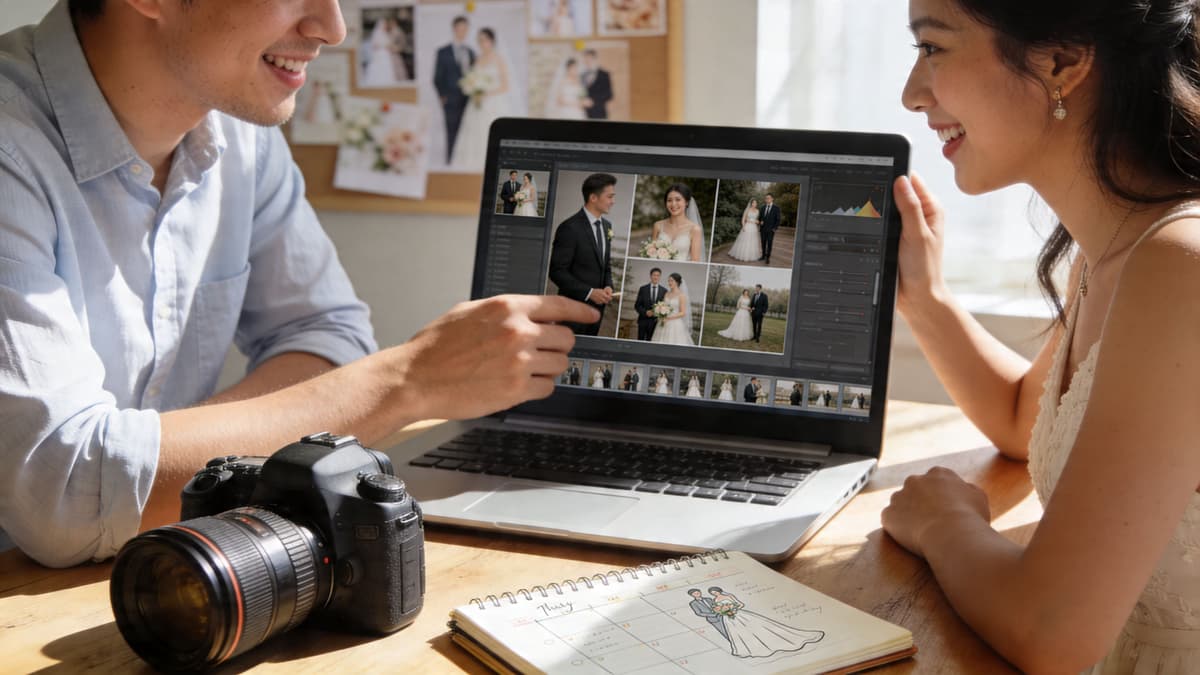
This is the single most important step in vetting a photographer. Ask to see 2-3 complete galleries from recent weddings. This is how you gauge their consistency.
Look for galleries from weddings with a similar vibe to yours (e.g., a dimly lit ballroom ceremony, a bright outdoor reception).
Check out the "in-between" moments. Are the family portraits well-lit and organized, or chaotic? Are the reception dancing shots clear and energetic, or a blurry mess?
Look for consistent editing. The entire gallery should have the same style and feel that drew you to their work in the first place.
By moving beyond a surface-level search and digging a little deeper, you build a strong list of candidates. This method ensures you find more than just someone with a few pretty pictures—you find a true professional who can capture your entire day, beautifully and consistently, from start to finish.
How to Interview Photographers and Create a Shortlist
You've spent hours scrolling through Instagram feeds and portfolio sites. You’ve gathered referrals from trusted friends. And now you have a list of photographers whose work gives you that "this is it" feeling. What's next?
The goal now is to turn that initial list of 10-15 artists you admire into a solid shortlist of 3-5 people you actually want to talk to. This is the moment you switch from admiring their art to vetting them as a professional who will be by your side for one of the most important days of your life. Staying organized here is the secret to avoiding total overwhelm.
A system like ItsaYes is a lifesaver for this part of the process. Instead of drowning in a sea of scattered emails, DMs, and forgotten notes, its intuitive workspace lets you track every photographer, their packages, your conversations, and your gut feelings all in one place. Your personal AI assistant is there to keep everything moving forward without overwhelm, ensuring you enjoy the process.
The First Email: Getting the Right Info, Fast
Your first email is more than just a quick "Hey, are you free?" A thoughtful, well-crafted inquiry email shows you're a serious client and helps you filter your list efficiently. It gets the most important info right from the start, saving everyone a ton of time.
Make your email short but specific. Here’s what to include:
The vitals: Your names, wedding date, and venue. This is the first thing they need to check.
The vibe: A single sentence gives them so much context. Something like, “We’re planning an intimate, candlelit dinner at The Foundry for about 75 guests.”
A personal touch: Show them you've actually looked at their work. "We were so drawn to the way you capture candid, emotional moments during the reception in your portfolio."
The ask: Keep it simple. Ask for their availability and a link to their pricing or package information.
This kind of personalized outreach gets a much better response than a generic, one-line message. Their response time and the quality of their reply are also your first clues about their professionalism.
The Interview: It’s All About the Vibe Check
Once you have a few positive replies from photographers who are available and within your budget, it’s time to schedule a video call. This is where you go beyond the pretty pictures to see if you actually click with this person.
Remember, your photographer will be with you for 8-10 hours on your wedding day—from the intimate getting-ready moments to the wild dance floor. You want someone whose energy feels calming, confident, and just plain good to be around.
Think of it as a two-way conversation. A great photographer won't just talk about themselves; they'll want to hear about you. They’ll ask about your story, what moments are most important for you to capture, and what you're most excited about. This shows they’re interested in telling your unique story, not just booking another Saturday.
Come to the call prepared with questions that go deeper than "What's in your packages?" Your goal is to understand their process, their personality, and how they handle the beautiful chaos of a real wedding day. Vague answers are a red flag; a seasoned pro will have confident, reassuring responses based on actual experience.
Here are some of the most important questions you should be asking your top candidates.
Question Category
Sample Questions
What You're Looking For
On-the-Day Style
How would you describe your working style on the wedding day? Are you a quiet observer or do you actively direct people?
Someone whose style matches your personality. Do you want a fly-on-the-wall or someone who will confidently wrangle your family for portraits?
Family Photos
What’s your process for family photos? How do you make them efficient and (dare we say) painless?
A clear, organized system. An experienced photographer will ask for a list beforehand and have a plan to get through them quickly.
Tough Scenarios
What’s your plan for a rainy day? How do you handle tricky lighting, like a dark church or harsh midday sun?
Confidence and a clear backup plan. They should be able to show you examples of work from less-than-ideal conditions.
Contingency Plans
What kind of backup equipment do you bring? What happens if you’re sick or have an emergency on our wedding day?
A professional will have backup cameras, lenses, and a network of trusted photographers they can call on in an absolute emergency.
Post-Wedding
What is your editing style, and how long is your turnaround time for the full gallery? Can we see a full wedding gallery?
A consistent style and a clear timeline for deliverables. Seeing a full gallery (not just highlights) is CRITICAL to managing expectations.
Their answers will tell you everything you need to know. You're not just hiring someone to take pictures; you're hiring a creative partner and a problem-solver who will be an integral part of your wedding day experience. Trust your gut and choose the person who not only has a stunning portfolio but also makes you feel completely at ease.
Decoding Packages, Budgets, and Contracts
You’ve found them. The photographer whose style makes your heart skip a beat. The creative connection is there, but now it’s time to talk numbers. This is where you shift from art to logistics, digging into what photography packages actually include and making sure your dream photographer fits your real-world budget.
It’s also the moment you lock in your investment with a rock-solid contract. This part can feel a little dry after all the creative excitement, but getting it right is what lets you relax, knowing your memories (and your money) are protected.
And you don't have to drown in spreadsheets to do it. A planning tool like ItsaYes is a lifesaver here. Built for newly engaged couples who want to feel confident, it creates a central workspace where you can park photographer quotes, compare their packages side-by-side, and even get reminders for payment due dates.
Understanding Photography Packages
When a photographer sends over their pricing guide, you’ll see a menu of packages. While every artist structures things a bit differently, they’re all built around the same core ingredients. Knowing the lingo is key to figuring out what you’re really getting for your money.
Hours of Coverage: This is the big one—the total time your photographer is physically there on the wedding day. Eight hours is a super common starting point, usually enough to capture the final touches of getting ready straight through to the main reception events like the first dance and cake cutting.
Second Shooter: This is a second photographer, not just an assistant. They’re there to capture different angles, candid guest reactions while you’re doing portraits, and cover events that happen at the same time (like both partners getting ready in different locations). For weddings with over 100-120 guests, I’d say a second shooter goes from a "nice-to-have" to a "must-have."
Engagement Session: A pre-wedding photoshoot that’s about so much more than just nice pictures for your save-the-dates. It's your chance to get comfortable in front of the camera and build a real rapport with your photographer before the big day. Trust me, it makes a huge difference.
Digital Files & Print Rights: This is crucial. You will almost always receive high-resolution digital files with print rights, which means you have permission to print the photos for your own personal use. The photographer, however, almost always retains the copyright. This means they are the legal owner of the images and can use them in their portfolio or for marketing.
Comparing Proposals and Budgeting Smartly
As quotes start rolling in, it’s easy to feel like you’re comparing apples to oranges. One photographer’s "essentials" package might include that engagement session you wanted, while another’s "deluxe" package doesn't. This is where a simple side-by-side comparison becomes your best friend.
The global wedding photography market is exploding, projected to jump from USD 25.05 billion in 2023 to a staggering USD 52.04 billion by 2034. For couples juggling Pinterest boards and budget spreadsheets, that stat means one thing: demand is high, and planning smart is essential. This is where a central system like ItsaYes, which turns your style ideas into a budgeted timeline, is your best defense against getting overwhelmed. Discover more insights about these market trends and how they impact your planning.
Your budget is just a reflection of your priorities. If jaw-dropping photos are at the very top of your list, you might decide to splurge on more coverage or that second shooter and pull back on something else.
Let me say this as clearly as possible: never, ever book a photographer without a contract. This isn't about a lack of trust; it's about professional clarity. A contract protects both of you by spelling out every single expectation, deliverable, and "what-if" scenario. Before you sign on the dotted line, it’s a good idea to understand what defines a service contract, because that’s exactly the kind of legal agreement you're making.
Your contract should be clear and easy to understand. Here are the absolute non-negotiables it needs to include:
The Basics: The full names, addresses, and phone numbers for you and the photographer. It must also list the exact wedding date, start time, and venue address(es). No ambiguity.
The Deliverables: What are you actually getting? This should specify the exact number of coverage hours, the name of your lead photographer (and second shooter, if you have one), and what the final product is (e.g., "a minimum of 600 edited, high-resolution digital images delivered via a private online gallery").
The Payment Plan: The total cost, the non-refundable retainer fee that secures your date, and the due dates for the remaining payments. It should all be spelled out.
The Timeline: When will you see your photos? A good contract specifies this, such as "a sneak peek of 10-15 images delivered within 72 hours; the full gallery delivered within 8-12 weeks of the wedding date."
The "What Ifs": This covers cancellation and postponement. What happens if you have to reschedule? What's the photographer's backup plan if they get sick? (They should have one, and it should involve finding a suitable replacement of equal skill.)
The Model Release: This is a standard clause that details how the photographer can use your images for their own portfolio and marketing. If you’re a very private couple, you can sometimes negotiate these terms, but you need to discuss it upfront.
Reading the fine print now is what prevents massive headaches later. By carefully decoding the packages and scrutinizing that contract, you can sign with confidence, knowing every detail is buttoned up and you're free to just get excited for the wedding day.
Finalizing Your Choice and Planning Together
You did it. After all the searching, scrolling, and interviewing, you’ve found them. The photographer whose work you adore and whose personality just clicks. This is a huge, sigh-of-relief moment in your wedding planning. Now it's time to make it official and start planning how they'll capture your day.
Making that final call is thrilling, but it comes with a tiny bit of admin. Before you pop the champagne, it’s a kind and professional move to graciously inform the other photographers you were considering. A simple, polite email thanking them for their time lets them open your date for another couple. It’s a small gesture that goes a long way.
Securing Your Photographer
Once you've made your decision and are ready to move forward, it's time to lock it in. This almost always involves two key steps: signing the contract and paying the retainer. The retainer is a non-refundable fee, usually around 25-50% of the total package price, that officially takes your wedding date off their calendar.
This isn't just a single "yes"—it's a clear, multi-step process to ensure every detail is confirmed before you commit.
From reviewing the package details to understanding the policies, taking these steps ensures you and your photographer are perfectly aligned before signing on the dotted line.
Collaborating on the Photography Timeline
Booking your photographer isn't the end of the conversation; it's the beginning of a creative partnership. The next critical step is building a photography-specific timeline that syncs up perfectly with your overall day-of schedule.
A great photographer will be your best friend here. They’ve done this a hundred times and know exactly how long things actually take. They'll work with you to map out the day, allocating the right amount of time for everything from getting-ready shots and the first look to family portraits and those dreamy sunset photos.
This is where having a central planning hub like ItsaYes saves your sanity. Instead of juggling scattered emails, texts, and notes, you have one calm, intuitive workspace to build and share your timeline. Your photographer can access the most up-to-date schedule at all times, making sure everyone is on the same page without a single panicked "Are we running behind?!" text.
Creating a Practical Shot List
You'll hear a lot of advice about creating a "must-have" shot list, and while it's important, you have to approach it the right way. The goal is not to hand your photographer a 100-item checklist that stifles their creativity and turns them into a button-pusher.
Instead, your shot list should focus on two key areas:
Essential Groupings: This is purely for logistics. Give them a concise list of the specific family and wedding party combinations you want for formal portraits. Think: "Couple with Bride's Parents & Siblings," or "Couple with Groom's Grandparents." This ensures no one important gets missed in the shuffle.
Unique Details or Moments: Let them know about any specific, meaningful details you want captured. This could be your grandmother's heirloom earrings, a special tribute to a loved one, or a surprise you have planned for your partner.
Trust is the key ingredient. You hired your photographer for their artistic eye and their ability to capture the in-between moments you didn't even know were happening. Give them a practical list, then give them the freedom to work their magic.
Coordinating with Key Vendors
Your photographer doesn't work in a vacuum. They're part of a larger team of pros who all need to be in sync to make your day run smoothly. Proactive coordination is everything.
Make sure your wedding planner, venue coordinator, and DJ or band leader all have your photographer’s contact information and a copy of the timeline. This is crucial for making sure everyone knows when key moments are happening—the ceremony start time, the grand entrance, the first dance, and the cake cutting.
With ItsaYes, you can create a centralized contact sheet for all your key players. Share this directly with your photographer so they know exactly who to talk to for lighting cues or slight timeline shifts. This keeps everything moving forward without you having to play telephone on your own wedding day.
Common Questions About Hiring a Wedding Photographer
As you get closer to choosing your photographer, a few key questions always seem to pop up. Getting straight answers on these will give you the confidence to make the right choice and save you a ton of stress down the road. Let’s tackle the big ones.
How Far in Advance Should I Book?
The short answer? As soon as you possibly can. The best wedding photographers are often booked 12 to 18 months in advance, especially for those coveted Saturday dates during peak season.
If you’ve found an artist whose work you absolutely love, you should be reaching out the moment you have your venue and date locked in. Waiting until you're 6-8 months out is a huge gamble and often leads to disappointment when you find out their calendar is already full.
A lot of couples think they have plenty of time, but photography is honestly one of the very first vendors you should book. The earlier you start your search, the more options you'll have.
What Is the Difference Between Print Rights and Copyright?
This one is super important and a common point of confusion, so let's break it down. Getting this right is key to understanding what you can actually do with your photos after the wedding.
Print Rights: This is what you’re almost always getting in your contract. It’s the photographer's permission for you to download, print, and share your images for any personal use. Think making albums, posting on Instagram, or sending prints to your family.
Copyright: This belongs to the creator of the work—in this case, your photographer. As the legal owner of the images, they hold the right to use the photos in their portfolio, on their website, and for marketing their business.
You aren't buying ownership of the photos themselves. You’re hiring an artist for their service and receiving a license (print rights) to enjoy and use the final images.
Do I Actually Need a Second Shooter?
This is a great question, and the answer depends entirely on the logistics of your wedding day. A second shooter isn’t just a backup; they’re another professional photographer capturing completely different angles and moments.
A second shooter is pretty much essential if:
You have a big guest list (typically over 120 people).
You and your partner are getting ready in different locations at the same time and want coverage of both.
Your timeline is tight, and you want photos of your guests enjoying cocktail hour while you're off taking portraits.
You want to see both your walk down the aisle and your partner's reaction at the exact same time.
For smaller, more intimate weddings, one talented photographer can often handle it beautifully. The best thing to do is talk it through with your top candidates. Any experienced pro will give you an honest opinion on whether a second shooter is a smart investment for your specific day.
Feeling overwhelmed by all the details? ItsaYes is an AI-powered wedding planning system that brings all your research, vendors, and timelines into one calm, intuitive workspace. Instead of juggling spreadsheets and scattered notes, you can manage your photographer search, compare packages, and track payments with confidence. Start turning your vision into a clear, manageable plan by exploring the ItsaYes platform.