So, you’re thinking about making your own wedding arch? Good. It's one of those DIY projects that feels a little intimidating at first, but ends up being one of the most rewarding parts of the whole day. Seriously.
It's way more than just a piece of decor. A wedding arch literally frames the moment you say "I do." Building it yourself infuses that moment with so much personal meaning, and it’s a brilliant way to keep your budget in check. This guide is your roadmap, designed to turn that dream image saved on your phone into a stunning reality.
We're going to skip the chaos of a million different ideas and give you a structured, actionable plan. That feeling of overwhelm? It disappears when you have a clear path forward, much like how an AI-powered wedding planning system like ItsaYes helps you turn scattered notes and inspiration boards into one calm, intuitive workspace.
From a Vague Idea to an Actionable Plan
Couples want their weddings to feel like theirs, and that trend is only getting stronger. Over 72% of couples have recently opted for custom themes with personal touches like handmade floral arches. It's part of a global wedding decorations market now valued at a massive USD 78.5 billion. A DIY arch is the perfect way to get in on that.
Before you start buying supplies, let’s nail down the vibe. Which of these popular styles feels right for you?
Rustic & Boho: Imagine natural wood, maybe a little asymmetrical, with breezy fabrics and wild, organic flowers.
Clean lines are key. Think copper pipes or a sleek metal frame, often in a geometric shape like a hexagon.
Classic & Romantic: This is all about timeless elegance—a frame completely covered in lush flowers and greenery, with soft, draped fabric.
Circular & Infinity: A round arch is a beautiful symbol of endless love and looks incredible in almost any setting.
The goal here isn't just to pick a style, but to build a real plan around it. Instead of drowning in ideas, ItsaYes helps you define your look, breaking the next 6 to 12 months into simple, manageable steps, and fitting it all into your timeline and budget.
Building an arch that looks like it was done by a pro is completely within your reach. With a clear vision and the right instructions, you'll create a backdrop that’s not just beautiful, but deeply meaningful. For a little extra confidence boost, check out this complete DIY guide to making a flower arch. It's a fantastic resource that will help you get started.
So you've got a vision for the perfect wedding arch. That's the exciting part. Now comes the practical bit: what are you actually going to build it out of? The materials you choose will shape everything from your budget and build time to the final look and feel of your ceremony.
Think of it like this: your materials are the foundation of the project. Picking the right ones from the start keeps you from making frantic, last-minute trips to the hardware store and ensures the final structure is exactly what you pictured.
Let's break down the most popular options so you can figure out what makes the most sense for your day.
The Timeless Appeal of a Wooden Arch
There's a reason wood is such a classic choice. It’s sturdy, versatile, and fits in just about anywhere, from a rustic barn wedding to a chic garden party. But not all wood is created equal for this kind of project.
Your Best Bets for Wood: If your arch will be outdoors, cedar and redwood are fantastic choices because they naturally resist rot and pests. They do come with a higher price tag, though. For a more budget-friendly option, pine is lightweight and easy to work with, but you’ll want to give it a good coat of sealant if there’s any chance of rain.
Where to Look: Don't just head to the big-box home improvement stores. Check out local lumberyards. They often have higher-quality wood and can sometimes cut the pieces to your exact measurements, which saves you a ton of work. For a really unique, sustainable vibe, see if there are any reclaimed wood or salvage yards nearby.
You can expect the cost for a wooden arch to land somewhere between $75 and $300, all depending on the type of wood you choose and how complex your design is.
Modern and Minimalist Metal Frames
For a sleek, modern, or industrial-chic look, nothing beats a metal arch. They're also surprisingly DIY-friendly, especially if you start with a kit instead of trying to bend copper pipes yourself.
Building from scratch can feel a bit intimidating, so don't be afraid to look at pre-made kits as your starting point. For example, market data shows that a popular hot-sale white circle floral arch sells about 1,000 units a month at $258. It’s a reliable and popular choice. On the other end of the spectrum, a boho wooden stand kit like the one from AZAMIA sells for around $69, offering a much more affordable option if you just need a solid frame to decorate.
One of the biggest perks of metal, especially copper or lightweight aluminum, is how easy it is to move around. If you design your arch to be assembled in sections, getting it to your venue becomes so much simpler. That's a key logistical detail an AI assistant can help you track so nothing gets forgotten.
The Smart and Stylish PVC Arch
For couples keeping a close eye on the budget, PVC pipe is a total game-changer. It's incredibly lightweight, a breeze to cut, and you can paint it to look like almost anything, from aged copper to sleek, modern black metal.
The secret to making a PVC arch look high-end is all in the finishing touches. Use a high-quality spray paint made specifically for plastic to get a smooth, professional finish. The most important part, though, is creating a rock-solid base. A common trick is to set the ends of the arch into buckets filled with quick-set concrete or sand. You can then easily hide the buckets with draped fabric or lush floral arrangements.
This is a perfect example of how a small budget can still create something truly impressive. If you're looking for more ways to make your money go further, our guide on planning a beautiful wedding on a budget is packed with tips.
To help you see how these options stack up, here’s a quick comparison.
Wedding Arch Materials and Cost Comparison
Choosing the right material is a balancing act between your budget, your DIY confidence, and the overall vibe of your wedding. This table breaks down the three most popular options to help you decide which path is right for you.
Arch Type
Core Materials
Estimated Cost
Skill Level
Best For (Theme)
Wooden
Pine, Cedar, Redwood Beams, Screws, Bolts
$75 - $300+
Intermediate
Rustic, Boho, Garden, Traditional
Metal
Copper Pipe, Aluminum Tubing, Pre-Made Kit
$100 - $350
Beginner-Intermediate
Modern, Industrial, Minimalist, Glam
PVC
PVC Pipes (1.5"-2" diameter), Connectors, Primer, Paint
$50 - $120
Beginner
Any theme (highly versatile), Budget-conscious
Ultimately, the best material is the one that gets you excited to start building. Whether you go for the rustic charm of wood, the sleek lines of metal, or the clever versatility of PVC, you're on your way to creating a beautiful, personal centerpiece for your ceremony.
Constructing the Arch Frame Step by Step
Alright, this is where your vision and all those materials finally come together. Building the frame is the most hands-on part of this whole project, but don't let that intimidate you. With a clear plan and a little bit of patience, you'll have a sturdy, beautiful foundation ready for its floral close-up.
We'll walk through the assembly for three of the most popular DIY arch types. Each one takes a slightly different approach, but the goal is always the same: a secure structure that stands tall with confidence.
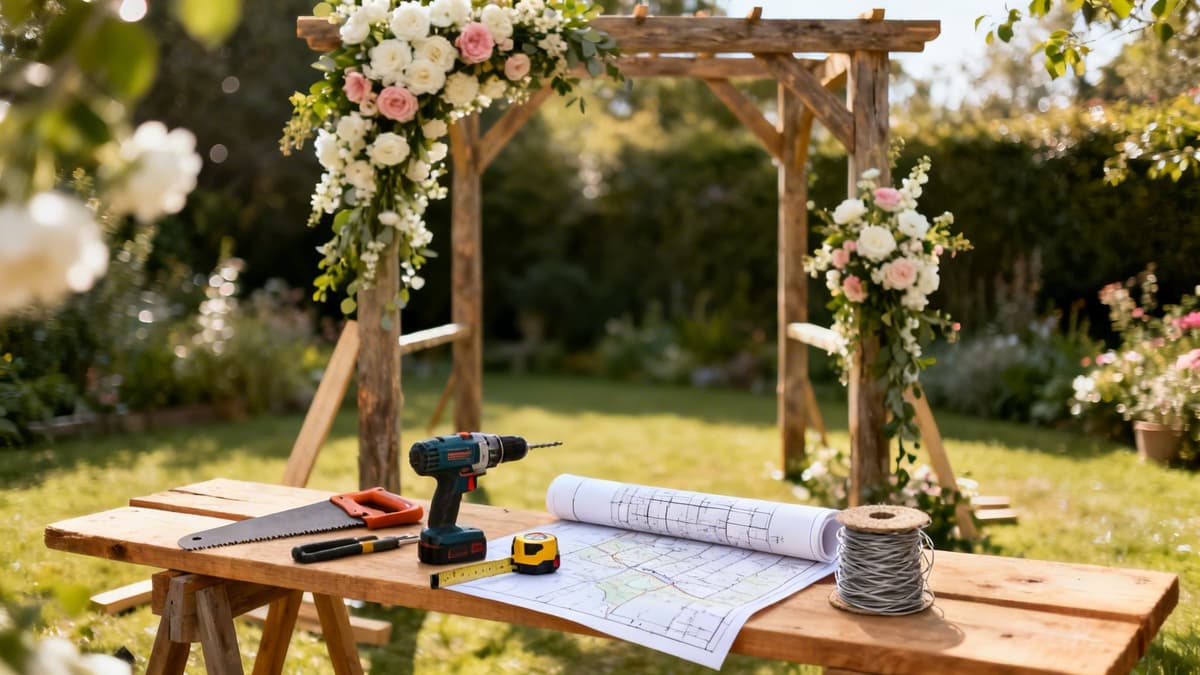
Remember, a smooth build starts long before you pick up a drill. It begins with a smart plan for getting your materials on time and on budget.
This process is key. A successful build is all about planning ahead before the sawdust starts to fly.
Assembling a Classic Wooden Arch
There's just something about a wooden arch. It has a timeless, rustic charm that works perfectly for outdoor ceremonies and boho-themed weddings. For this one, precision is your best friend, your measurements and cuts are what will make or break the stability of the final product.
First, lay out your three main pieces: two vertical side beams and one horizontal top beam. A pretty standard size is around 7-8 feet tall and 5-6 feet wide, but feel free to tweak these numbers to fit your space and style. A speed square is a lifesaver here for making sure every cut is perfectly straight.
Now, a crucial tip before you join anything: pre-drill your holes. I can't stress this enough. This simple step keeps the wood from splitting when you drive in the screws, which is a super common (and frustrating) mistake for first-time builders.
Building a Sturdy Wooden Frame:
Attach the Top Beam: Lay your two vertical beams on a flat surface, parallel to each other. Place the top beam across them, forming an inverted 'U' shape.
Secure with Bolts: This is where the strength comes from. Use two heavy-duty bolts on each side to connect the top beam to the vertical posts. Using bolts and nuts is way stronger than just screws, and it has the added bonus of letting you easily take it apart for transport.
Construct the Bases: To keep it from tipping over, you need feet. Create two 'T' shaped bases by attaching a shorter piece of wood (about 2-3 feet long) perpendicular to the bottom of each vertical post. Lock them in place with long wood screws.
A common mistake is underestimating how much stability you need, especially for an outdoor ceremony. Always, always test your arch for wobbles on a level surface before you even think about decorating. If it feels even a little unsteady, add some angled support braces where the vertical posts meet the bases. Better safe than sorry.
Building a Budget-Friendly PVC Arch
PVC is an incredibly forgiving material for any DIY project. It’s lightweight, a simple handsaw is all you need to cut it, and the pieces connect like grown-up LEGOs.
The real magic of a PVC arch is in the connectors. You'll mostly be using T-connectors and 90-degree elbow connectors to create the shape. The most important rule here? Always dry-fit everything together first before you glue a single piece. Make sure it all lines up exactly how you want it.
Once you're happy with the shape and size, you can make the connections permanent.
Securing Your PVC Connections
For a bond that will actually last, you'll need PVC primer and cement. The primer (it's usually bright purple) cleans and softens the pipe, which allows the cement to create a chemical weld between the pieces.
Make sure you're in a well-ventilated area for this part. Apply the primer to both the inside of the connector and the outside of the pipe's end. Immediately follow that with a layer of cement, push the two pieces together with a slight twist, and hold them tight for about 30 seconds.
This process creates a permanent, waterproof bond that is surprisingly strong. Just remember, once that cement sets, which happens in under a minute, there's no taking it apart. This is exactly why that dry-fitting step is so critical.
The Simplicity of a Metal Arch Kit
Want the elegant look of a metal arch without the headache of welding or cutting pipes? A pre-made kit is your perfect solution. These are designed for ridiculously easy assembly and usually come with every screw and bolt you'll need.
For couples who love to plan, you can start with a top-selling frame like the Fullvaseer Gold Arch Backdrop Stand. It has a 4.4-star rating from over 100 reviews and costs just $44.92. In fact, consumer data shows that 70% of couples prefer these lightweight, modular designs because they're so easy to transport to outdoor venues. If you want to see what's popular, you can explore more trends in wedding arch frames to get inspired.
When your kit arrives, lay out all the pieces and check them against the parts list in the instructions. You want to make sure nothing is missing before you start putting it together.
Assembly is usually just a matter of snapping or screwing pieces together. Follow the manufacturer's guide, making sure every connection is tight. Don't be afraid to use a rubber mallet to gently tap pieces into place if they're a bit snug.
The biggest challenge with these kits can be stability since they're often very lightweight. The non-negotiable final step is to reinforce the base. Placing sandbags or decorative weights over the feet is an absolute must, especially for an outdoor wedding where a sudden gust of wind could be disastrous. With a few simple reinforcements, your metal kit can be just as reliable as any custom-built frame.
Alright, you've built a solid frame. Now for the fun part, making it beautiful. This is the moment you get to transform a simple structure of wood, metal, or PVC into a breathtaking centerpiece that's completely you. Decorating is where the arch truly comes to life.
Think of this process as telling your story with flowers, fabric, and light. It's all about layering textures, colors, and personal details until the arch feels like a genuine reflection of your style as a couple.
Creating Elegant Drapes with Fabric
Fabric is probably the fastest way to add romance and a touch of drama. Lightweight materials like chiffon, tulle, or organza are your best bet, they catch the light beautifully and have an airy, effortless feel.
Start by securing your fabric at the very top center of the arch. A clear zip tie or some fishing line works perfectly. Let it fall naturally, then gather it and secure it again to the side posts, maybe about halfway down. You can create a simple drape on just one side or go for a symmetrical look on both.
Want something a little more lush? Don't be afraid to use multiple bolts of fabric and layer them. My favorite trick is to let the ends pool gracefully on the ground. It adds a sense of effortless romance and does a great job of hiding the arch's feet or any weights you're using.
Don’t just default to white. A soft blush, a dusty blue, or even a rich emerald fabric can tie your arch directly into your wedding colors. This is where your personal style really begins to shine through, creating a look that feels cohesive and intentional.
Mastering the Art of Floristry
Flowers are almost always the star of the show. Whether you're working with fresh blooms or high-quality artificials, the right technique makes all the difference between "nice" and "wow."
If you're using fresh flowers, floral foam cages are your best friend. Seriously. Just soak the foam block until it's completely saturated, then attach the cage to your arch with some heavy-duty zip ties or floral wire. You can then stick your flowers and greenery right into the foam, giving you total control over the shape and fullness of your design.
For artificial flowers, you have a bit more flexibility. You can attach them one by one with floral wire or create smaller bundles and secure those to the frame. I find this method works really well for creating lighter, more organic-looking designs that don't feel too heavy.
Designing Your Floral Look
Right now, the trend is all about creating movement and personality. One of the most popular styles I'm seeing is an asymmetrical design, where the flowers are concentrated on one corner and then trail down one side. It feels modern, dynamic, and creates a stunning focal point without being overwhelming.
To get this look, cluster your largest, most vibrant flowers (we call these "focal flowers") in that main corner. Then, use lighter, airier flowers and plenty of greenery to create that beautiful trailing effect down one leg of the arch.
Here’s a simple process to follow:
Start with Greenery: Always build a base of greenery first. Things like eucalyptus, ivy, or fern branches create a lush foundation and help you map out the overall shape of your arrangement.
Add Focal Flowers: Next, place your showstoppers, the big blooms like roses, peonies, or dahlias. Distribute them strategically to create a sense of balance, even in an asymmetrical design.
Fill with Secondary Flowers: Use smaller flowers and textural bits like baby's breath, thistle, or berries to fill in any gaps. This is what adds depth and makes the arrangement feel full and complete.
Getting the colors just right is crucial. For some great inspiration on how to build a palette that works, you can explore this guide to beautiful wedding color palettes to help guide your floral choices.
Adding Personal Touches Beyond Flowers
Your arch doesn't have to stop at flowers and fabric. This is your chance to weave in unique elements that really speak to who you are as a couple. These are the final touches that make an arch truly yours.
Think about incorporating different textures and lighting to add another layer of visual interest. These small details can have a huge impact, especially as the sun starts to set and the mood shifts.
Creative Ideas for Personalization:
Fairy Lights: Weave delicate, battery-powered fairy lights through the fabric or greenery. There's nothing like it for creating a magical, romantic glow for an evening ceremony.
Ribbons and Macrame: For a more bohemian vibe, you can hang long, flowing ribbons in your wedding colors. A beautiful macrame wall hanging also works incredibly well as a backdrop.
Personalized Signs: A custom wooden or acrylic sign with your names, wedding date, or a meaningful quote adds a deeply personal touch that guests always love.
Paint and Finishes: If you built a wooden or PVC arch, the finish itself is a design choice. A dark stain can feel rustic and earthy, while a can of metallic gold spray paint adds instant glam. To really nail the finish, check out some professional paint and decorating tips for flawless results.
Ultimately, decorating your arch is about layering elements you love to create a backdrop that feels authentic. By combining elegant fabrics, thoughtful floral design, and unique personal details, you'll craft a ceremony centerpiece that is not only beautiful but also a true reflection of your journey together.
Planning Your Day-Of Arch Logistics
A perfectly built arch is one thing, but getting it set up flawlessly on your wedding day is a whole different ballgame. This is where your role shifts from builder to project manager. Honestly, the on-the-day execution is just as critical as the build itself, ensuring your hard work actually shines when it matters most.
This kind of thinking needs to start way back in the design phase. If your venue is a 30-minute drive away, that beautiful, massive, one-piece frame is going to be a nightmare. You absolutely need to design it to be modular. Think two side pillars and a detachable top beam, all held together with simple bolts. This is how you avoid that gut-wrenching moment when you realize your masterpiece doesn't fit in the truck.
This is the kind of proactive planning that keeps a wedding from spiraling into chaos. ItsaYes is built for this, its personal AI assistant is available 24/7 to suggest priorities and organize tasks so everything keeps moving forward without overwhelm.
Creating Your Day-Of Assembly Checklist
Let's be crystal clear: on your wedding day, you will not have time to assemble an arch. You need a dedicated team and a plan so detailed they can execute it without having to ask you a single question. This is a job for a few reliable friends or family members you can trust.
Your checklist has to be foolproof. Pretend you're writing it for someone who has never seen the arch before.
Your Day-Of Assembly Kit Should Include:
A Photo of the Final Look: Don't just describe it. Give them a picture of the fully assembled and styled arch so they know exactly what they're aiming for.
All Necessary Tools: Pack a dedicated toolkit. We're talking a cordless drill with two fully charged batteries, the right bits, wrenches, extra screws, and a big handful of zip ties. You can never have too many zip ties.
A Labeled Parts List: If your arch is modular, label every single piece with painter's tape (e.g., "Left Leg," "Top Beam," "Cross-Brace A"). Your checklist should correspond directly to these labels.
Contact Information: Put the phone numbers for the venue coordinator and your florist right at the top of the list. If something goes sideways, your team needs to know who to call.
And please, do a full practice run with your assembly team at least a week before the wedding. This trial is your chance to discover that one bolt is a weird size or that a specific step is confusing, all while the stakes are low.
Timing and Venue Coordination
Get in touch with your venue coordinator early. You need to know their rules inside and out. When can your setup crew actually get on-site? Are there restrictions on where the arch can be placed? Do they have rules about staking things into the ground? A five-minute phone call can save you hours of headaches later.
The setup timeline is another beast entirely. The arch frame can probably be assembled early in the day, but fresh flowers have a much shorter window. Florals should be one of the very last things added to keep them from wilting before you even walk down the aisle. Chat with your florist and schedule their arrival for no more than a few hours before the ceremony. A well-thought-out schedule is everything. To get this right, you can use a wedding day timeline generator to map out every last detail.
Smart Repurposing and Safe Disassembly
Your arch doesn't have to be a one-hit wonder. With just a little bit of planning, it can pull double duty at your reception.
One of the smartest things I see couples do is move the arch from the ceremony to behind the sweetheart table at the reception. It can also be a killer backdrop for the cake-cutting or even become the main feature of a guest photo booth.
Finally, think about the end of the night. The same crew that set it up should be responsible for taking it down. Make sure they know the plan and have the tools they need ready to go. Planning for disassembly is the final step to ensuring your beautiful DIY project ends as smoothly as it began.
Your Top DIY Wedding Arch Questions, Answered
Jumping into a DIY wedding arch project is exciting, but let's be real, it also comes with a ton of questions. Getting clear answers before you start is the difference between a fun, creative project and a last-minute stress fest.
Think of this as your pre-build pep talk. We’re covering the most common questions from couples just like you, so you can avoid the usual pitfalls and build your arch with total confidence.
How Far in Advance Should I Actually Build This Thing?
Timing is everything. Build it too early and it's taking up space for months; build it too late and you’re painting it the night before the wedding. No thanks. The perfect timeline really comes down to the materials you're using.
If you’re working with wood or PVC, you can absolutely build the main frame one to two months before the wedding. This gives you a nice, relaxed window to get any painting, staining, or sealing done and let it cure completely. If you bought a pre-made metal kit, the assembly is super quick, so putting that together the week of the wedding is totally fine.
The one non-negotiable? The decor. Any fresh flowers and greenery have to be added no more than 24 hours before the ceremony. This is the only way to make sure they look fresh and vibrant, not sad and wilted.
What's the Single Biggest Mistake I Need to Avoid?
I see it all the time: couples build a gorgeous arch but completely underestimate the need for a rock-solid, stable base. An arch that feels even a little bit wobbly isn't just an inconvenience; it’s a serious safety hazard, especially if you're getting married outside where a gust of wind could spell disaster.
Your arch needs to be completely stable before you even think about adding a single flower.
Here’s how to make sure it’s secure:
For Wooden Arches: Build T-shaped feet that stick out at least a foot in both the front and back of the posts. This creates a wide, stable footprint.
For PVC Arches: Stick the ends into buckets filled with sand or quick-set concrete. You can easily hide the buckets with some beautiful draping fabric.
And please, don't forget to confirm the final dimensions with your venue. The absolute last thing you want is to show up on your wedding day and realize your stunning creation is too tall for the ceremony space.
Can I Really Pull This Off for Under $150?
Yes, you absolutely can. A beautiful, sturdy wedding arch doesn't have to break the bank. Your most budget-friendly option is a PVC pipe frame, which you can often build for well under $100, and that includes the structure, some elegant fabric, and a few high-quality faux flowers.
Want to use other materials but keep costs low? Look for reclaimed wood at a local salvage yard or hunt for a second-hand metal frame on Facebook Marketplace. The trick to a budget-friendly arch is to invest in a solid structure first, then get creative with affordable decorations like lush greenery, flowing fabric, and delicate fairy lights.
How on Earth Do I Get a Giant Arch to My Venue?
The secret here is modular design. Never, ever build your arch as one giant, immovable piece. You'll thank me later. Instead, build it in a few separate sections that you can quickly and easily assemble on-site.
A classic wooden arch, for example, can be built as two side pillars and a separate top beam. Just connect them with bolts instead of screws, and it comes apart in minutes. Label each piece clearly with painter’s tape ("Top Left," "Side A") so reassembly is foolproof.
Finally, assign a dedicated "transport team" from your wedding party or family. Have them practice putting it together and taking it apart once before the big day. A five-minute practice run can save you a world of stress.
Juggling all these DIY details alongside vendor deadlines and guest lists can feel like a lot. ItsaYes is built for newly engaged couples who want to enjoy the process, stay organized, and feel confident—from first inspiration to a fully structured plan. It brings your vision, tasks, budget, and timeline into one calm, intuitive workspace so you can get clarity from the very start. Start planning at https://itsayes.io.