Mastering Your Response Wedding Card Wording and Etiquette
17 min
Mastering Your Response Wedding Card Wording and Etiquette
Author
The ItsaYes TeamAuthor
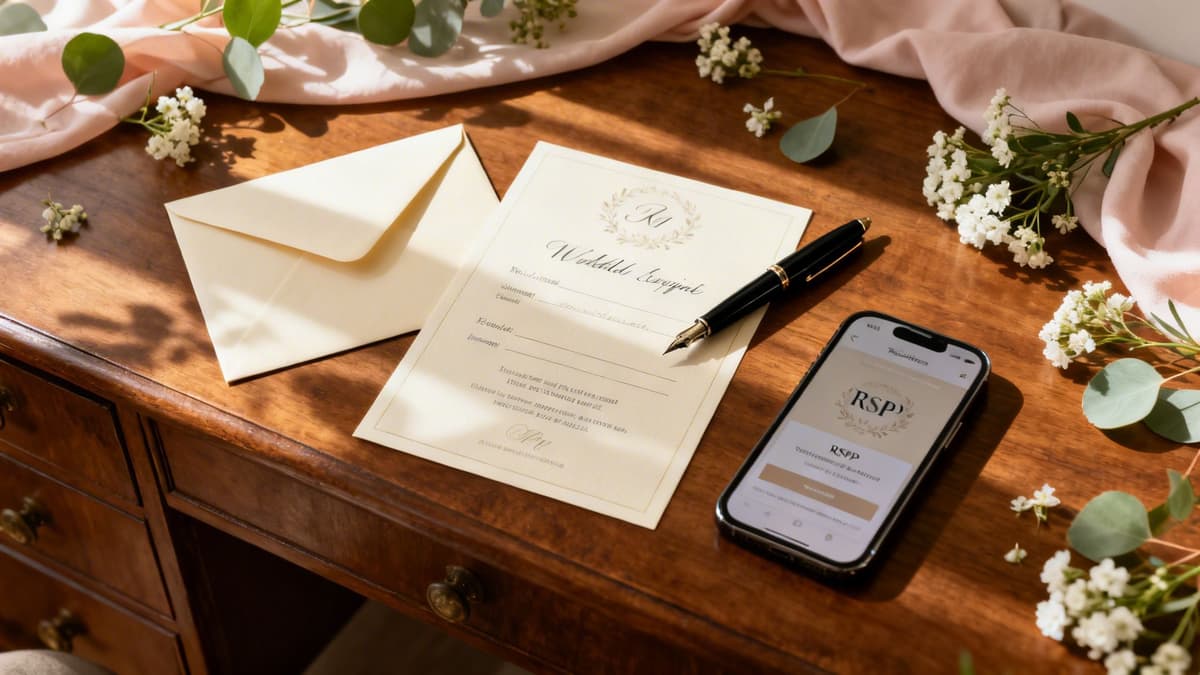
The response wedding card, or RSVP card, might seem like a tiny piece of paper in your gorgeous invitation suite, but don't be fooled. It’s the single most important tool you have for turning your dream wedding from a vague idea into a real, tangible event. Getting this right from the start is the key to a calm, organized planning process.
Why Your Response Wedding Card Is So Important
Let's be honest. The moment you get engaged, your mind starts racing with the big, exciting ideas—the venue, the dress, the overall vibe. But the success of that entire vision hinges on one small, unglamorous detail: knowing exactly who is coming.
Your response wedding card is the workhorse that gathers this crucial information, transforming your guest list from a hopeful draft into a final, actionable plan. This little card carries so much weight. It directly impacts your final budget, as caterers charge per head. It dictates your seating chart, informs your favor order, and ensures you have enough chairs for everyone.
Without clear replies, you're left juggling spreadsheets, chasing down texts, and guessing numbers. It’s a recipe for stress right when you should be feeling excited.
A Foundation for Confident Planning
Feeling confident from the very start is all about having a clear system. When you approach your RSVPs with a strategy, you’re not just sending out mail; you’re building the logistical foundation for your entire wedding. This is where modern tools can make a world of difference.
For newly engaged couples who want to enjoy the process, platforms like ItsaYes are designed for clarity from the very start. Instead of juggling spreadsheets, Pinterest boards, and scattered notes, you can bring your vision, tasks, budget, and timeline into one calm, intuitive workspace.
Imagine your personal AI assistant suggesting priorities, organizing tasks, and keeping everything moving forward without overwhelm. This transforms guest management from a manual headache into a seamless, automated process that keeps everything on track.
This organized approach isn't just about efficiency; it's about peace of mind. By defining your style and ideas, you can turn inspiration into a clear plan, breaking the next 6 to 12 months into simple, manageable steps. Choosing the right response card method is your first big step toward that confident, structured experience.
Crafting RSVP Wording That Gets Clear Answers
Your response wedding card is one of the most important pieces of paper in your entire wedding plan. The way you word it will be the difference between a clear, final headcount and a month of chasing down vague texts and awkward phone calls right before your catering deadline.
Think of it less like a formality and more like a targeted mini-survey. The goal is to get clean data: who’s coming, exactly how many people, and what they’ll be eating. If you want to get really nerdy about it, you can even borrow a few tricks from the pros who create effective survey questions examples for a living. The principles are the same: clarity is everything.
Set the Right Tone and Expectations
Before you get into the nitty-gritty, make sure the wording actually matches the vibe of your wedding. A black-tie affair and a backyard bash need very different language.
Formal Wording: This is your classic, elegant stuff. Phrases like "Accepts with pleasure" and "Declines with regret" are timeless. The traditional "M___________" line is also a hallmark of formal invitations, giving guests space to fill in their formal titles (Mr., Mrs., Ms.).
Casual Wording: If your wedding is more relaxed, have some fun with it! Get creative with phrases like "Can't wait to celebrate!" and "Sad to miss the fun!" This immediately tells your guests to expect a good time, not a stuffy event.
The Most Important Lines on Your Card
Beyond just a "yes" or "no," a few key lines will save you from some of the biggest wedding planning headaches. These are non-negotiable if you want a headcount you can actually count on.
First, you absolutely need a firm RSVP deadline. A simple "Kindly reply by June 10th" or the more formal "The favor of a reply is requested by the tenth of June" works perfectly. This date should land about 3-4 weeks before your wedding day. That gives you a buffer to hunt down the inevitable stragglers without panicking.
Next, you have to solve the "plus-one" problem before it even starts. The single most effective way to prevent surprise guests from showing up is to add this one simple line to your RSVP card:
We have reserved ___ seats in your honor.
You fill in the blank with "1" or "2" on each invitation before you mail it. It's a polite but crystal-clear way to communicate exactly who is invited, leaving zero room for awkward assumptions. Trust me, this little line is a lifesaver.
This is especially critical if you're using a planning system like ItsaYes. Its AI assistant is available 24/7 to help you organize tasks and keep your guest list, budget, and seating chart all perfectly in sync within your calm, intuitive workspace. No more manually updating a spreadsheet every time an RSVP comes in.
Finally, let's talk meal choices. A generic "dietary restrictions" line is a recipe for disaster, leading to vague answers you can't use. Instead, be specific. Ask your guests to initial their choice next to each entrée, like this:
___ Beef Tenderloin
___ Pan-Seared Salmon
___ Wild Mushroom Risotto (Vegan)
This gives your caterer the exact counts they need and prevents any day-of mix-ups. This kind of precision is vital when you look at the numbers. Every year in the United States, there are around 2 million weddings. The average couple invites 162 guests, but only about 134 usually RSVP "yes", an 83% acceptance rate. That gap is where planning chaos happens, with guests delaying their response or penciling in uninvited plus-ones. Getting your wording right is your best defense against those surprise costs and headaches. Discover more insights on guest count trends at RSVPify.
Designing a Beautiful and Functional Response Card
Your response card has one job: get you a clear answer. While it should absolutely look like it belongs with the rest of your gorgeous invitation suite, this is the one piece where function has to win over flair.
Think of it this way: your main invitation sets the mood, but the RSVP card is all business. It needs to be incredibly simple for everyone, from your tech-savvy cousin to your great-aunt, to understand, fill out, and send back without a single moment of confusion.
Balancing Style with Readability
It’s easy to get carried away with beautiful materials. That heavy, textured paper might feel incredible, but can your guests actually write on it with a normal pen? Some glossy finishes are notorious for smudging ink, turning a clear "yes" into an unreadable smudge.
The same goes for fonts. That stunning, elaborate script you used for your names on the invitation? It's a nightmare for small-print meal choices. For the actual instructions and options on the response wedding card, stick with a clean, simple font. Readability is king here.
Let's be honest: your response card is a data collection tool disguised as beautiful stationery. Prioritize clarity in every choice, paper, font, and layout, to make sure the info you get back is actually usable.
This isn't about compromising your wedding vision; it's about making smart, practical choices that help you feel confident and in control. For more on how all your paper goods fit together, check out our guide on choosing the right invitation card size.
The Modern Touch: QR Codes
Adding a QR code is one of the smartest ways to blend that traditional paper experience with modern efficiency. It’s a tiny square that creates a direct link between the physical card in your guest's hand and your digital command center.
With a quick scan, your guest lands right on your wedding website's RSVP page. If you're using a system like ItsaYes, their response is logged instantly, updating your guest count, meal choices, and even your budget in real time. No more deciphering handwriting or manually typing every single reply into a spreadsheet.
Here are a few tips for adding a QR code without it looking clunky:
Keep it clean: Place the code in a corner or on the back with a simple line like, "To RSVP online, scan here."
Offer both paths: Always include the traditional mail-in option. This ensures less tech-savvy guests can reply comfortably without having to call you for help.
Test, test, test: Before you approve the final print run for 200 invitations, print one copy and test the QR code on a few different phones. A broken link is a planning headache you don't need.
By giving guests a digital path, you make it easy for them to reply the second they open the invitation. For you, it means a steady stream of automated data, turning a massive logistical task into a simple, manageable part of a fully structured plan.
How Digital RSVPs Can Genuinely Simplify Your Life
Let's talk about one of the least glamorous, most headache-inducing parts of wedding planning: chasing down RSVPs. Imagine a world where your guest list updates itself in real time. No more late nights with a spreadsheet, trying to decipher your uncle's handwriting, or texting bridesmaids to chase down their plus-one's meal choice.
Digital RSVP tools turn this entire chaotic process into one of the most streamlined parts of your plan. Instead of a growing pile of paper cards you have to manually tally, you get a clean, intelligent dashboard. Platforms like ItsaYes act as a command center, instantly logging every "yes" or "no" as it comes in. This gives you immediate clarity on your guest count, meal preferences, and more, all in one calm workspace.
From Paper Invites to an Intelligent Dashboard
Here’s a secret: embracing digital RSVPs doesn't mean you have to give up those beautiful, tangible paper invitations you’ve been dreaming of. In fact, the most effective approach for most couples is a blend of both. You send the gorgeous paper suite, but on the response card, you add a simple QR code that takes guests straight to your wedding website.
For your guests, it's a seamless experience. One quick scan and they can confirm their attendance, pick their meal, and double-check the event details. For you, it's a massive win. Your planning system automatically captures every single answer, keeping your headcount, budget, and to-do list perfectly aligned without you lifting a finger.
The real power of digital RSVPs is turning guest responses into actionable data. Each reply automatically updates your headcount, which in turn adjusts your budget projections for catering and rentals. This is how newly engaged couples stay organized and feel confident from first inspiration to a fully structured plan.
Setting Up a Stress-Free Digital System
Getting started with online RSVPs is surprisingly straightforward and can be a huge relief, especially if you're feeling overwhelmed by the planning process. Most modern wedding websites have built-in form features, and if you're looking for something really slick, a dedicated Wedding RSVP Form template can make it even smoother.
Here’s what that process actually looks like in practice:
First, you'll set up a simple form on your wedding website to capture the key information—guest names, their attendance status, and any meal choices.
Next, you use a free online tool to generate a QR code that links directly to that form.
Finally, you just place that QR code on your paper response card with a simple, clear instruction like, "Kindly reply online by scanning this code with your phone."
This shift isn't just a niche trend; it's becoming the new standard. The wedding invitations software market, valued at USD 1.2 billion in 2024, is projected to hit USD 3.5 billion by 2033. This boom reflects a massive change in how couples plan, with data showing that a whopping 61% of couples getting married in 2026 are opting for either fully digital invitations or a QR code hybrid.
One last, crucial tip: always accommodate everyone. Be sure to include a phone number or an email address on the card as an alternative for less tech-savvy guests, like grandparents. This small gesture ensures no one feels left out and, most importantly, that you get a response from every single person on your list. Our guide to digital wedding invitations offers even more tips on making this process easy and inclusive for all your guests.
Mastering Your RSVP Timeline and Etiquette
Of all the moving parts in wedding planning, few create more last-minute panic than the guest count. Your caterer, your venue, your rental company—they all need that final number. And they needed it yesterday.
Nailing your response wedding card timeline isn't just about being organized. It's about giving yourself the breathing room you need to finalize those critical details without the frantic stress of chasing down replies.
This simple breakdown shows the key milestones that stand between you and that final headcount.
Each step builds on the last, creating a clear roadmap that keeps you ahead of your vendor deadlines, not scrambling to meet them.
The Ideal Wedding Invitation Timeline
That standard wedding timeline you always hear about? It’s not arbitrary. It’s a schedule that pros swear by because it’s built to give both you and your guests the time you actually need.
Send Invites: Get those invitations in the mail 8 to 12 weeks before the wedding. This is the sweet spot. It gives everyone enough time to arrange travel, book a hotel, or take time off work without feeling rushed.
Set the Deadline: Your RSVP deadline should fall 3 to 4 weeks before your wedding day. This timing is strategic. It’s close enough that the date feels real and urgent to your guests, but it leaves a crucial buffer before your own vendor deadlines kick in.
This schedule is especially important if you sent out save-the-dates. If you skipped them, you’ll want to send your invitations a bit earlier, more like 4 to 6 months out, to give everyone a proper heads-up. We dive deeper into this in our comprehensive guide to mailing out wedding invitations.
Handling Late RSVPs with Grace
Let’s be real. It’s a universal wedding planning truth: people will miss the deadline. Instead of panicking when the date passes and you’re still short a few replies, have a simple, polite follow-up plan ready to go.
The goal is just to get an answer, not to make anyone feel awkward or called out.
Pro Tip: Never, ever assume a non-response means "no." Invitations get lost in the mail. People get busy and genuinely forget. A gentle nudge is almost always necessary for a few guests, so just plan on it.
Here are a few scripts you can tweak for a quick text or a friendly call after the deadline has passed.
For a Close Friend or Family Member: "Hey! Just checking in to see if you'll be able to make it to the wedding. We're giving our final numbers to the caterer this week and would absolutely love to have you there!"
For a More Distant Guest: "Hi [Guest Name], hope you're doing well! We're confirming our final guest count for the wedding and wanted to make sure you received our invitation. We need to get all responses in by the end of the day. Please let us know if you can join us!"
This is one of those little tasks that can feel surprisingly stressful. By using a system like ItsaYes, you can see at a glance who hasn't replied yet. Your personal AI assistant can suggest priorities and help you organize these follow-ups, turning a potential headache into a simple, manageable step in your plan.
FAQs: Navigating Those Tricky RSVP Questions
Even with the best-laid plans, a few awkward questions around your response wedding cards are bound to pop up. It's completely normal. How you handle these little hiccups with grace and clarity can make all the difference in keeping your planning smooth and stress-free.
Here are some straight-talking answers to the most common RSVP headaches couples run into, so you can navigate them with confidence.
When Should I Set My RSVP Deadline?
Your RSVP deadline should be set 3 to 4 weeks before your wedding date. This isn't just a random number; it's a strategic sweet spot that gives you a crucial buffer. Most caterers and venues need your final headcount 1 to 2 weeks before the big day, so this timeline gives you room to breathe.
More importantly, it builds in time for the inevitable: personally (and politely) chasing down the handful of guests who will miss the deadline. It’s a small detail, but planning for it saves you a world of last-minute panic.
How Do I Politely Handle No Kids or Plus Ones?
Clarity is your best friend here. The most effective way to handle this is to be direct and polite right on the invitation and response card, leaving no room for guesswork.
On the envelope: Address the invitation only to the specific people invited. For example, "Mr. and Mrs. Smith" instead of "The Smith Family." This is your first, subtle clue.
On the response card: This is where you bring it home. Use the magic phrase: "We have reserved __ seats in your honor." Before mailing, you'll pre-fill that blank with '1' or '2' for each household. It’s a firm but graceful way to communicate exactly who is invited, preventing awkward assumptions.
If you're having an adults-only reception, you can also pop a polite note on your wedding website's FAQ page. Something like, "To allow all our guests to relax and enjoy themselves, we have chosen for our wedding day to be an adult-only occasion." This sets a clear, kind expectation from the start.
When dealing with tricky guest situations, the goal is to be firm and clear while still making every invited guest feel welcome and respected. Grace is everything.
Do I Really Need to Put a Stamp on the RSVP Envelope?
Yes, absolutely. Proper wedding etiquette is clear on this: you should pre-address and pre-stamp the return envelope. Think of it as removing a tiny but significant roadblock for your guests. It’s a thoughtful touch that makes it as easy as humanly possible for them to reply quickly.
Forgetting the stamp is a surprisingly common reason for delayed responses. When you're building your stationery budget, make sure to factor in the cost of these extra stamps. It’s a small price to pay for timely replies and a much more accurate headcount.
What About Guests Who RSVP Yes But Don't Show Up?
No-shows are incredibly frustrating, especially since you've already paid for their meal and their seat at the table. But the truth is, they almost always happen because of an unavoidable, last-minute emergency. The best you can do is simply be understanding.
Once the wedding whirlwind has settled down, a simple, kind message like, "We missed you at the wedding and hope everything is alright!" shows you care. It opens the door for them to explain without making them feel cornered or guilty. It’s an unfortunate reality of event planning, but mentally preparing for one or two no-shows can help ease any day-of disappointment.
Feeling overwhelmed by all these little details? ItsaYes is an AI-powered wedding planning system designed for couples who want clarity from the very start. Instead of juggling spreadsheets, Pinterest boards, and scattered notes, ItsaYes brings your vision, tasks, budget, and timeline into one calm, intuitive workspace so you can feel confident and enjoy the process. Start turning your inspiration into a fully structured plan today at https://itsayes.io.